Coloring for Wellness: How a Simple Creative Practice Can Change How You Feel
Quick Answer: Coloring supports mindfulness health by activating the body’s relaxation response — slowing heart rate, lowering cortisol, and quieting the mind’s rumination loop — through focused, repetitive creative attention. Just 10–20 minutes of coloring can measurably shift stress levels, making it one of the most accessible entry points into a daily mindfulness practice.
You know that feeling — the day has barely started, and your mind is already running three conversations, a to-do list, and a quiet background hum of worry all at once. You are not looking for a complete life overhaul. You are looking for something that actually helps, right now, today.
Coloring for wellness is exactly that. Not a hobby. Not a nostalgic throwback to childhood. A genuinely well-supported, accessible tool for calming the nervous system, reducing anxiety, and building the kind of mindfulness health that compounds quietly over time — one page at a time.
This is your complete guide to using coloring as a daily wellness practice. You will find the science behind why it works, practical guidance for getting started, the right pages for different emotional states, and answers to the questions most people have before they begin.
Ready to skip straight to the pages? Jump to free printables or start with the beginner ritual guide.
Why Coloring Is Good for Your Mental Health
Before you dismiss this as wishful thinking, it helps to understand what is actually happening in the brain and body when you sit down with a coloring page and a handful of pencils. The connection between coloring and mindfulness health is not incidental. It is the direct result of specific, documented neurological and psychological mechanisms.
It Activates the Relaxation Response
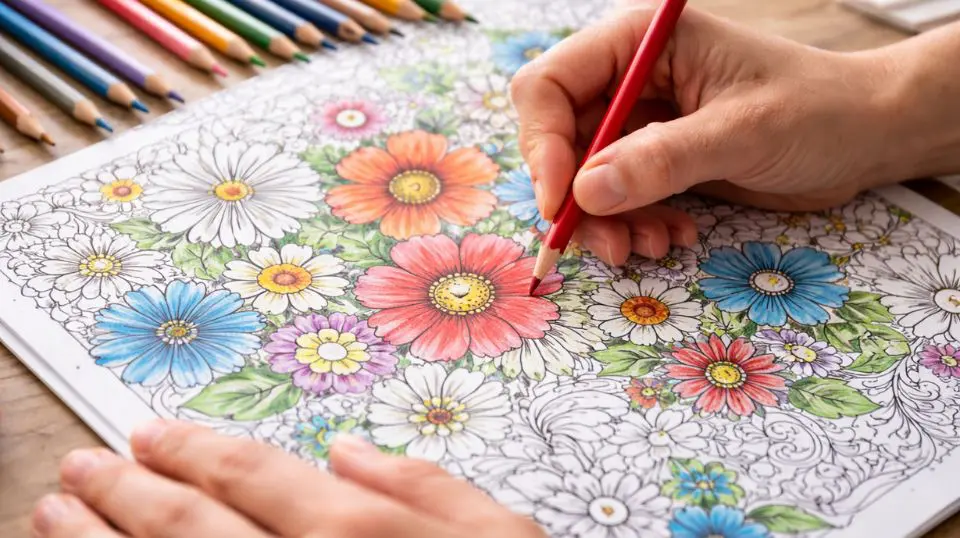
Repetitive, focused motion — the kind you fall into when filling in a coloring page — sends a signal of safety to the nervous system. Heart rate slows. Cortisol levels drop. Muscle tension begins to release. This is the same underlying mechanism that makes meditation, breathwork, and even knitting effective for mindfulness wellness. Research on repetitive creative tasks consistently points to this shift in autonomic nervous system activity as a core therapeutic outcome, and coloring reliably triggers it without prior training.
It Occupies the Mind’s “Worry Channel”
The prefrontal cortex — the part of the brain associated with planning, rumination, and anxious thinking — stays just occupied enough during coloring to interrupt the anxiety loop. Unlike scrolling through social media or watching television, coloring requires a low but genuine level of focus. That small cognitive demand is enough to crowd out ruminative thought without demanding the kind of intense mental effort that creates more stress. It is, in the best possible sense, the right amount of nothing — and that balance is central to what makes coloring a practical mindfulness wellness tool.
It Creates a Flow State
When the challenge level of a task matches your skill level, the brain enters what psychologists call flow — a state of absorbed, effortless concentration where time distorts and self-consciousness drops away. A well-designed coloring page achieves this almost automatically. Art therapy journals have noted this state as central to the therapeutic benefits of creative activities: it is where the deepest support for mindfulness and well-being occurs, and where the relief is felt most fully.
If you’re building a coloring wellness routine, our Ultimate Ocean Coloring Pages for Adults – 35 Designs make a wonderful addition — 35 thoughtfully crafted pages that support relaxation and creative self-care.
It Produces a Finished Object
Unlike most mindfulness practices, coloring leaves you with something tangible at the end. That sense of completion — of having made something — activates the brain’s reward system and reinforces the habit. Studies on repetitive creative tasks suggest that the presence of a visible, finished outcome increases the likelihood of returning to the practice. That matters enormously when you are trying to build a consistent routine around mindfulness health.
Mindfulness becomes easier when you focus on soft, comforting illustrations, which is exactly what you’ll find in 50 Cozy Coloring Pages for Women – Joyful Scenes to Color, helping readers stay present while coloring.
What Can Coloring Help With?
Coloring is not a medical treatment, and it does not replace professional support for serious mental health conditions. What it offers is something different: a low-friction, screen-free, reliably accessible tool for shifting your state. Here is what the evidence and experience suggest it helps with most — and how each benefit connects to broader mindfulness and wellbeing.
Anxiety and Stress
This is the most common entry point, and for good reason. Coloring directly interrupts the physical stress response — the shallow breathing, the racing thoughts, the muscle tension that builds through the day. Even a 10 to 15-minute session produces a measurable shift for most people. Supporting mindfulness wellness through coloring works here because the repetitive motion replaces the stress loop with something measured, absorbing, and inherently non-urgent.
If anxiety or daily stress is what brought you here, start with stress relief coloring pages — designs chosen specifically for their calming effect. You can also read more about how coloring helps with anxiety.
Low Mood and Depression
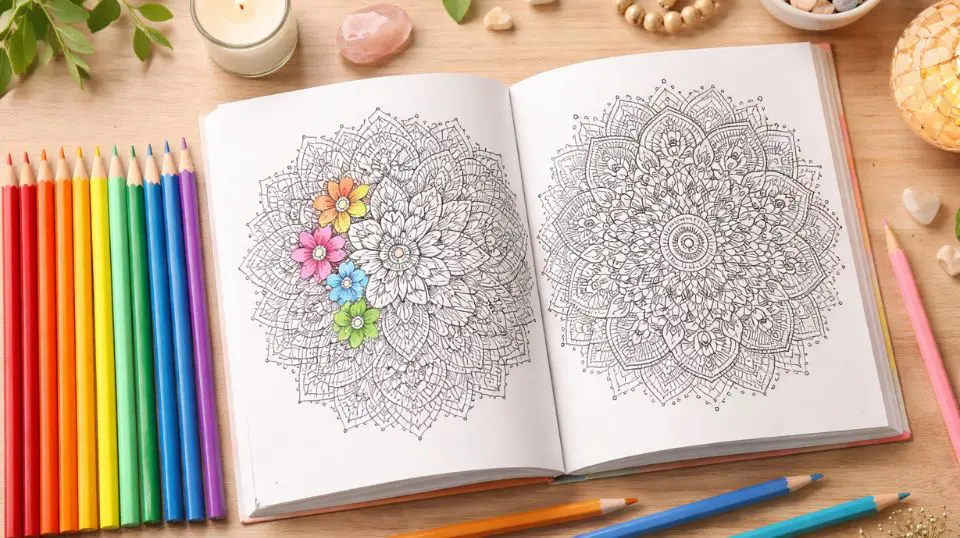
Coloring is not a treatment for clinical depression. But it offers something that low mood often strips away: a reason to sit down, a small creative decision to make, and a gentle re-engagement with the present moment. When decision-making feels impossible, and motivation is depleted, the very accessibility of coloring — pick up a pencil, choose a color, fill in a shape — can be its own quiet form of reactivation. This gentle re-entry into the present is one of the most underappreciated aspects of coloring for mindfulness health. Explore the full picture of the benefits of coloring therapy.
Sleeplessness and Wind-Down
Screens before bed are stimulating. Coloring is the opposite. A 20-minute coloring session as part of a nighttime routine signals to the brain that the day is over and the body is safe to rest. Warm, muted palettes — ochres, soft blues, dusty pinks — support this transition particularly well. Used consistently, this kind of evening ritual becomes a genuine pillar of mindfulness, wellness, and sleep hygiene together. For a complete approach, see how to create a daily coloring ritual.
Mindfulness and Present-Moment Awareness
For people who find seated, breath-focused meditation difficult — too still, too quiet, too confronting — coloring offers an active alternative that supports mindfulness and well-being just as effectively. Attention anchors to color, line, texture, and the small decisions of each moment. The outcome is functionally similar to formal mindfulness practice: reduced mind-wandering, increased present-moment awareness, and a quieter internal environment. Discover how this works in detail at mindfulness coloring pages for adults and meditation coloring pages.
Emotional Processing and Self-Expression
Color choices, pressure, the decision to stay inside the lines or not — these are small but real acts of self-expression. Art therapy uses precisely this observation: the way a person engages with creative materials both reflects and influences their emotional state. Supporting mindfulness health through creative expression does not require insight or analysis. The process does the work. For more on the relationship between color and emotion, see Art and Emotions: Using Color to Explore Feeling, and for combining coloring with reflective writing, mindfulness coloring, and journaling.
How to Use Coloring as a Wellness Practice
You do not need a specialist setup or prior experience. The following steps are designed to help you build a sustainable coloring ritual — one that supports your mindfulness and wellbeing every day, not just when motivation is high.
1. Choose the right time. Consistency matters far more than duration. Morning, lunch break, and the hour before bed each offer different benefits for mindfulness health. A morning session sets a calm, grounded tone for the day. A midday session interrupts the stress build-up before it peaks. An evening session signals the close of the day and prepares the nervous system for rest. Pick one slot, protect it, and keep it.
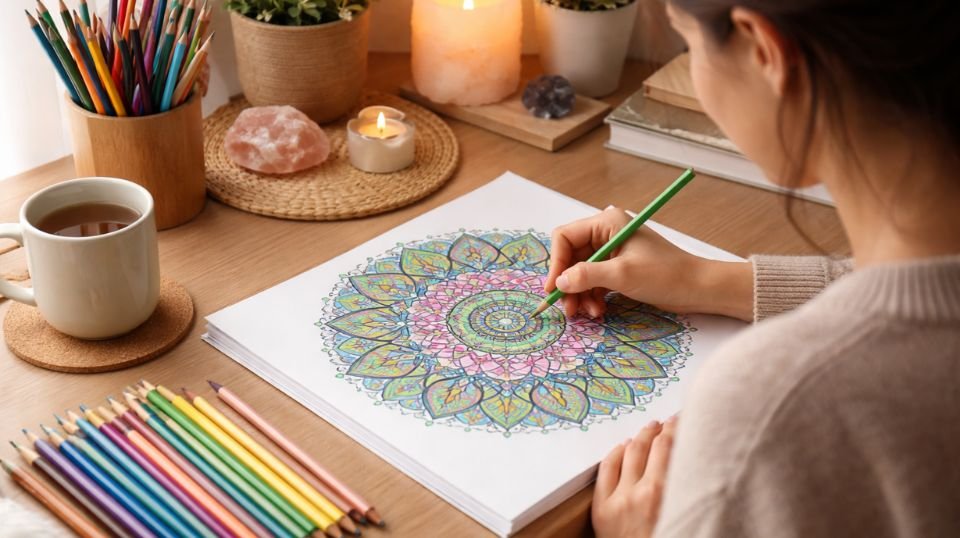
2. Set up a calm space. Remove your phone from arm’s reach — not across the room, out of reach. A cup of tea, a candle, and good natural or warm light. These small signals tell your brain that this time is qualitatively different from the rest of your day. The ritual of setting up is itself the beginning of your mindfulness wellness practice, even before you pick up a pencil.
Recommended for This Topic

400+ Stress Coloring Pages for Adults — Calming PDF Bundle
75+ Adult Coloring Pages for Relaxation — Printable PDF Set
3. Pick a design that matches your energy. High anxiety calls for simpler designs with larger fill areas — mandalas, bold florals, open geometric forms. Mild stress or low-level boredom suits more intricate patterns. Do not force complexity when you are depleted. The point is not a challenging page. The point is a page that draws you in gently and supports your mindfulness and wellbeing in the state you are actually in, not the state you wish you were in.
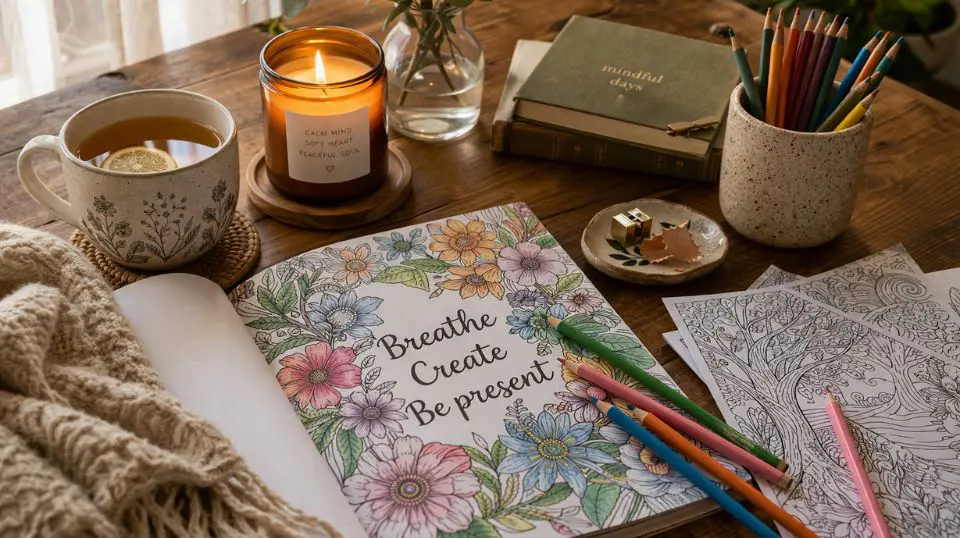
4. Choose colors intuitively. Resist the urge to plan a palette in advance. Pick what draws you in the moment. What you reach for instinctively is often a useful signal about your emotional state — and following that instinct is itself a small, meaningful act of mindfulness and health practice.
5. Color without judgment. There is no wrong way. Staying inside the lines is optional. The goal is not a beautiful finished page — it is 20 minutes of your nervous system being at rest. Approaching the page with this attitude is the core of coloring as a mindfulness wellness practice: the practice is the point, not the product.
6. Finish with a moment of reflection. Before you close the book or fold away the page, pause for 30 seconds. Notice how you feel now compared to when you sat down. Name the difference, even silently. This closes the loop, reinforces the habit, and over time makes the calming effect quicker to access. It is also a simple, powerful exercise in mindfulness and wellbeing — noticing, without judgment, how a small practice has shifted your inner state.
For a complete guide to building this into a sustainable daily routine, visit How to Create a Daily Coloring Ritual.
Which Coloring Pages Are Best for Stress Relief and Mindfulness?
Not all coloring pages serve mindfulness and wellness equally. Design complexity, subject matter, and pattern structure all affect the experience. Here is a practical guide to choosing the right page for your state.
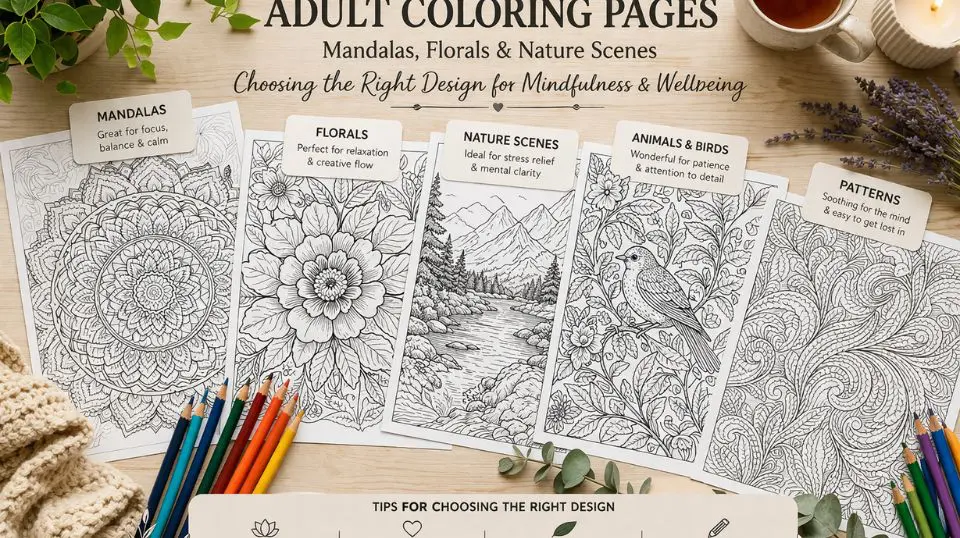
For anxiety: Simple, repetitive patterns — mandalas, geometric repeats, botanical fills. Complexity is counterproductive when the nervous system is already overloaded. The last thing an anxious brain needs is a fiddly design that demands more precision than you have to give. For mindfulness health in moments of high anxiety, simpler is always better. Explore free mandala coloring pages for a strong starting point.
For deep relaxation: Nature scenes, flowing organic shapes, soft subject matter — animals, forests, water, open skies. Nothing with tight deadlines implied in the design, nothing with exacting detail. These designs support mindfulness and wellbeing by inviting attention to wander and rest rather than track and complete. Spring coloring pages for adults are ideal for this purpose.
For emotional processing: Abstract or expressive designs where color choice carries most of the meaning. The image itself matters less here; what matters is that the act of choosing — this blue, not that one; more pressure, less pressure — is given space. This is mindfulness wellness in its most intuitive form. Stress relief coloring pages offer a range that works well for this kind of inner exploration.
For mindfulness practice: Mandala forms are particularly effective here because their radial symmetry naturally draws the eye inward — the visual equivalent of returning to the breath. The eye travels outward along a petal and returns to the center, again and again. This structure supports the recursive, gentle attention that mindfulness health practice cultivates. Find a curated selection of coloring pages for meditation.
Free Wellness Pages to Start With Today
FAQs: Coloring for Wellness — Common Questions
Q1: Is coloring actually good for mindfulness health?
A1: Yes — and the support for this goes well beyond anecdote. Research in art therapy and occupational therapy confirms coloring as a genuine tool for reducing anxiety and promoting relaxation. It activates the same neurological mechanisms that underpin formal mindfulness practice: a shift in autonomic nervous system activity, a reduction in ruminative thinking, and the induction of a focused, present-moment state. It is not a replacement for professional mental health support, but as a daily mindfulness practice, it has measurable, well-documented benefits for most people who use it consistently.
Q2: How long do I need to color to support mindfulness wellness?
A2: Most people notice a meaningful shift in their sense of calm and presence within 10 to 20 minutes. Longer sessions deepen the effect, particularly for anxiety, but the most important variable when building a mindfulness wellness habit is not duration — it is consistency. Fifteen minutes of coloring every day produces significantly more cumulative benefit than a 90-minute session once a week. The nervous system responds to regularity. The more often you create the conditions for calm, the more readily that calm arrives.
Q3: What if I’m not artistic? Can coloring still support my mindfulness and well-being?
A3: Completely. Coloring requires no artistic skill whatsoever. There is no blank canvas to fill, no composition to invent, no style to develop or defend. The design is already there — you simply engage with it. That complete removal of creative pressure is precisely what makes coloring such an accessible path into mindfulness and wellbeing. People who would never describe themselves as creative often find it the easiest mindfulness practice they have ever tried, because the only requirement is showing up.
Q4: Can coloring help with sleep as part of a mindfulness wellness routine?
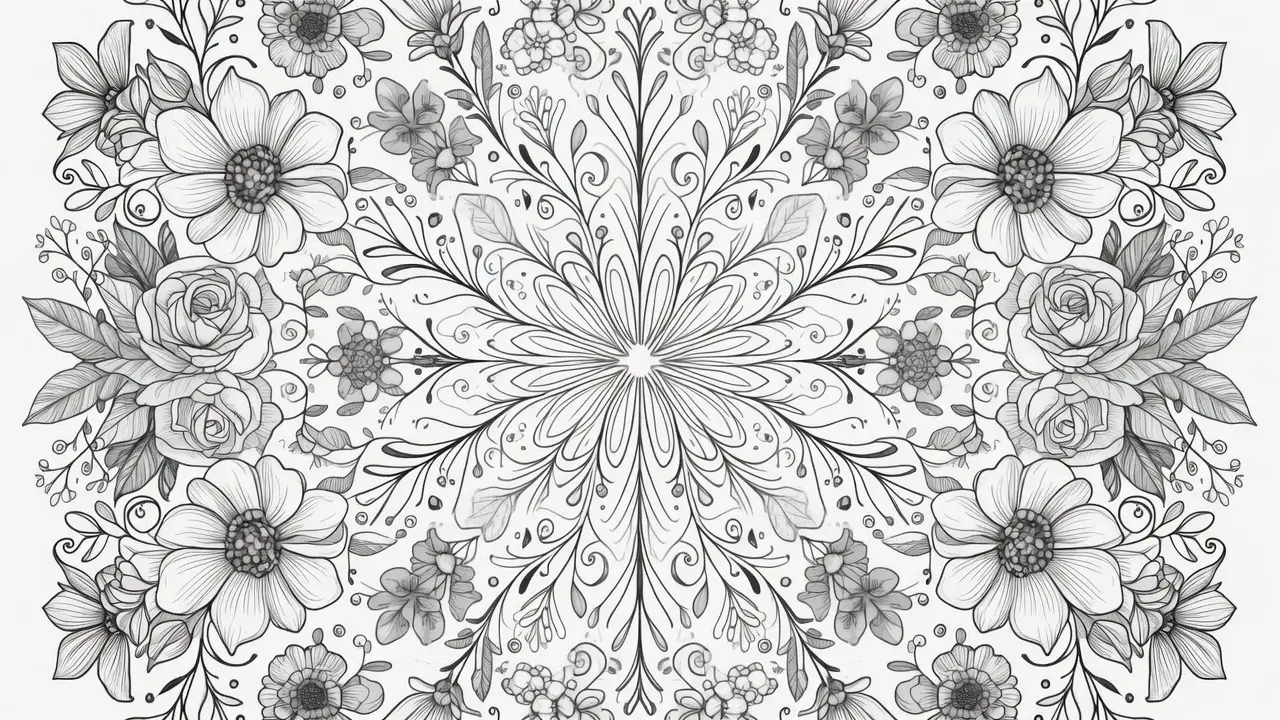
A4: Yes, used as part of a consistent wind-down practice. The key conditions are: ending the session at least 30 minutes before you intend to sleep, choosing warm-toned palettes rather than cool or bright colors, and keeping the session fully screen-free. Avoid intricate designs late at night — complexity increases alertness rather than reducing it. A simple mandala or open floral design is the better choice for evening mindfulness and wellness. Used regularly, this kind of pre-sleep coloring ritual meaningfully supports both the quality of rest and the broader practice of mindfulness and wellbeing.
Q5: Are digital coloring apps as effective as paper for mindfulness health?
A5: The screen itself introduces low-level visual stimulation — brightness, the possibility of notifications, the habitual associations your brain has built around devices — that partially offsets the calming effect coloring is meant to produce. Paper coloring, with the tactile sensation of pencil on page, the absence of alerts, and the slower pace that physical media naturally imposes, produces a more complete relaxation response for most people. Digital apps have their place and are certainly better than scrolling, but if genuine mindfulness, health, and nervous system regulation are the goal, paper consistently outperforms screens.
Your Coloring Practice Starts With One Page
The barrier to entry is as low as it gets. A single printed page. A handful of coloured pencils you probably already own. You can find five minutes somewhere in the day.
The benefits of coloring for mindfulness wellness do not require intensity — they require consistency. A brief, regular practice builds mindfulness and wellbeing quietly and cumulatively, in ways that change how you move through stressful days. The nervous system learns to expect the calm. The habit becomes its own reward. And the investment — one page, a few pencils, a few minutes — is as small as it sounds.
Download your first free wellness coloring page →
Or if you would like a structured starting point: Start with our beginner stress relief collection →
Adult Coloring Bundle Printable with Affirmations & Tracker