
How to Create a Daily Coloring Ritual
In our fast-paced, screen-saturated world, finding moments of calm can feel impossible. Yet, the simple act of filling a page with color can become a powerful anchor in your day—a sacred pause that nourishes your mind, body, and spirit. Creating a daily coloring ritual isn’t just about picking up colored pencils; it’s about intentionally crafting a practice that brings you back to yourself, again and again.
Whether you’re seeking stress relief, creative expression, or simply a few minutes of peace, establishing a mindful coloring routine can transform your relationship with both art and self-care. Let’s explore how to build a sustainable coloring practice that fits seamlessly into your life.
Why a Daily Coloring Ritual Matters
Before diving into the “how,” it’s worth understanding the “why.” A coloring meditation practice offers benefits that extend far beyond the page. Research shows that coloring activates different areas of the brain, reducing activity in the amygdala (the stress center) while engaging the cerebral cortex, which controls higher-level thinking and creativity.
When you commit to a regular coloring practice, you’re not just creating art—you’re rewiring your brain for calm. The benefits of coloring for stress relief are well-documented, including reduced cortisol levels, improved focus, and better emotional regulation. Unlike many wellness practices that require significant time commitments or specialized equipment, coloring is accessible, affordable, and adaptable to any schedule.
Understanding the Elements of a Meaningful Ritual
A ritual differs from a routine in one crucial way: intention. While a routine is a series of actions you perform regularly, a ritual imbues those actions with meaning and purpose. Your daily coloring ritual should feel less like a chore and more like a gift you give yourself.
Think about what makes an experience feel special to you. Perhaps it’s the lighting in your space, a particular scent, or the comfort of a favorite chair. These sensory elements transform coloring from a simple activity into a sanctuary moment. The key is consistency paired with mindfulness—showing up for yourself in the same way, at the same time, creates a powerful signal to your nervous system that it’s safe to relax.
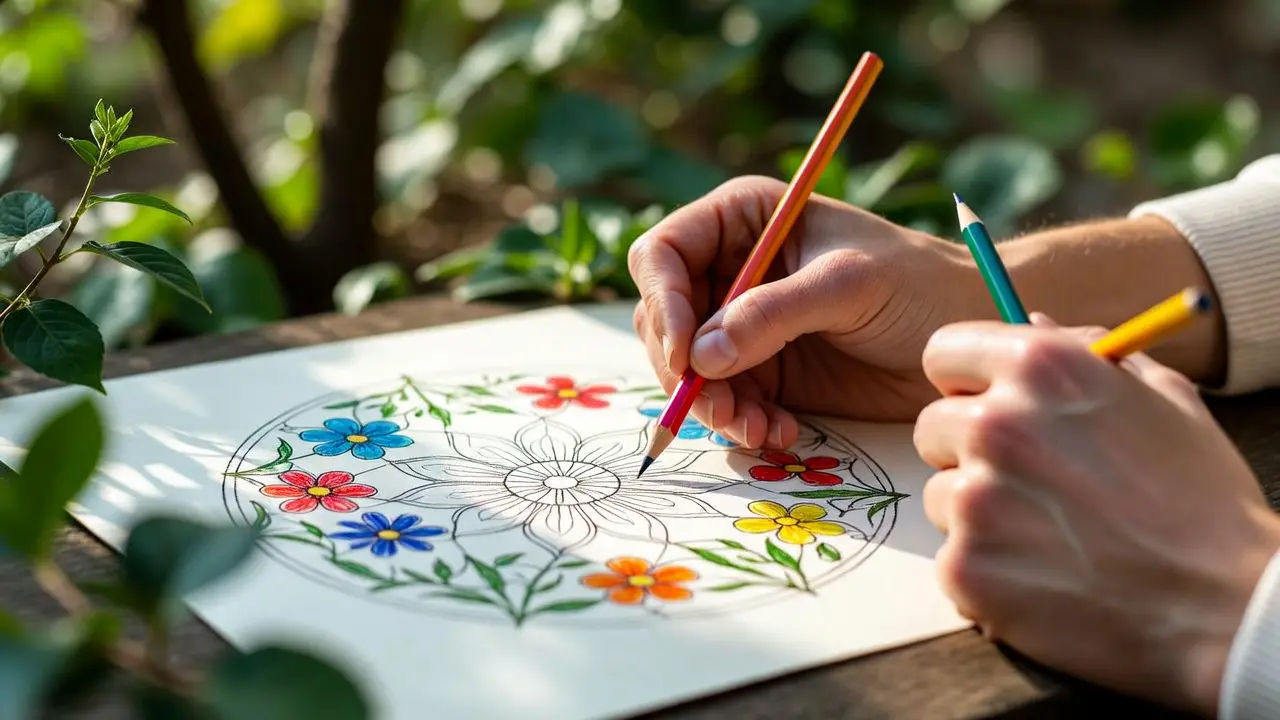
Step 1: Choose Your Sacred Time
The foundation of any sustainable practice is finding the right time. Your mindful coloring routine will only stick if it fits naturally into your existing schedule. For some, early morning coloring sets a calm tone for the day ahead. For others, evening coloring serves as a transition ritual between work and rest.
Please review your energy patterns throughout the day. Are you most creative in the morning? Does anxiety spike in the afternoon? Do you struggle to wind down at night? Match your coloring time to when you need its benefits most. Even five to ten minutes can make a profound difference when practiced consistently.
Some people find that anchoring their coloring practice to an existing habit—such as morning coffee or before bed—helps maintain consistency. This technique, called “habit stacking,” leverages the momentum of established routines to support new ones.
Step 2: Create Your Coloring Sanctuary
Environment matters deeply when cultivating a coloring meditation practice. You don’t need a dedicated studio, but you do need a space that feels inviting and free from distractions. This might be a corner of your kitchen table, a comfortable chair by a window, or even a special cushion you place on the floor.
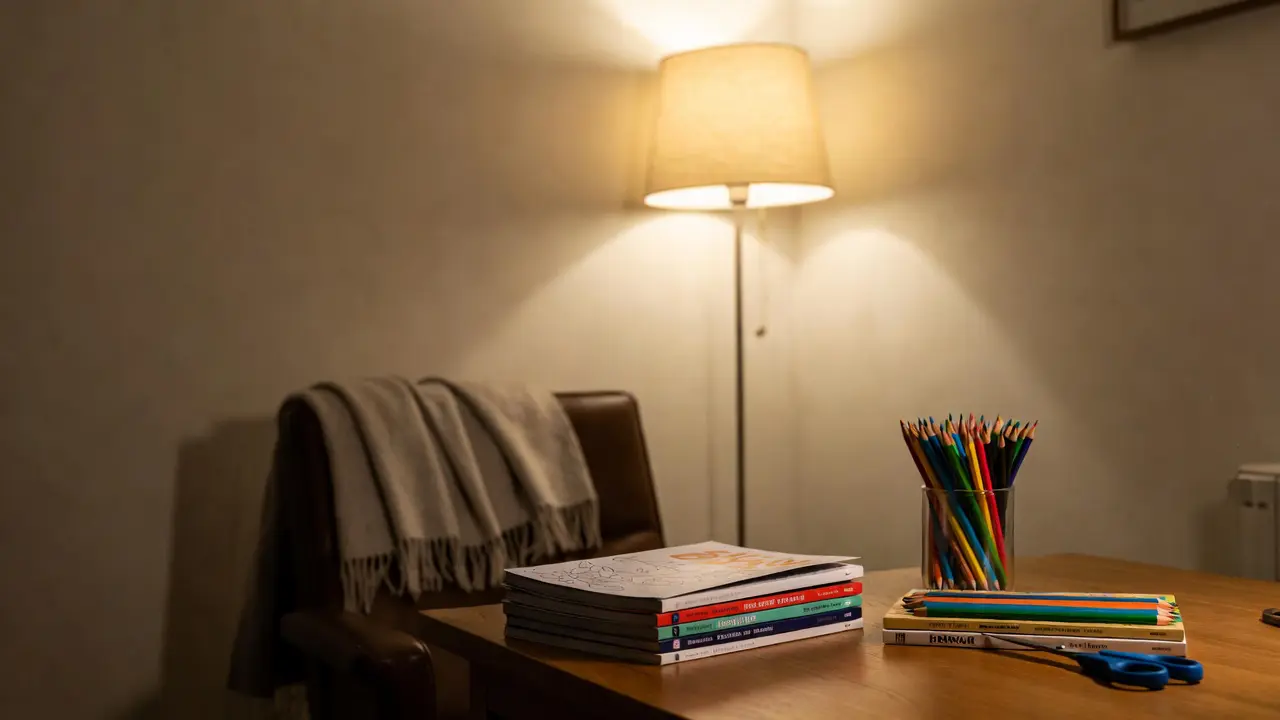
Pay attention to lighting—natural light is ideal, but a warm lamp can create equally soothing ambiance. Remove clutter from your immediate area; visual chaos can interrupt the calm you’re trying to make. Some people find that playing soft instrumental music or nature sounds enhances their practice, while others prefer silence.
Consider keeping your coloring supplies in a beautiful basket or box that is easy to access. The ritual of unpacking and setting up your materials becomes part of the practice itself. Printable adult coloring pages offer a convenient, low-pressure way always to have fresh designs ready when inspiration strikes.
Step 3: Select Your Materials Mindfully
The tools you use profoundly affect your coloring experience. While expensive supplies aren’t necessary, choosing materials that feel good in your hands enhances the sensory pleasure of coloring. Experiment with colored pencils, markers, gel pens, or even watercolor pencils to discover what you enjoy most.
Many beginners find that colored pencils offer the most control and forgiveness, making them ideal for detailed work. Others prefer the bold, immediate gratification of markers. There’s no wrong choice—only what resonates with you. Quality matters more than quantity; a small set of pigment-rich pencils will serve you better than a large set of waxy, pale ones.
If you’re starting, coloring pages for adults provide structure and variety without overwhelming choice. As your practice deepens, you might gravitate toward specific themes that speak to your current emotional or creative needs.
Step 4: Set an Intention for Your Practice
Before you begin coloring, could you take a moment to connect with why you’re here? Your intention doesn’t need to be profound—it might be as simple as “I’m here to relax” or “I want to feel creative today.” This brief pause shifts your practice from mindless activity to mindful ritual.
Some questions to guide your intention-setting:
- What do I need most in this moment—calm, joy, focus, or creative expression?
- Am I coloring to process emotions or to enjoy the process?
- How do I want to feel when I finish this session?
Your coloring meditation practice becomes most potent when you align it with your deeper needs. On anxious days, you might choose guided mandala practices for anxiety, allowing the repetitive patterns to quiet your mind. On days when you feel emotionally overwhelmed, you might explore art and emotions through color, letting your color choices reflect and release what you’re experiencing.

Step 5: Practice Presence While You Color
The true magic of a mindful coloring routine happens when you bring your full attention to the present moment. Notice the texture of the paper beneath your hand. Feel the gentle pressure of the pencil as it glides across the surface. Observe the colors as they layer and blend, creating new shades and depth.
When your mind wanders—and it will—gently bring it back to the physical sensations of coloring. The act of returning to the present moment, again and again, is the practice itself. This is why coloring is often described as meditation in motion; it offers something tangible to anchor your attention while allowing space for your mind to settle.
Some practitioners find it helpful to sync their breathing with their coloring strokes—breathing in as they choose a color, breathing out as they fill a space. Others prefer to let their breath flow naturally while maintaining soft focus on the emerging design. There’s no single “right” way; the goal is to be here, now, with your colors and your page.
Step 6: Combine Coloring with Other Wellness Practices
Your daily coloring ritual doesn’t exist in isolation—it can beautifully complement and enhance other self-care practices. Many people find that creative journaling, combined with coloring, provides a powerful outlet for both visual and verbal expression.
Consider pairing your coloring with:
- Morning pages: Write for 10 minutes, then color for 10 minutes
- Gratitude practice: List three things you’re grateful for, then color a mandala
- Meditation: Sit in silence for 5 minutes, then color mindfully for 15 minutes
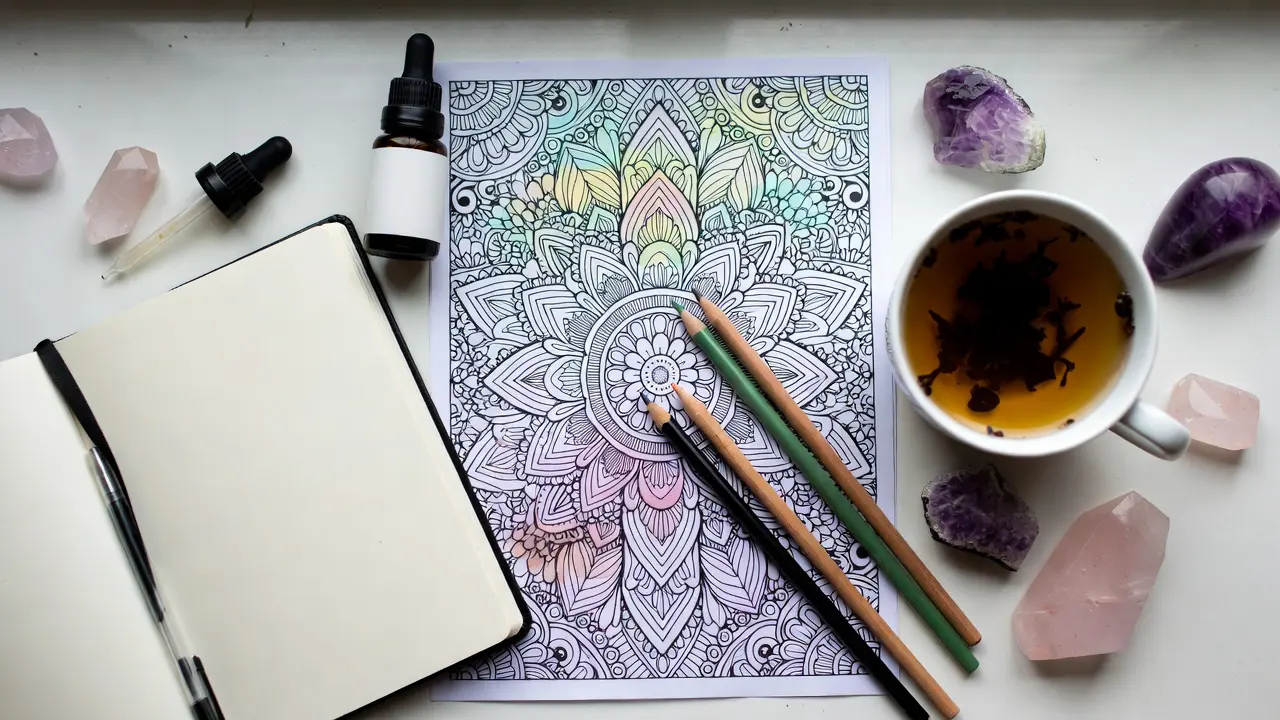
- Aromatherapy: Diffuse calming essential oils like lavender or bergamot while you color
- Movement: Do gentle stretches before and after your coloring session
This holistic approach recognizes that wellness isn’t one-dimensional. By weaving color into a broader self-care routine, you create multiple entry points for relaxation and renewal. As explored in Mindful Creativity & Wellness: How Art Nourishes Your Inner World, creative practices engage distinct neural pathways and offer benefits that complement traditional meditation or exercise.
Step 7: Remove Pressure and Embrace Imperfection
One of the biggest obstacles to maintaining a coloring meditation practice is perfectionism. When you approach coloring as performance rather than practice, stress replaces relaxation. Remember: the goal isn’t to create gallery-worthy art; it’s to show up for yourself with kindness and presence.
Allow colors to go outside the lines. Experiment with “wrong” color combinations. Leave some sections unfinished if that’s what feels right in the moment. Your daily coloring ritual is a judgment-free zone where process matters infinitely more than product.
Some days, you’ll create pages that delight you. Other days, you might color for five minutes and feel complete. Both are equally valid. The power of ritual lies in consistency, not perfection. Trust that each time you pick up your colored pencils, you’re nourishing yourself, regardless of the outcome.
Recommended Resources for Your Coloring Journey
To support your developing practice, here are thoughtfully curated resources that align with different moods and intentions:
For Intricate, Meditative Focus
Printable Mandala Coloring Sheets for Adults offer symmetrical designs that naturally guide your attention inward. The circular patterns have been used for centuries as meditation tools, making them ideal for deep focus and stress relief.
For Nature-Inspired Calm
Floral Coloring Pages: Botanical Designs for Relaxation bring the serenity of gardens and natural beauty to your practice. These detailed botanical illustrations work wonderfully for those who find peace in nature’s patterns.
For Gentle Morning Practice
Spring Coloring Pages capture the hopeful, renewing energy of new beginnings. These lighter, more delicate designs are perfect for starting your day with optimism and creative flow.
Tracking Your Progress Without Judgment
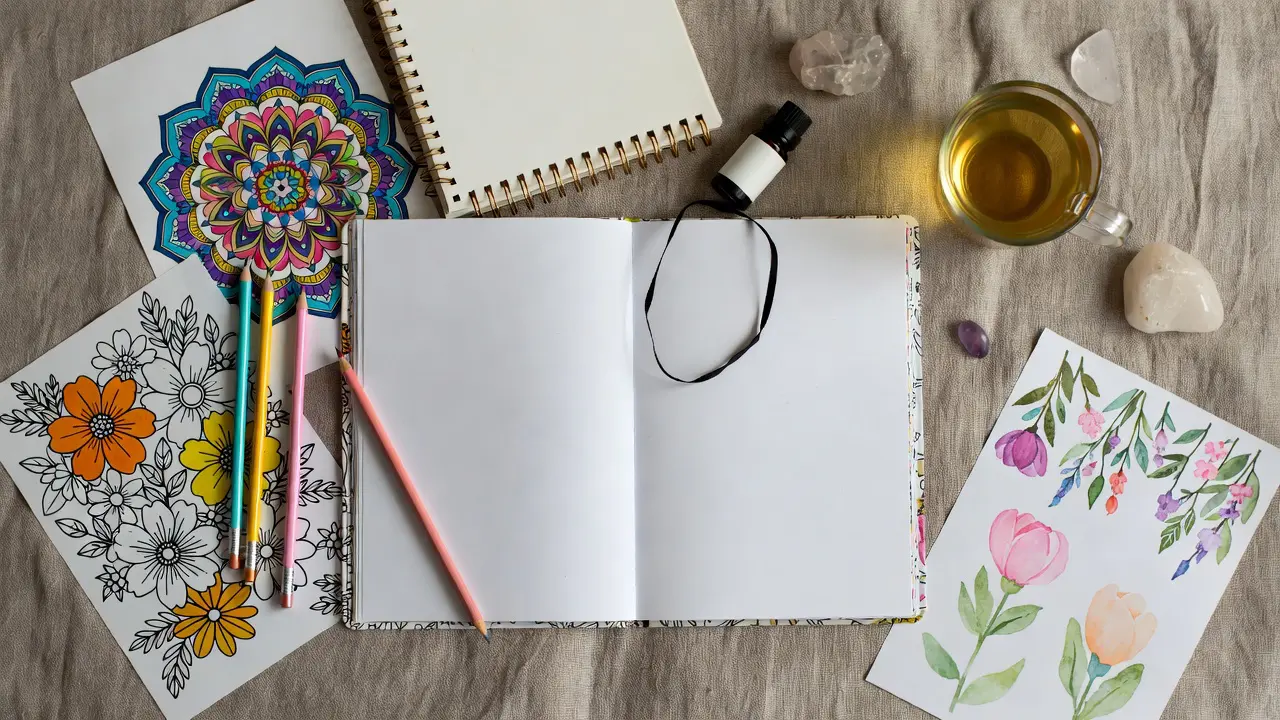
While your daily coloring ritual shouldn’t be about achievement, gentle tracking can help you understand patterns and celebrate consistency. Consider keeping a simple coloring journal where you note:
- Date and time you colored
- How long have you practiced
- Your emotional state before and after
- Any insights or observations
This isn’t about creating pressure to color every single day; it’s about developing self-awareness. You might notice that you color more consistently in the morning than in the evening, or that certain types of designs serve different emotional needs. These insights help you refine your ritual over time.
Remember that missing a day doesn’t mean you’ve failed. Life happens. What matters is your willingness to return to the practice, again and again, with compassion for yourself and curiosity about what each session will bring.
Deepening Your Practice Over Time
As your mindful coloring routine becomes established, you should explore new dimensions of the practice. This evolution is healthy and keeps your ritual fresh and engaging. Consider:
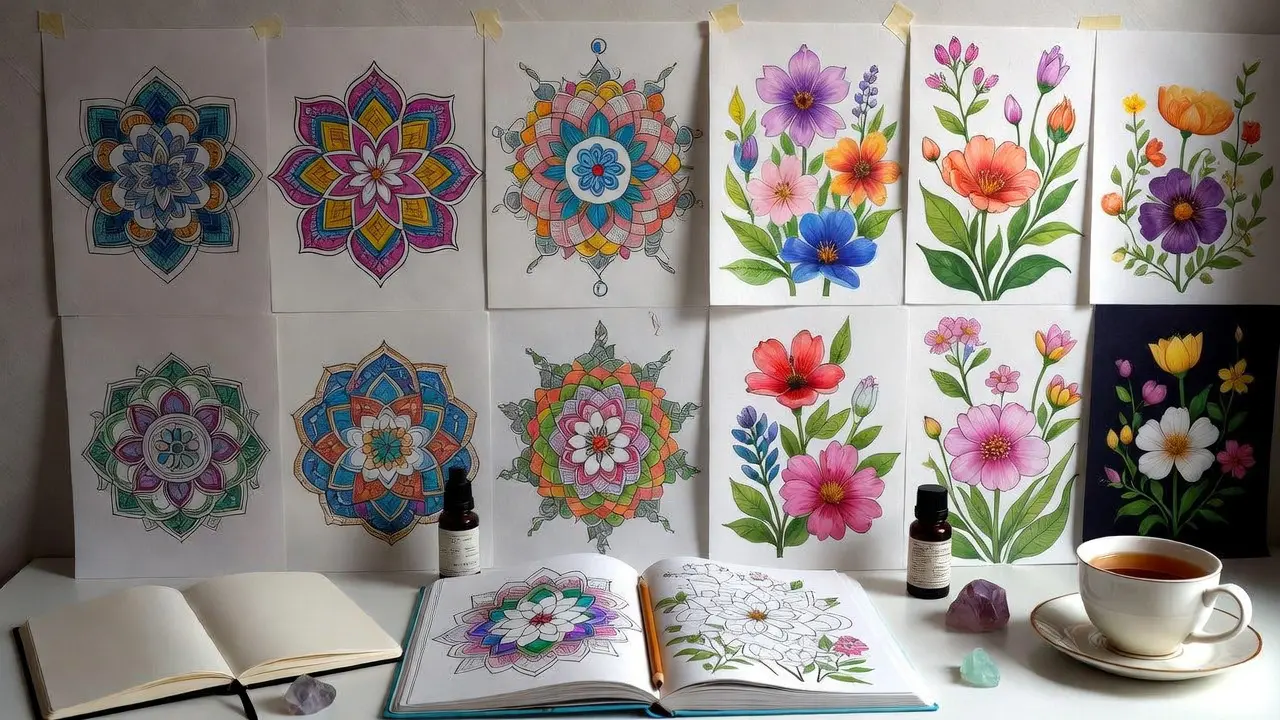
Themed series: Color all the mandalas in a collection, or work through seasonal designs throughout the year. Garden Mandala Coloring offers a beautiful starting point for nature-themed progression.
Color challenges: Dedicate a week to working only with cool colors, or create a color palette inspired by a favorite place or memory.
Skill development: While the focus isn’t on performance, naturally developing your coloring techniques can enhance enjoyment. Explore different shading methods, blending techniques, or layering approaches when you feel inspired to experiment.
Community connection: Share your colored pages with friends or online communities. Seeing how different people interpret the same design can be inspiring and reduce the isolation some people feel in creative practice.
Making Your Ritual Sustainable
The difference between a ritual that lasts and one that fades is sustainability. Build your coloring meditation practice on a foundation that can weather life’s inevitable changes. Some principles for longevity:
Start smaller than feels necessary: Five minutes daily is more valuable than thirty minutes once a week. You can continually expand, but starting too ambitiously often leads to burnout.
Link it to an existing habit: As mentioned earlier, habit stacking works. “After I pour my morning coffee, I color one section of my current page,” creates a natural flow that doesn’t require additional willpower.
Please make sure to prepare your space the night before: Remove friction by setting out your coloring book and pencils before you need them. This small act signals your commitment to the practice and makes it easier to follow through.
Permit yourself to adapt: Your ritual might look different during busy weeks, vacation, or periods of stress. That’s not only okay—it’s wise. Rigidity kills rituals; flexibility sustains them.
Seasonal celebration coloring ideas and traditions.
The Ripple Effects of Regular Practice
When you commit to a daily coloring ritual, you’re not just gaining a hobby—you’re cultivating a relationship with yourself. Over time, practitioners often report unexpected benefits beyond stress relief: increased patience in other areas of life, greater appreciation for small details, improved ability to focus on single tasks, and a general sense of having a “home base” they can return to when life feels chaotic.
Your coloring practice serves as a barometer of your inner state. On days when you resist sitting down to color, it might signal that you need it most. On days when you lose yourself entirely in the process, you’re experiencing the flow state that psychologists recognize as essential for well-being and creativity.
This practice of returning to yourself, of creating beauty for its own sake, of honoring your need for calm—these are radical acts of self-care in a world that constantly demands more, faster, louder. Your mindful coloring routine is a quiet rebellion, an insistence that your inner world deserves attention and care.
Your Invitation to Begin
You don’t need to wait for the perfect moment, the perfect supplies, or the perfect plan to start your coloring meditation practice. Today—right now, if you wish—you can claim a few minutes for yourself, pick up a colored pencil, and make a mark on a page. That’s all it takes to begin.
Let go of expectations about what your ritual “should” look like. Some days it will feel transcendent; other days it will simply feel like coloring. Both are valuable. The commitment is to show up for yourself, to practice presence, and to trust that in these small, consistent moments of creative attention, something meaningful is growing.
Your daily coloring ritual awaits—not as one more thing on your to-do list, but as a gift you give yourself. A permission slip to slow down. A reminder that you are worthy of beauty, calm, and creativity, simply because you exist.
May your practice bring you home to yourself, one colored stroke at a time.
🎨 Not sure where to start?
Here are our most loved products.
Frequently Asked Questions
🎨 Not sure where to start? Here are our most loved products.
Q1: How much time should I dedicate to my daily coloring ritual?
A: The ideal duration is whatever you can maintain consistently. For most people, starting with 5-10 minutes daily is more sustainable than longer, sporadic sessions. As your habit strengthens, you can naturally expand to 15-30 minutes if desired. Remember that consistency matters more than duration—five focused minutes every day creates more benefit than an hour once a week. Listen to your schedule and energy levels, and honor what feels doable rather than aspirational.
Q2: What’s the best time of day to practice my mindful coloring routine?
A: The “best” time is the one that works for your lifestyle and meets your needs. Morning coloring can set a calm, intentional tone for your day and may improve focus and mood throughout the day. Evening coloring helps transition from work mode to rest mode and can improve sleep quality by reducing screen time and quieting mental chatter. Lunch break coloring offers a midday reset that combats afternoon energy dips. You can experiment with different times each week and see how you feel. Your body and schedule will reveal the optimal window for your practice.
Q3: I’m not artistic—can I still benefit from a coloring meditation practice?
A: Absolutely. Coloring requires zero artistic skill or talent. The pages already have the designs; you’re simply adding color. In fact, people who don’t identify as “artistic” often benefit most from coloring because they approach it without the pressure of creating something original. Your coloring meditation practice is about the process, not the product. The therapeutic benefits come from the focused attention, repetitive motion, and creative engagement—not from producing gallery-worthy art. Let go of any self-judgment and enjoy the sensory experience of color meeting paper.
Q4: What if I miss a day (or several days) of my daily coloring ritual?
A: Missing days is entirely normal and doesn’t mean you’ve failed. Life happens, and rigid adherence to any practice can create stress rather than relieve it. If you miss a day, resume your routine the next day without guilt or self-criticism. Some people find it helpful to think of their practice not as a “daily” ritual but as a “regular” ritual—most days, not all days. The power lies in your willingness to return, again and again, not in never breaking the streak. Self-compassion is as important as consistency.
Q5: Should I finish every coloring page I start?
A: There’s no rule requiring you to complete every page. Some designs might take multiple sessions to finish, which is terrific—you have something familiar to return to. Other pages might feel complete to you even when sections remain uncolored. Sometimes you’ll color halfway through a design and realize it’s not serving you that day, and it’s perfectly fine to start a fresh page. Your coloring practice is about honoring your present-moment needs, not checking boxes. Do what feels right, and release any pressure around completion.
Q6: How can I maintain my coloring ritual during stressful or busy periods?
A: During challenging times, simplify rather than abandon your practice. Reduce the time commitment (even 2-3 minutes counts); keep your supplies visible and easily accessible; choose simpler designs that require less decision-making; or consider coloring just one small section rather than the whole page. Sometimes, ironically, we most need our grounding rituals when we feel we have the least time for them. Think of your coloring practice as essential self-maintenance, like brushing your teeth, not a luxury to sacrifice when life gets hectic. The consistency of showing up, even briefly, maintains the neural pathways and habits you’ve built.
Q7: Can I combine my coloring practice with other activities like watching TV or listening to podcasts?
A: This depends on your intention. If your goal is mindful presence and stress relief, multitasking will diminish the benefits. The therapeutic power of a coloring meditation practice comes from focused attention—when you split that attention with media consumption, you miss much of the calming effect. However, if your goal is simply creative enjoyment and relaxation (not meditation), gentle background music or nature sounds can enhance the experience. Consider your purpose: on days when you need deep calm, color in silence or with instrumental music only. On days when you’re coloring for fun or creativity, more stimulation may be fine. Notice how you feel after sessions with and without media, and let that guide your choices.
Q8: What types of coloring pages work best for building a mindful routine?
A: Different designs serve different purposes in your practice. Mandalas and geometric patterns are excellent for meditation and anxiety relief because their symmetry naturally draws your focus inward and creates a hypnotic rhythm. Floral and nature-inspired designs tend to evoke calm and peace, making them ideal for stress relief. Intricate, detailed pages demand concentration that can quiet mental chatter, while simpler designs allow for more free-flowing, intuitive color choices. You can start by experimenting with different styles to find out what resonates with you. Many people maintain variety by rotating between mandala, nature, and other themes based on their mood and needs each day. Please trust your intuition about what design calls to you in any given moment.
Creating a daily coloring ritual has transformed my mornings. This guide made it easy to build the habit.
The ritual framework helped me stick with coloring consistently. It’s become my favorite form of self-care.
I use these pages in my art therapy practice as supplemental materials. They’re appropriate for a wide range of participants and always well received.