
Coloring and Mindfulness: How Mindfulness Coloring Pages for Adults Quiet the Mind and Restore Calm
There is a moment that happens somewhere between choosing a color and filling in the first petal of a mandala. The mental chatter drops. Your breathing slows. The to-do list that was screaming at the top of your mind goes quiet. This is coloring and mindfulness working together — and it is not a coincidence or a pleasant side effect. It is the whole point.
Adults around the world have rediscovered what children have always known intuitively: putting color to paper is one of the most effective ways to pull attention into the present moment. And when that practice becomes intentional — when you sit down with dedicated mindfulness coloring pages rather than a random doodle — something more significant begins to happen. Stress begins to dissolve. Creativity opens up. For many people, coloring and mindfulness together become a daily ritual they genuinely look forward to.
This article explores the science and practice behind coloring and mindfulness, how to build a habit that actually sticks, and how to choose the right mindfulness coloring pages for adults that match where you are emotionally and creatively on any given day.
Positive Psychology — “What Is Mindful Coloring? (+39 Creative Mindfulness Ideas)” Carl Jung believed mandalas had a soothing effect and incorporated mandala drawing into the treatment of his clients. Positive Psychology: The article covers mindful coloring, its relationship to creativity, and how to incorporate it into daily life. 🔗 https://positivepsychology.com/mindfulness-coloring-art/
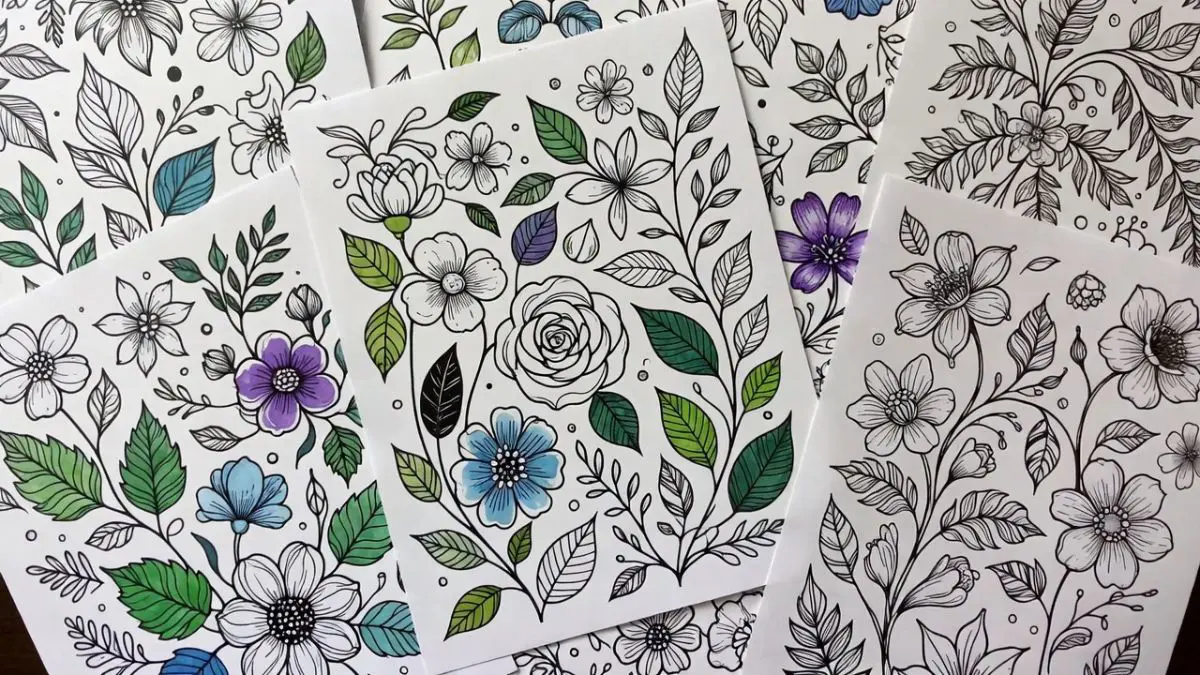
Why Coloring and Mindfulness Go Together So Naturally
Mindfulness, at its core, is the practice of sustained, non-judgmental attention to the present moment. Most mindfulness techniques — breathing exercises, body scans, seated meditation — require you to anchor awareness to something specific so that the restless mind has a focus point. Coloring does exactly the same thing, but with your hands and eyes working together.
When you work on detailed mindfulness coloring pages, your visual attention is fully engaged. Your hands are occupied with a purposeful, repetitive motion. There is no screen demanding a response, no inbox filling up, no conversation requiring an answer. Your nervous system registers this as safety, and the body responds accordingly: cortisol drops, heart rate steadies, and the parasympathetic nervous system — the branch responsible for rest and recovery — begins to activate.
Researchers at the University of the West of England found that just ten minutes of coloring was enough to significantly reduce anxiety and induce a state closely resembling meditative calm. Other studies point to coloring and mindfulness activities as tools that activate the brain’s prefrontal cortex — the region associated with focus and emotional regulation — while quieting the amygdala, which drives the stress response.
This makes coloring and mindfulness fundamentally different from passive relaxation like watching television or scrolling on a phone, both of which have been shown to increase rumination rather than reduce it. Mindfulness coloring pages give the mind just enough to do — but not so much that it becomes overwhelming.
The Specific Benefits of Mindfulness Coloring Pages for Adults
Not all coloring pages are created equal when it comes to mindfulness. A chaotic, asymmetrical design with no clear visual rhythm can feel stimulating rather than calming. Mindfulness coloring pages for adults are specifically designed with psychological ease in mind — repeating patterns, radial symmetry, graduated complexity, and visual flow that naturally guides the eye without demanding too much.
Stress reduction that compounds over time. A single session with mindfulness coloring pages can lower stress in the moment. But when coloring and mindfulness become a regular practice — even twenty minutes a day, three or four times a week — the cumulative benefits are significant. Your nervous system begins to recognize the ritual as a reliable signal to shift into a calmer state, much the way experienced meditators describe an increasing ease of dropping into stillness as they sit more consistently.
Improved focus and attention span. Many adults who struggle with focus — especially in an era of constant notifications and competing demands — find that working with mindfulness coloring pages for adults trains the attentional muscle in a gentle, sustainable way. Staying with a single design, deciding color by color and section by section, builds the same kind of sustained concentration that meditation teachers spend years cultivating in their students.
A creative outlet that requires no prior skill. Unlike painting or drawing, mindfulness coloring pages remove the intimidating blank page. The structure is already there. You simply respond to it. This makes coloring and mindfulness genuinely accessible to people who would never describe themselves as artistic, and who may have spent decades believing that creativity was not available to them.
Emotional processing and mood regulation. Therapeutic practitioners increasingly incorporate mindfulness coloring pages for adults into their work with clients managing anxiety, depression, grief, and trauma. The structured repetition of coloring interrupts rumination, while the creative choices involved — which colors feel right, which areas to leave lighter — allow emotional expression that does not require words. Coloring and mindfulness together offer a way to feel without having to explain.
If you’re looking to relax and unwind, explore our complete guide on Stress Relief Coloring Pages: The Complete Guide to Mindfulness, Calm, and Anxiety Relief to discover how coloring can support your mental well-being.
How to Build a Coloring and Mindfulness Practice That Sticks
The difference between a one-time experiment and a genuine practice comes down to how deliberately you set up the experience. Here is how to make coloring and mindfulness a daily habit rather than an occasional treat.
Create a dedicated space. You do not need a studio or a separate room. Even a corner of your kitchen table, used consistently for this one purpose, sends a signal to your brain that it is time to shift gears. Keep your mindfulness coloring pages and supplies in one place so there is no friction between the intention to practice and the act of beginning.
Set a time, not a duration. Rather than deciding you will color “for an hour,” commit to coloring at a specific time — after dinner, during a lunch break, or in the thirty minutes before bed. Short, consistent sessions of coloring and mindfulness are far more effective than long, irregular ones. The regularity is what creates the neurological benefit over time.
Begin with intention. Before you pick up your first pencil, take three slow breaths. Notice how you feel right now. This brief pause anchors the session in mindfulness from the start and distinguishes it from simply passing the time with a coloring page.
Choose your mindfulness coloring pages based on your current emotional state. If you are highly agitated, a simple, open design with large, flowing areas will be more effective than a dense, intricate pattern that requires intense concentration. If you are feeling flat or numb, a rich, complex design with many small sections can activate engagement and pull you gently forward. The emotional intelligence of your choice matters as much as the act of coloring itself.
Stay with the sensation. Notice the physical experience — the pressure of the pencil, the sound it makes against the paper, the way color builds layer by layer. When your mind wanders (and it will), gently return attention to what your hand is doing. This is the practice of coloring and mindfulness in its simplest form: noticing and returning.
Choosing the Right Mindfulness Coloring Pages for Adults
The quality of the design you work with genuinely shapes the depth of the experience. Here are the three most important principles for selecting mindfulness coloring pages for adults that will actually support your practice.
Radial symmetry creates natural calm. Mandala-style designs are among the most effective choices for mindfulness coloring pages because the eye is drawn naturally toward a center point and then moves outward in a rhythm that mirrors the breath itself. There is an inherent sense of order and completion in these designs that communicates balance even before you apply a single stroke of color.
Complexity should match your intention. If your goal is deep meditative quiet, choose mindfulness coloring pages with small repeated elements that require sustained, patient attention. If your goal is emotional release and creative expression, choose designs with larger, more open forms that welcome freer coloring. Both are valid — the key is matching the design to where you are right now.
Recommended for This Topic


Themes reach deeper than you might expect. A nature-based scene — florals, botanicals, organic curves — tends to activate what researchers call restorative attention pathways: the same neurological networks that recharge when we spend time outdoors. Floral mindfulness coloring pages for adults tap into this same neurological response, which is one reason so many people describe nature-themed designs as especially soothing compared to purely geometric ones.
Common Mistakes That Undermine the Mindfulness Effect
There are a few habits that quietly shift coloring from a mindfulness practice back into an ordinary activity — worth knowing so you can recognize and avoid them.
Coloring while watching television or listening to podcasts. Both split your attention and prevent the single-pointed focus that makes mindfulness coloring pages effective. Background music without lyrics is fine — it can actually deepen the meditative quality of a session. But narrative content competes directly with the kind of sustained attention that coloring and mindfulness require.
Judging the outcome. Mindfulness coloring pages are not about producing something beautiful. They are about what happens inside you while you work. The moment you start evaluating whether the page “looks right,” you have stepped out of the present moment and into self-critical thinking — the opposite of mindfulness.
Choosing pages that are too complex for your current state. A highly intricate design on a high-anxiety day can increase rather than reduce stress. One of the real skills in a coloring and mindfulness practice is learning to match your choice of mindfulness coloring pages to your actual emotional state on a given day, rather than always reaching for the same design out of habit.
Rushing. The mindfulness benefit is dose-dependent. A hurried three-minute fill is not the same as twenty unhurried minutes of full presence. Give yourself enough uninterrupted time that the nervous system can actually settle into the practice.
Calm Blog — “How Mindfulness-Based Art Therapy Can Boost Your Mental Health” Studies suggest that people who practice mindfulness-based art therapy (MBAT) experience less stress and even find relief from symptoms related to trauma and anxiety. Calm 🔗 https://www.calm.com/blog/mindfulness-art-therapy
🎨 Not sure where to start?
Here are our most loved products.
Frequently Asked Questions
🎨 Not sure where to start? Here are our most loved products.
Q1: Does coloring actually count as mindfulness, or is it just a creative activity?
A: Coloring absolutely qualifies as mindfulness when practiced with attention and intention. Mindfulness is not defined by the technique, but by the quality of present-moment awareness you bring to it. When you sit with mindfulness coloring pages and keep your attention on the sensation of the pencil, the colors you are choosing, and the design unfolding in front of you — rather than replaying yesterday’s conversation or planning tomorrow’s schedule — you are practicing mindfulness. Several clinical researchers have validated the combination of coloring and mindfulness as producing measurable reductions in anxiety and cortisol levels, equivalent in some studies to the effects of guided meditation.
Q2: How long do I need to color for it to have a real effect on my stress levels?
A: Studies suggest that meaningful stress reduction from mindfulness coloring pages begins after roughly ten to fifteen minutes of focused coloring. The effects deepen significantly with longer sessions and with regular practice over time. Even twenty minutes three times a week is enough to begin noticing cumulative changes in your baseline stress level and your ability to drop into a calmer state more quickly. Coloring and mindfulness work best as a consistent practice rather than an occasional remedy applied only in moments of crisis.
Q3: Are some coloring page designs better for mindfulness than others?
A: Yes, design matters considerably. Radially symmetric designs like mandalas are particularly effective as mindfulness coloring pages because the eye is naturally drawn inward and the pattern creates a visual rhythm that mirrors slow, deliberate breathing. Highly asymmetrical designs can feel stimulating rather than calming. Nature-based imagery — florals, botanicals, flowing organic forms — activates the brain’s restorative attention networks in ways that purely abstract designs may not. The best mindfulness coloring pages for adults are those that draw your attention in without requiring too much effort to follow.
Q4: Can mindfulness coloring help with anxiety and depression?
A: Many people with anxiety and depression find mindfulness coloring pages a genuinely helpful complementary practice. For anxiety, the focused attention that coloring and mindfulness require interrupts the ruminative thought loops that feed anxious states. For depression, the gentle creative activation and color-choice-making can help counter the emotional flatness and withdrawal that characterize low mood. That said, mindfulness coloring pages for adults are a supportive practice, not a clinical treatment. If you are managing anxiety or depression, please work with a qualified mental health professional alongside any self-care practices you adopt.
Q5: I have not colored since I was a child. Is it too late to start, and will I be any good at it?
A: It is absolutely not too late, and being skilled at it is not the point. Mindfulness coloring pages for adults require no prior artistic background and no particular talent. The structure of the design is already there — your only job is to show up with a pencil and some colors and stay present with the process. Many people find that the absence of any performance pressure is precisely what makes coloring and mindfulness so freeing: there is nothing to prove and nothing to get right.
Q6: What supplies do I need to get started with mindfulness coloring pages?
A: Very little. A set of colored pencils — even an inexpensive one — is enough to begin. Colored pencils are recommended over markers for mindfulness coloring pages because they allow for subtle shading, pressure variation, and layered blending, which keeps the hand more engaged and makes the coloring and mindfulness experience tactilely richer. Beyond pencils, a printed page and a flat surface are all you need. Keep the setup simple so there is no friction between the intention to color and the act of sitting down to do it.
The Practice Is the Point
There is a quiet shift happening in how adults approach daily wellbeing. People are increasingly skeptical of solutions requiring expensive equipment, elaborate routines, or significant chunks of time carved out of already-full days. They are looking for practices that are simple, accessible, and genuinely effective — ones that can be woven into ordinary life without disruption.
Coloring and mindfulness fit that description exactly. A printed mindfulness coloring page, a handful of pencils, twenty minutes of attention. No app required. No subscription. No performance. Just the slow, satisfying work of choosing a color and filling in a space, one section at a time, until the mind goes quiet and the body remembers what rest actually feels like.
If you are new to this, start with a single session and simply notice what happens. If you already work with mindfulness coloring pages occasionally, consider making the practice more intentional — choosing your designs more carefully, setting aside a consistent time, beginning each session with a breath. The practice of coloring and mindfulness deepens exactly as much as you bring yourself to it. And that, it turns out, is more than enough.
All mindfulness coloring pages mentioned in this article are available as instant-download printable PDFs from egcreativity.art. Print at home, at a local copy shop, or use with a digital drawing tablet — the choice is yours.