
Art & Emotions: Using Color to Explore Feeling
Have you ever noticed how a vibrant yellow can lift your spirits, or how a deep blue seems to wash over you with calm? The relationship between art and emotions is profound and ancient, woven into the very fabric of human expression. When we pick up colored pencils, markers, or crayons, we’re not just filling in shapes—we’re translating the invisible language of our inner world into something tangible and real.
Color has the remarkable ability to bypass our logical mind and speak directly to our feelings. This connection between color and emotions in art isn’t just poetic imagination; it’s rooted in psychology, neuroscience, and centuries of artistic practice. Whether you’re exploring mindful creativity for the first time or deepening your existing practice, understanding how to use color as an emotional tool can transform your artistic journey into a powerful form of self-discovery and healing.
The Psychology Behind Color and Emotions in Art
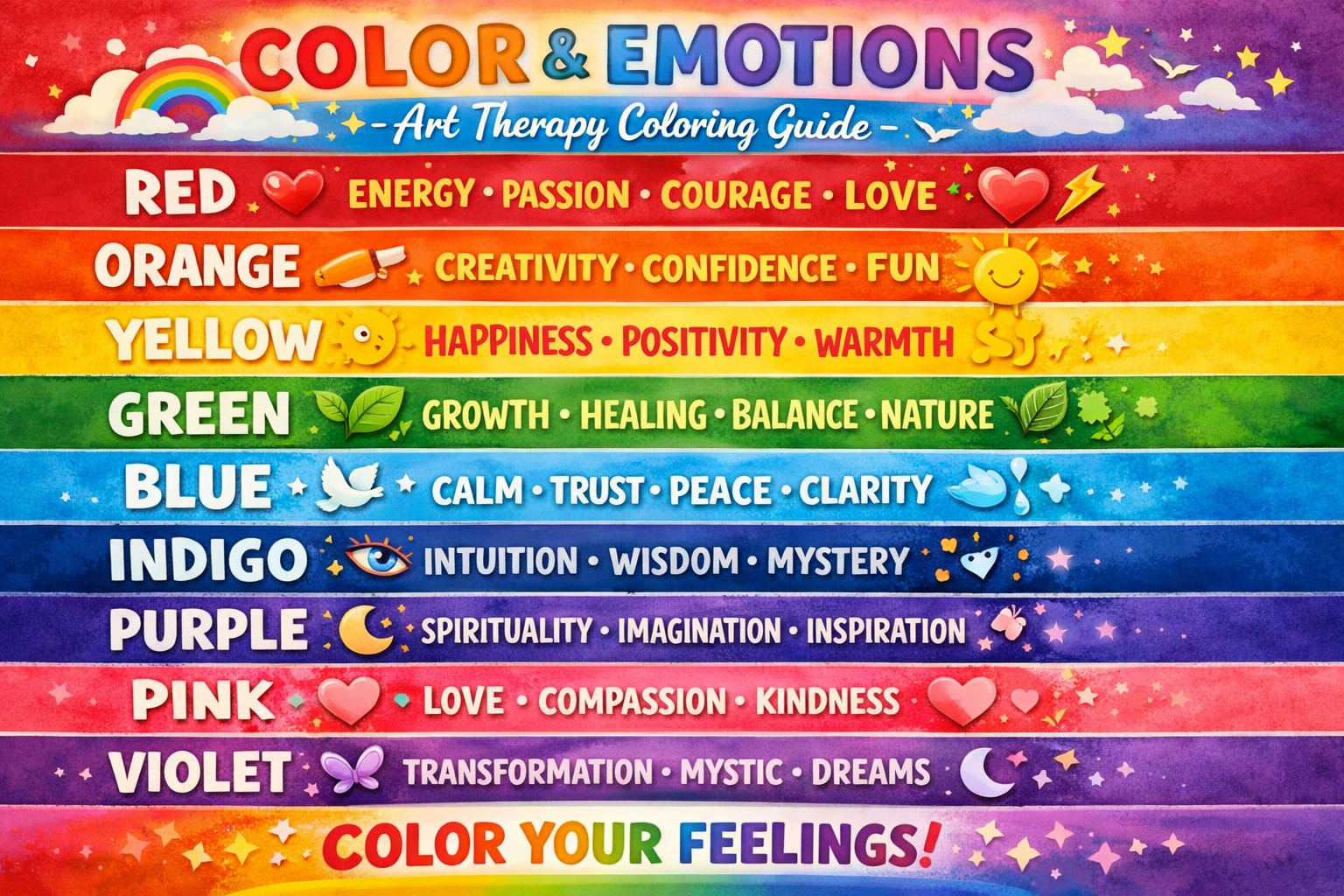
Every color carries its own emotional weight—red pulses with energy, passion, and sometimes anger. Blue soothes and calms, evoking tranquility or melancholy. Yellow radiates joy and optimism, while purple suggests mystery and spirituality. These associations aren’t arbitrary—they’re shaped by nature, culture, and our personal experiences.
When we engage in using color to express emotions, we tap into a universal language that transcends words. A child who scribbles furiously in red may be processing anger or excitement. An adult who gravitates toward soft pastels during a coloring session might be seeking comfort and peace. The colors we choose reveal what we’re feeling, often before we can articulate it ourselves.
This is why art therapy coloring has become such a valuable practice for mental health and emotional wellness. Through the simple act of selecting and applying colors, we create a safe space to explore, acknowledge, and transform our emotional landscape. As discussed in our guide on Mindful Creativity & Wellness, this practice nourishes your inner world in ways that words often cannot.
Understanding Your Color and Emotions in Art Vocabulary
Before you can use color as an emotional tool, it helps to develop your personal color vocabulary. While cultural associations exist—red for love or danger, green for growth or envy—your individual experiences shape how colors speak to you. Perhaps blue reminds you of childhood summers by the ocean, or orange evokes memories of autumn gatherings with family.
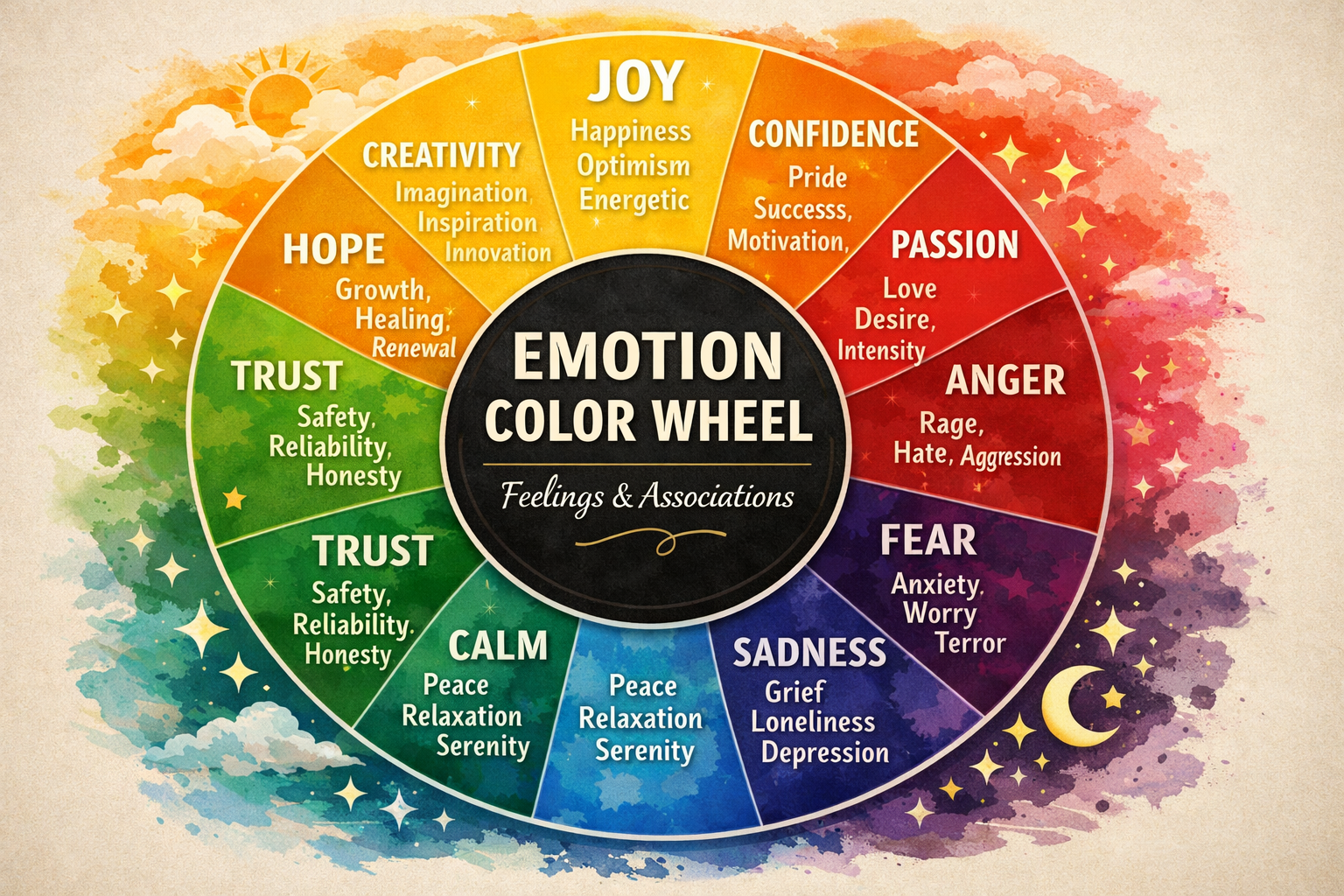
Creating your own emotional color and using an emotions guide in art can be enlightening. Take a quiet moment with your coloring supplies and ask yourself: What does each color make me feel? Don’t overthink it—let your intuition guide you. You might discover that yellow doesn’t bring you joy but rather anxiety, or that black isn’t depressing but grounding and powerful. There are no wrong answers in emotional expression through art.
Common Color-Emotion Connections
While your personal associations matter most, understanding traditional color psychology can deepen your practice:
Warm Colors: Red, orange, and yellow tend to energize and stimulate. They can represent passion, creativity, anger, or joy. When you’re feeling stuck or lethargic, reaching for warm colors can help energize your art and emotions.
Cool Colors: Blue, green, and purple are typically calming and soothing. They often relate to peace, sadness, healing, or introspection. If you’re overwhelmed or anxious, cool colors can help regulate your nervous system, as explored in our article on Benefits of Coloring for Stress Relief.
Neutral Colors: Brown, gray, and beige can ground and stabilize. They represent earthiness, wisdom, or sometimes emptiness. These colors provide balance and can help you feel more centered when emotions run high.
Black and White: Often seen as opposites, both hold powerful emotional significance. Black can represent mystery, elegance, or the unknown, while white suggests clarity, purity, or new beginnings.
Practical Techniques for Using Color to Explore Feelings
The Color Check-In Practice
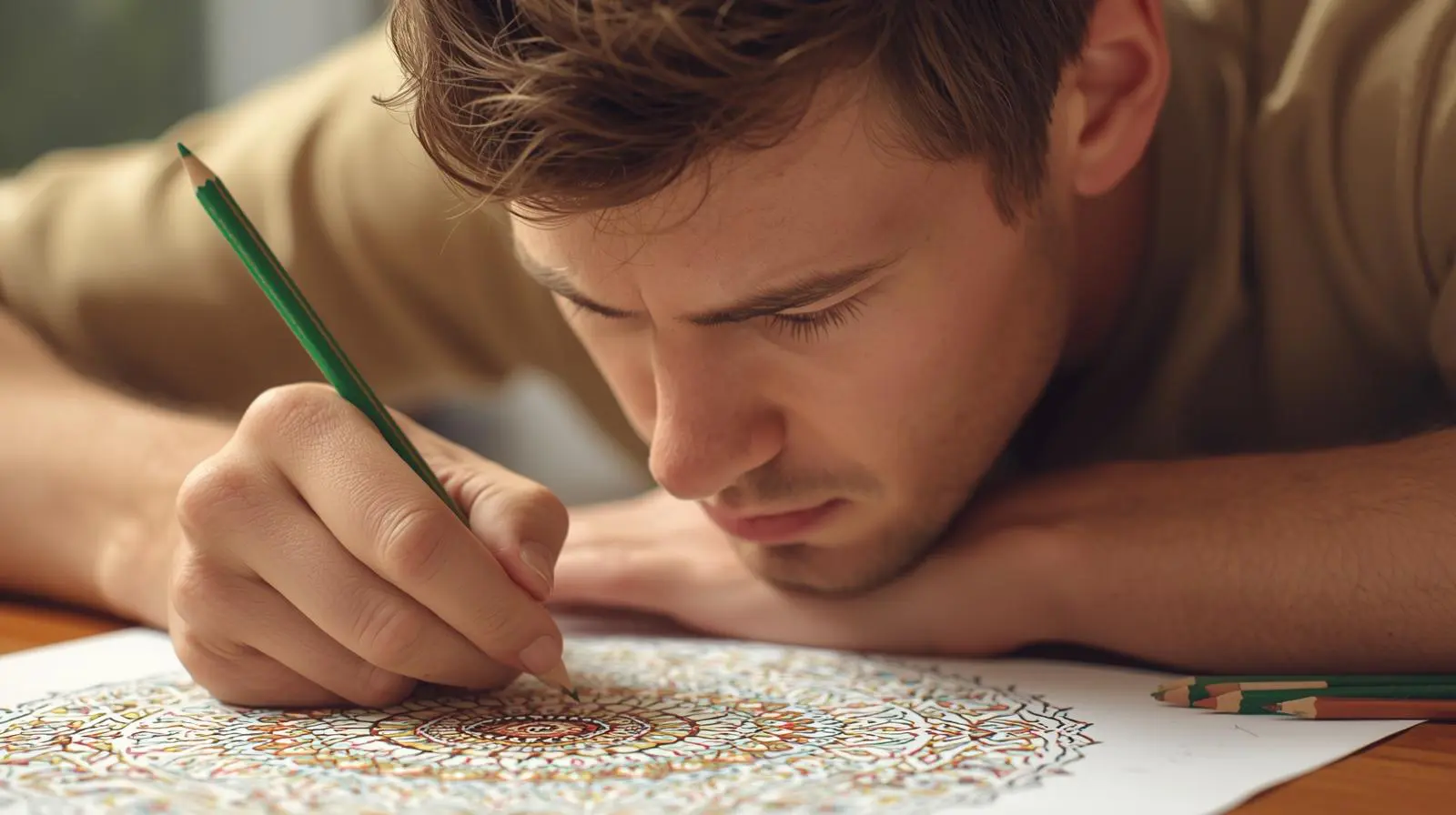
Before you begin any coloring session, take a moment to check in with yourself emotionally. Close your eyes, take three deep breaths, and ask: “How am I feeling right now?” Without judgment, notice what art and emotions are present. Then, open your eyes and look at your color palette. Which colors are you drawn to? Which ones do you want to avoid?
This simple practice builds emotional awareness and bridges your inner experience and your artistic expression. You might make this part of your daily coloring ritual to create consistency in your emotional exploration.
Dive into our coloring techniques guide, designed to grow with you from beginner to advanced.
Emotion Mapping Through Color
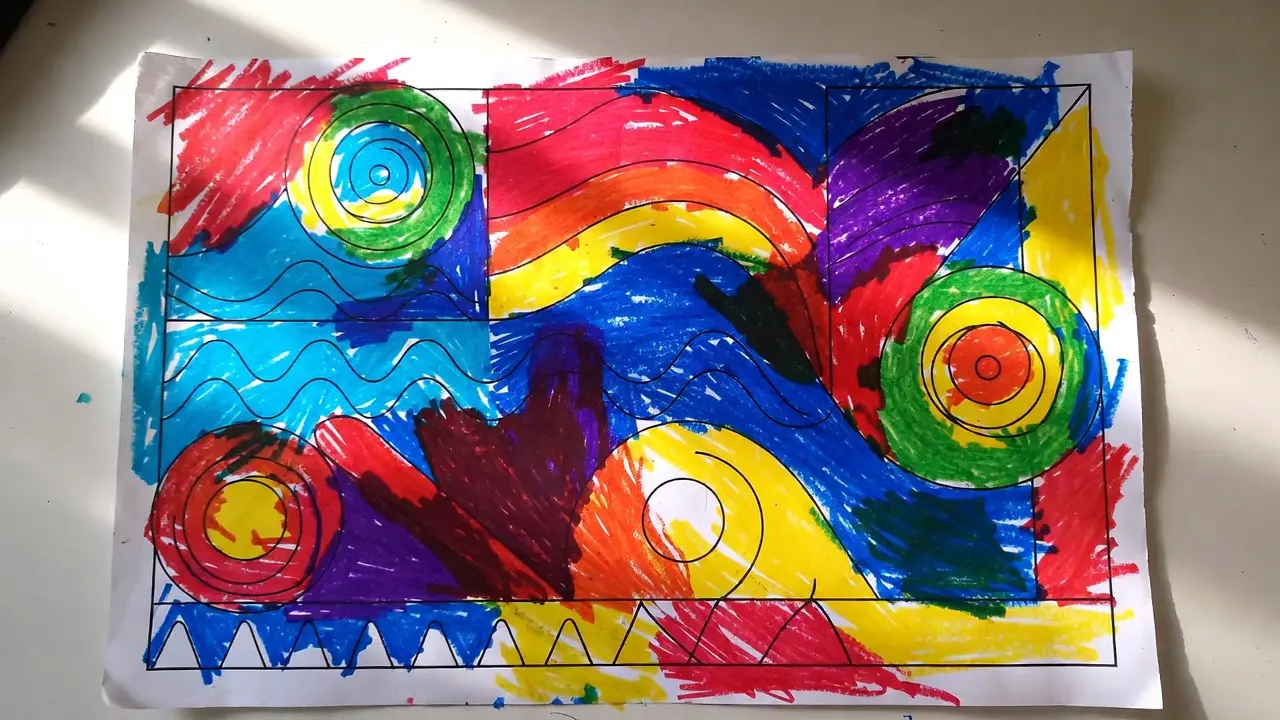
Try this powerful exercise: divide a blank page into sections—perhaps four quadrants or a circular mandala design. Assign each section to a different emotion you’re currently experiencing or want to explore. Then, intuitively color each section with the hues that represent those feelings to you.
You might fill one quadrant with angry reds and oranges, another with peaceful blues, a third with anxious yellows, and the last with hopeful greens. This practice, particularly effective when working with guided mandala practices, helps you acknowledge the complexity of your emotional life—nothing is ever just one feeling.
The Gradient Journey
Select two colors that represent contrasting emotions you’re experiencing or want to transition between—perhaps from the anxiety of yellow to the calm of blue, or from the heaviness of gray to the lightness of pink. Create a gentle gradient between them, blending the colors slowly and mindfully.
This technique mirrors the emotional journey itself. Feelings aren’t switches that flip on and off; they flow, blend, and transform. As you blend your colors, breathe deeply and imagine your emotions shifting with the same gentle progression.
Building a Sustainable Emotional Coloring Practice
Integrating art and emotional work into your routine requires intention and gentleness. Start small—even five minutes of mindful coloring can shift your emotional state. Consider pairing your color exploration with creative journaling practices to deepen your insights.
Create a comfortable space for your emotional art practice. Gather quality materials that inspire you to return to this work regularly. You don’t need expensive supplies—what matters is having tools that feel good in your hands and colors that sing to your soul.
Recommended Coloring Resources for Emotional Exploration
To support your journey of using color to express emotions, consider these beautifully designed resources:
Printable Mandala Coloring Sheets for Adults offer symmetrical designs that are perfect for meditative, emotional work. The repetitive patterns help quiet the mind while the open spaces invite colorful emotional expression through art.
Floral Coloring Pages provide organic, flowing designs that connect us to nature’s emotional language. Flowers have their own color symbolism—roses for love, violets for faithfulness, lilies for peace—adding another layer to your emotional exploration.
Motivational Quotes Coloring Pages combine the power of affirming words with color therapy. As you fill in letters and designs, you’re literally coloring positive emotions into your consciousness.
When Difficult Art and Emotions Surface
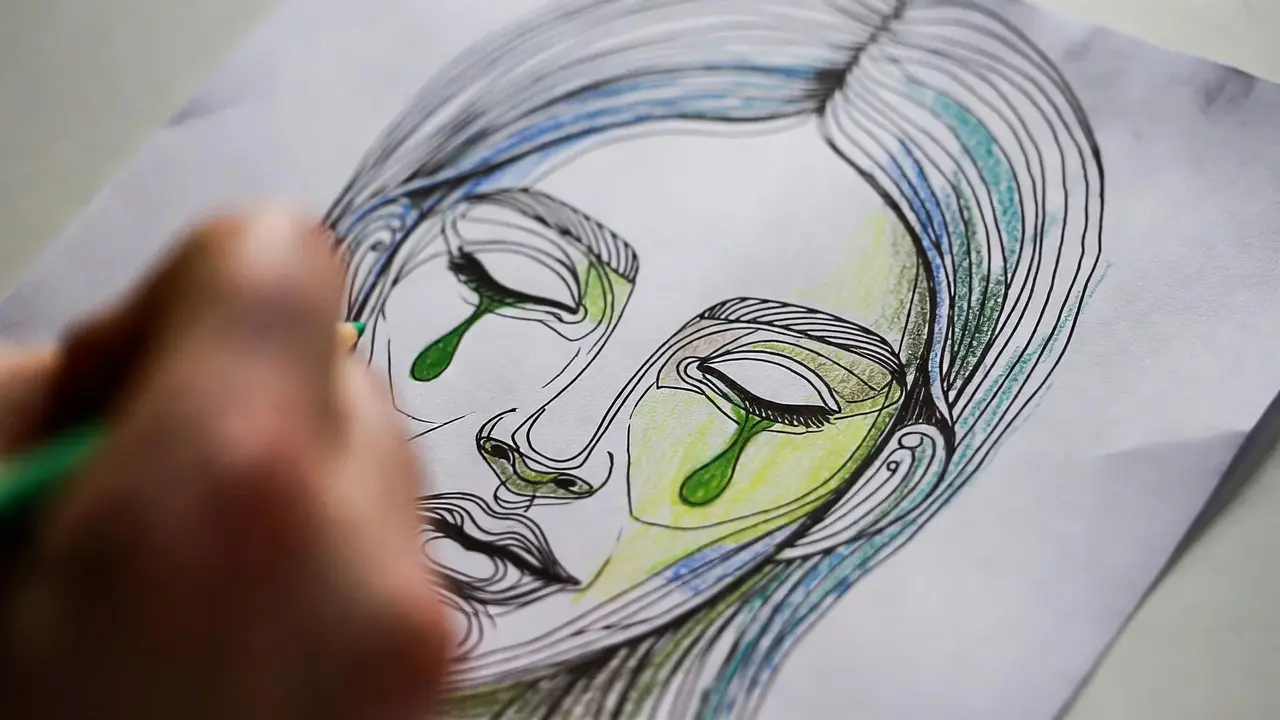
Sometimes, art therapy coloring brings up challenging feelings. This is not only normal—it’s often a sign that the practice is working. Your emotional world is asking for attention. When difficult emotions arise during coloring, resist the urge to push them away or judge yourself.
Instead, breathe into the feeling. Let your color choices reflect what you’re experiencing, even if it means covering a page in dark, heavy colors. This is a release. This is processing. This is healing. You might scribble aggressively or press hard with your colors. Allow it. The paper can hold what you’re feeling.
If emotions feel overwhelming, it’s perfectly acceptable to pause, step away, or shift to a more structured activity. Some days call for the soothing predictability of mandala patterns; other days require the freedom of abstract color play—honor where you are.
Tracking Your Emotional Color Journey
Consider keeping a color journal alongside your artistic practice. After each coloring session, jot down a few notes: What colors did you use? How were you feeling before, during, and after? Did any insights or memories surface? Over time, you’ll begin to notice patterns in your emotional color choices.
You might discover that you always reach for purple when processing grief, or that orange appears frequently when you’re feeling creative and alive. These patterns are unique to you and provide valuable self-knowledge. They become a personal emotional map that guides you toward greater self-understanding.
Sharing Your Emotional Art (Or Not)
The choice to share your emotional color work is entirely personal. Some people find deep value in keeping their art therapy coloring private—a sacred space just for themselves. Others discover healing in sharing their creations with trusted friends, family, or online communities.
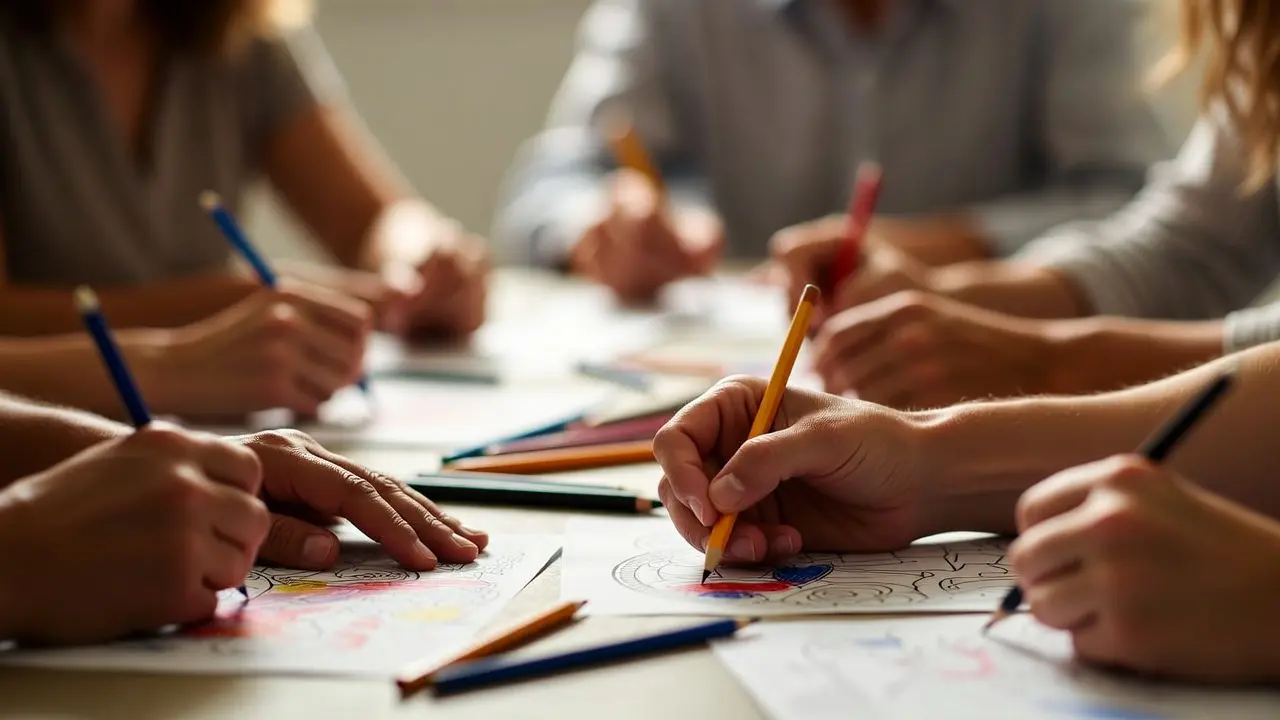
There’s no correct answer. What matters is that you feel safe in your practice. If sharing helps you process and connect with others who understand, wonderful. If privacy allows you to be more honest and vulnerable with yourself, that’s equally valuable. You can trust your intuition.
Expanding Your Emotional Color Practice
As you grow more comfortable with using color to express emotions, consider experimenting with different approaches:
Try color limitation exercises where you only use two or three colors for an entire piece. This constraint can deepen your relationship with specific emotions and help you discover subtle variations within a single color family.
Explore seasonal color work that aligns with the emotional qualities of different times of year. Spring’s fresh greens and pinks might reflect hope and renewal, while autumn’s oranges and browns could represent harvest and introspection.
Experiment with complementary color therapy by pairing opposite colors on the color wheel—red and green, blue and orange, yellow and purple. These high-contrast combinations can help you hold opposing emotions simultaneously, building capacity for emotional complexity.
The Transformative Power of Color and Emotion
When we combine color and emotions in art, we create more than beautiful pictures. We have a dialogue with ourselves. We externalize the internal. We give form to the formless. This is the profound gift of art therapy coloring—it transforms abstract feelings into concrete, visible expressions that we can then witness, understand, and ultimately release or integrate.
Every time you sit down with your coloring pages and consciously choose colors based on your emotional state, you’re engaging in a powerful act of self-care. You’re saying: “My feelings matter. They deserve attention. They deserve expression.” In a world that often asks us to suppress or ignore our emotions, this is revolutionary.
Beginning Your Journey Today
You don’t need to wait for the perfect moment or the perfect supplies to begin exploring emotional expression through art. Start now, wherever you are, with whatever you have. Even a simple box of crayons and a printed coloring page can become a portal to profound self-discovery.
The journey of using color to explore feeling is ongoing and ever-evolving. Your relationship with colors will deepen over time. Emotions that once seemed overwhelming may become familiar friends. Colors you once avoided might become sources of comfort and strength.
Remember, there’s no destination in this practice—only the continuous, compassionate act of showing up for yourself, one color at a time. Your emotions are valid. Your experience is real. And art is here to help you honor both.
🎨 Not sure where to start?
Here are our most loved products.
Frequently Asked Questions
🎨 Not sure where to start? Here are our most loved products.
Q1: How can color help me understand my emotions better through art?
A: Using color to express emotions provides a non-verbal language for feelings that might be difficult to articulate in words. When you choose colors intuitively while coloring in art therapy, you’re accessing subconscious emotional information that connects art and emotions at a deep level. Over time, you’ll notice patterns in your color and emotions in art—perhaps you always use blue when feeling calm or red when processing anger. These patterns create a personal emotional vocabulary that increases self-awareness. The act of translating feelings into colors through emotional expression through art also creates helpful distance from overwhelming emotions, making them easier to observe and understand without being consumed by them.
Q2: What if I don’t feel any emotions while using art therapy coloring?
A: Not feeling anything during an art therapy coloring session is perfectly normal and valid. Emotional numbness or disconnection is itself an emotional state worth acknowledging when exploring art and emotions. Sometimes we color during emotionally neutral times, and that’s okay—not every session needs to be intensely cathartic. If you regularly feel disconnected from emotions during creative activities, try starting with very gentle check-ins before coloring. Ask yourself simple questions like “Where do I feel tension in my body?” or “What color am I drawn to right now?” without expecting profound answers. Using color to express emotions is a skill that develops gradually with patient, compassionate practice.
Q3: Can using color to express emotions really change my mood?
A: Yes, the relationship between color and emotions in art can influence mood significantly, though the effect varies by individual. Research in color psychology shows that warm colors like red and orange can increase energy and arousal. In contrast, cool colors like blue and green tend to have a calming effect, which is why coloring in art therapy is so effective for stress relief. However, your personal associations with colors matter just as much as these general trends. If yellow reminds you of a happy childhood memory, it might lift your mood more effectively than for someone who associates yellow with anxiety. Emotional expression through art works both ways—you can choose colors to reflect your current mood or deliberately select colors related to the mood you want to cultivate through mindful color selection.
Q4: Is art therapy coloring better practiced alone or with others for emotional exploration?
A: Both solo and group approaches have unique benefits when exploring art and emotions. Coloring alone provides privacy and freedom to express complex emotions without self-consciousness, making it ideal for deep personal processing through color. Group art therapy coloring, whether in person or online communities, offers connection, validation, and the comforting knowledge that others also use color and emotions in art for wellness. Many people benefit from doing both—maintaining a private practice for vulnerable emotional work while occasionally joining others for the social and inspirational aspects of emotional expression through art. Choose based on what feels safest and most supportive for your current emotional needs.
Q5: What if my emotional expression through art looks “ugly” or “wrong”?
A: There is no such thing as “wrong” when it comes to using color to explore feelings, art, and emotions. Emotional expression through art isn’t about creating beautiful artwork—it’s about honest self-expression and authentic color and emotions in art. Sometimes our most difficult emotions create the most chaotic or “ugly” color combinations, and that’s precisely right for art therapy coloring purposes. Dark, muddy colors or aggressive marks are valid emotional expressions. The purpose of using color to express emotions isn’t aesthetic perfection; it’s emotional authenticity. Suppose you find yourself judging your emotional art harshly, practice self-compassion. Would you criticize a friend for how their feelings looked on paper? Extend the same kindness to yourself in your art and emotions practice.
Q6: How often should I practice using color to express emotions for it to be effective?
A: No prescribed frequency works for everyone in art therapy coloring. Some people benefit from daily five-minute emotional check-ins through color and emotions in art, while others find weekly longer sessions more helpful for emotional expression through art. Consistency matters more than duration—even brief, regular practice of using color to express emotions builds emotional awareness better than sporadic marathon sessions. Start with what feels sustainable, perhaps 10-15 minutes two or three times a week. As you notice the benefits of connecting art and emotions, you’ll naturally find your rhythm. The key is making art therapy coloring a compassionate habit rather than another source of pressure in your life.
Q7: Can children benefit from art therapy, coloring, and using color to explore emotions, too?
A: Absolutely. Children often find it easier than adults to practice emotional expression through art because they haven’t yet learned to overthink or judge their feelings. Encouraging children to connect with art and their emotions by choosing colors based on how they feel teaches valuable emotional literacy. You might ask, “What color is your happiness today?” or “If your frustration were a color, what would it be?” This practice of using color to express emotions helps children develop a rich emotional vocabulary and healthy coping mechanisms. Keep it playful and pressure-free—the goal is exploration, not perfect emotional understanding. Art therapy coloring can be particularly helpful for children who struggle to verbalize complex feelings, allowing color and emotions in art to communicate what words cannot.
Q8: What’s the difference between regular coloring and emotional expression through art?
A: Regular coloring might focus on staying within lines, creating aesthetically pleasing color combinations, or simply passing the time relaxingly. Art therapy, coloring, and using color to express emotions add a layer of intention and awareness—you’re deliberately using color as a tool for emotional expression and exploration, strengthening the connection between art and emotions. This doesn’t mean regular coloring lacks emotional benefits; any mindful creative activity can reduce stress and improve mood. The distinction lies in the conscious awareness of color and emotion in art. In emotional expression through art, you pause to notice what you’re feeling, choose colors accordingly based on your emotional state, and reflect on the experience afterward. This mindful approach transforms a pleasant hobby into a powerful practice of using color to express emotions for emotional health and self-discovery.
Using color to explore emotions is powerful. This approach has helped me process feelings I couldn’t verbalize.
The emotional palette concept is fascinating. I never thought about choosing colors based on what I need to express.
These pages helped me rediscover a creative side I’d let go dormant for about twenty years. Simple but genuinely meaningful.