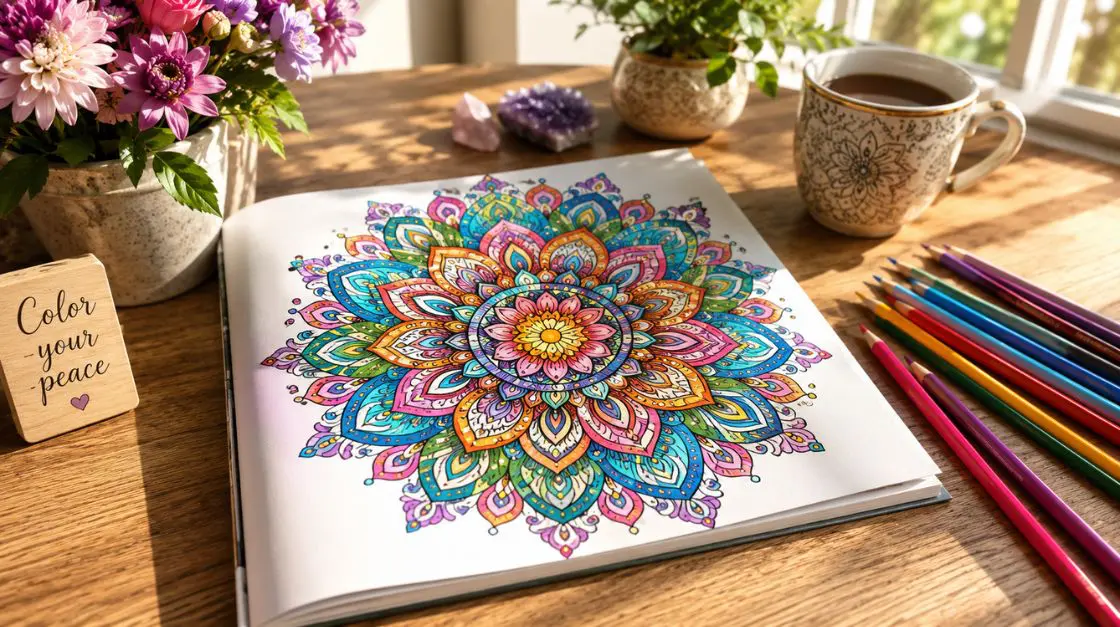
The Science Behind Adult Coloring Pages for Relaxation: Does coloring actually reduce stress?
Quick Answer: Adult coloring pages work as art therapy for stress by activating the brain’s relaxation response, quieting the prefrontal cortex, and redirecting anxious thoughts toward focused, repetitive creative activity. This engages the same neural pathways as mindfulness meditation, reducing cortisol levels and promoting a state of calm alertness.
Yes — coloring measurably reduces stress and anxiety, according to multiple clinical studies. Research using standardized anxiety scales has found that just 10 to 20 minutes of coloring can lower state anxiety, with mandala patterns showing the most consistent effect across age groups, from college students to older adults. A randomized controlled study of older adults found significantly lower anxiety after a short mandala coloring session, and separate research on undergraduates found coloring reduced anxiety and increased mindfulness compared to a control condition. That’s why art therapy for stress has moved from a niche clinical technique into something you’ll find recommended everywhere from hospital waiting rooms to corporate wellness programs. nihouhsc
This isn’t just a trend riding on aesthetics — it’s a practice with a growing evidence base behind it. Whether you’re brand new to coloring or you’ve been doing it for years, understanding why it works can deepen your practice and your results.
In this guide, you’ll discover the psychology and neuroscience behind coloring, the best types of coloring pages for relaxation, and exactly how to build a calming coloring habit that sticks.
👉 Browse our adult coloring page collections at EG Creativity and find your perfect stress-relief practice today.
Why Art Therapy for Stress Is Gaining Mainstream Attention
The Modern Stress Epidemic
Chronic stress is one of the defining health challenges of our era. According to the American Institute of Stress, 77% of adults regularly experience physical symptoms caused by stress. Anxiety, poor sleep, brain fog, and emotional exhaustion have become almost normalized — but they don’t have to be.
Art therapy for stress offers something that many other wellness approaches don’t: it’s free (or nearly free), requires no special training, and can be done anywhere. More importantly, it works.
Why Adults Are Turning to Coloring
What once seemed like a children’s pastime has been reclaimed as a powerful tool for adult mental wellness. The appeal is simple:
- No artistic skill required. The design is already there — you just add color.
- Immediate results. Most people notice a shift in tension within the first few minutes.
- Fully portable. A printed page and a pack of colored pencils fit in a bag.
- Deeply personal. Color choices, pace, and style are entirely your own.
This accessibility is why art therapy for stress management has exploded in popularity — especially among people who feel too time-pressed for longer mindfulness practices.
Real-Life Use Cases
People are using creative coloring techniques in more contexts than ever:
- After work decompression — transitioning from work mode to rest mode
- During anxiety episodes, as a grounding technique when thoughts spiral
- Before sleep — as a screen-free wind-down ritual
- During recovery from illness, burnout, or emotional setbacks
- In therapy sessions, art therapists increasingly use coloring as a structured intervention
Even schools have recognized the benefit. Calm corner coloring pages are now used in K–2 classrooms specifically to support emotional regulation — and the same principles apply directly to adult practice.
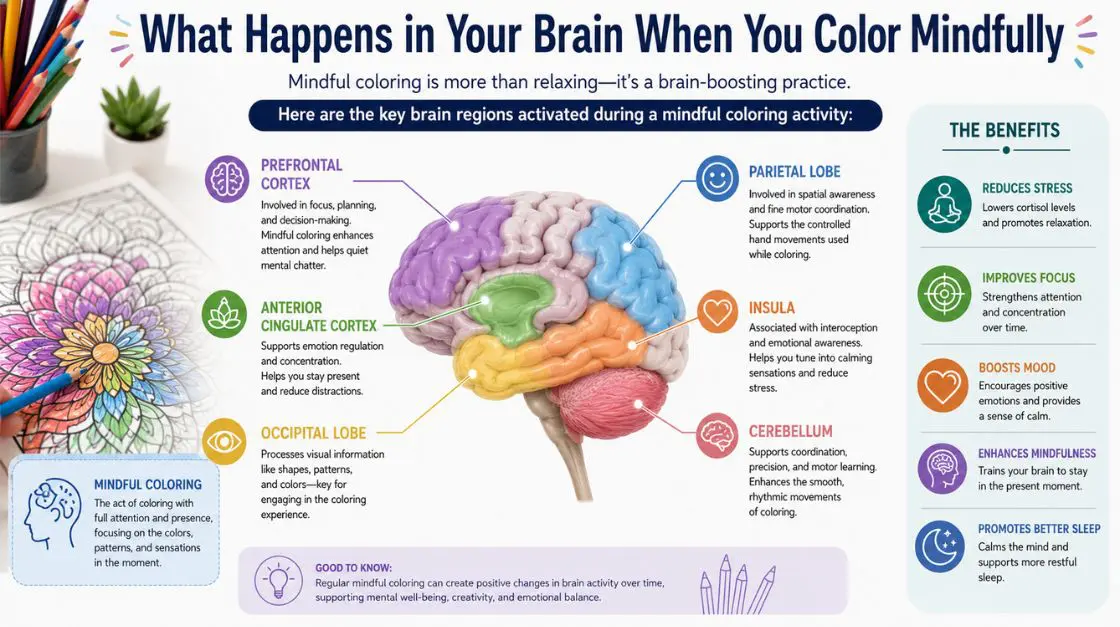
The Science: Why Coloring Actually Calms Your Brain
What Happens in Your Brain When You Color
Art therapy for stress isn’t just anecdotal feel-good advice. There’s real neuroscience behind it.
When you focus on coloring within lines, choosing colors, and completing a design, your brain enters a state remarkably similar to flow — a mental state characterized by complete absorption in an engaging task. During flow, the amygdala (your brain’s fear center) becomes less reactive, and the parasympathetic nervous system — your “rest and digest” mode — kicks in.
Here’s what research and clinical observation tell us:
- Coloring activates both brain hemispheres. The left hemisphere handles the logic of staying within lines; the right hemisphere processes creative color choices and aesthetic appreciation. This dual engagement creates a uniquely balanced mental state.
- Repetitive motion reduces cortisol. The gentle, rhythmic movements of coloring are similar in effect to rhythmic practices like knitting or drumming — they trigger the relaxation response.
- Focused attention interrupts the rumination cycle. Anxious minds tend to loop over the same worries. Coloring demands just enough attention to break that cycle without being cognitively overwhelming.
The Mindfulness Connection
Many therapists describe coloring as informal mindfulness. You’re not trying to empty your mind — you’re giving it a gentle, pleasant focal point. This is sometimes called attentional focus training, and it’s one of the most accessible creative relaxation techniques available.
A 2017 study in Art Therapy: Journal of the American Art Therapy Association found that participants who completed structured coloring activities showed significantly reduced anxiety compared to a control group. The structured nature of coloring pages — as opposed to freehand drawing — appears to be particularly effective for people who feel intimidated by blank-page creativity.
Expert Perspective
Art therapists consistently note that the predictability of a coloring page is part of its therapeutic value. Unlike freehand art, where the process can feel uncertain or expose insecurities, coloring within an existing design removes the pressure to “be good at art.” This allows the brain to relax into the creative act rather than evaluate it.
This is exactly why art therapy for stress management works even for people who would never describe themselves as creative.
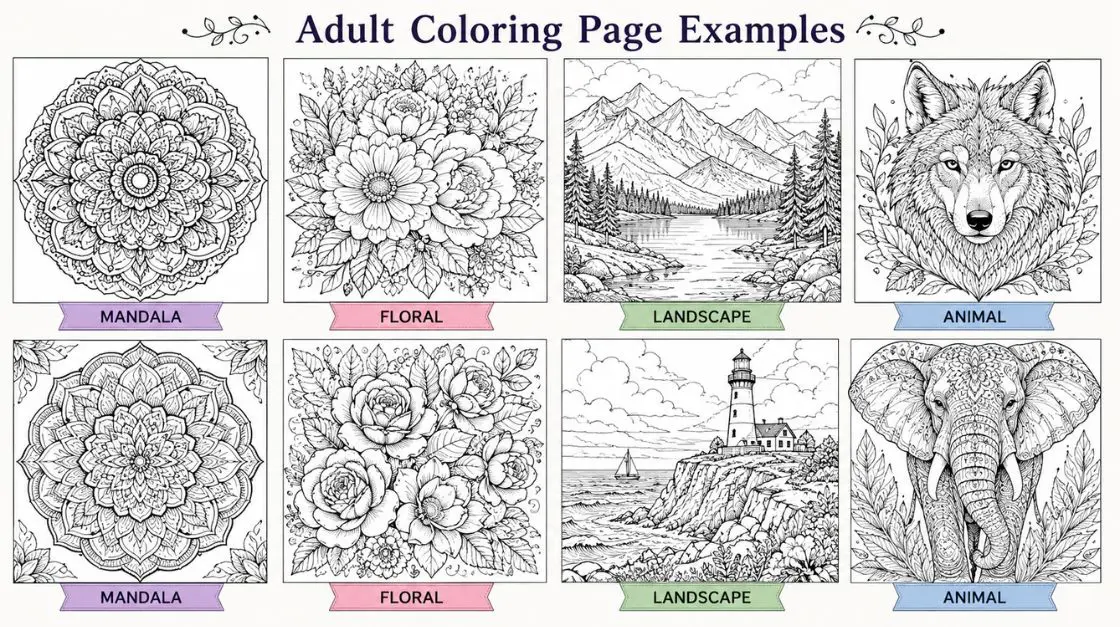
Types of Adult Coloring Pages for Maximum Stress Relief {#types}
Not all coloring pages create the same effect. Different designs engage the brain in different ways, making some more effective for certain moods or stress patterns.
Mandala Coloring Pages
Best for: Deep focus, meditation-style relaxation, obsessive thoughts
Mandalas are circular, symmetrical designs rooted in Buddhist and Hindu spiritual traditions. Their geometric repetition makes them ideal for people who struggle to “switch off” analytical thinking. The pattern essentially guides the mind into a calm, repetitive rhythm.
If you tend to overthink, a mandala is often the most effective art therapy for stress tool you can choose. Browse our mandala and geometric adult coloring pages for a wide range of complexity levels.
Nature & Floral Coloring Pages
Best for: Mood elevation, gentle focus, creative exploration
There’s a reason nature imagery is used across wellness contexts — from hospital room window views to forest bathing. Coloring flowers, plants, and landscapes activates the same restorative attention as spending time in nature.
Our printable wildflower coloring pages for adults feature over 35 detailed botanical designs — perfect for anyone craving a peaceful escape through creative relaxation techniques.
Landscape & Scenic Coloring Pages
Best for: Escapism, wide-open thinking, visual decompression
Coloring a landscape — rolling hills, a seaside village, a misty mountain — invites the imagination to “step inside” the scene. This gentle mental travel can be a powerful counterweight to a stressful day.
Explore our printable landscape coloring pages for 50+ stunning scene-based designs.
Animal & Fantasy Coloring Pages
Best for: Playfulness, child-like joy, emotional reset
Sometimes the best antidote to adult stress is reclaiming a sense of play. Animal designs — whether realistic or whimsical — invite a lighter emotional state. Our animal coloring pages bundle brings together farm, jungle, and ocean themes in one ready-to-print set.
For something more imaginative, printable anime coloring pages offer intricate character-based designs that fans find deeply absorbing.
Seasonal & Themed Coloring Pages
Best for: Grounding in the present moment, celebratory moods, seasonal transitions
Coloring pages tied to the current season can help anchor you in the present — a key component of mindfulness-based art therapy for stress management. From Easter printables to New Year coloring pages, seasonal themes add meaning and variety to a regular practice.
Printable vs. Traditional Coloring Books: Which Is Better?
| Feature | Printable Coloring Pages | Traditional Coloring Books |
|---|---|---|
| Cost | Low — pay once, print unlimited times | Per-book purchase; more expensive over time |
| Convenience | Instant download, print at any time | Requires shopping or delivery |
| Flexibility | Print only what you want, repeat favorites | Fixed page order and quantity |
| Portability | Print a few pages for travel | Carry the whole book |
| Customization | Choose paper weight, size (A4 or Letter) | Standard size only |
| Accessibility | Available 24/7 worldwide | Depends on local availability |
| Variety | Swap between collections easily | Limited to one book’s theme |
| Eco-friendliness | Print on demand — no waste | Pre-printed, may go unused |
For most adults using art therapy for stress, printable coloring pages offer the best balance of value, variety, and flexibility — especially when you can access them instantly from home.
How to Start an Art Therapy Practice at Home: Step-by-Step
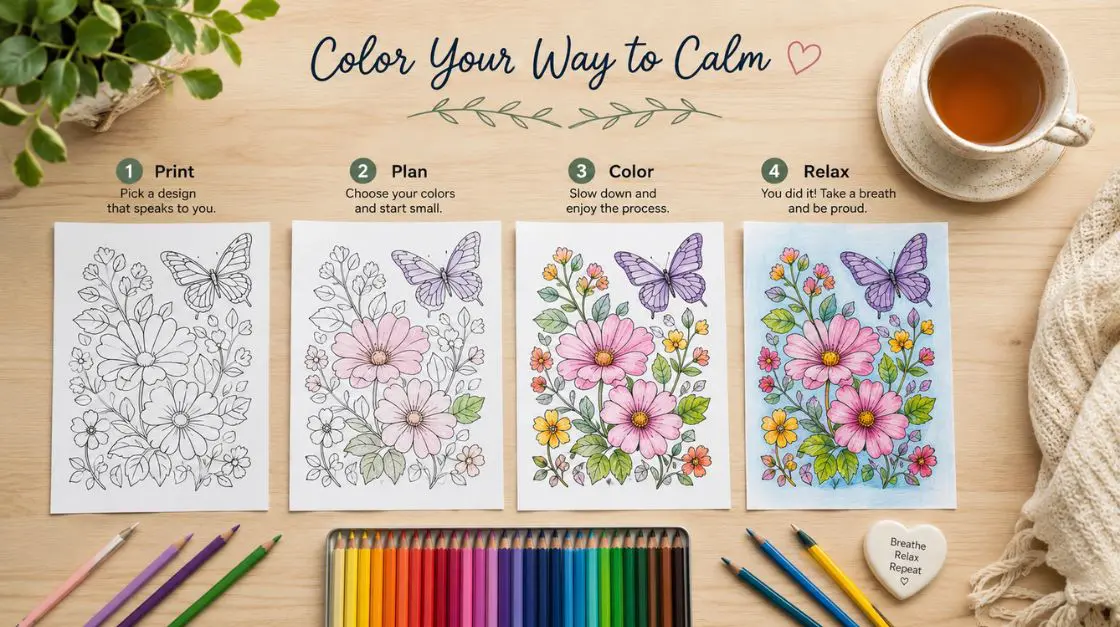
Starting a regular coloring practice doesn’t require much preparation. Here’s a simple, beginner-friendly approach to building a sustainable art therapy habit for stress.
Step 1: Choose Your Supplies
You don’t need expensive tools to get started. A basic set of colored pencils (24–36 colors) and a smooth printer-quality paper are all you need. As you develop your practice, you might add:
- Gel pens for intricate line details
- Watercolor pencils for blended, dreamy effects
- Fine-tip markers for bold, vivid fills
Tip: Don’t overthink your supplies. Starting simple keeps the focus on relaxation, not equipment.
Step 2: Download and Print Your Pages
Choose a design that genuinely appeals to you visually. Trust your instinct — if a design makes you feel calm just looking at it, that’s the one.
Print on standard 80gsm paper for colored pencils, or heavier cardstock (90–120gsm) if you’re using markers or watercolors to prevent bleed-through.
Tip: Print several pages at once so you always have options ready when you need to decompress.
Step 3: Create a Calm Coloring Space
Your environment matters. A dedicated, comfortable coloring spot reinforces the habit. Think:
- Good lighting (natural light is ideal)
- A clutter-free surface
- Optional: soft background music or nature sounds
- A warm drink nearby
Even a small corner of your home can become a meaningful sanctuary for art therapy and stress relief.
Step 4: Set an Intention, Not a Goal
Before you start, take three slow breaths and set a gentle intention: “I’m here to relax, not to produce.” This mental shift is crucial. The goal isn’t to finish the page or make it look perfect — it’s to be present in the process.
This is where coloring transitions from a hobby into a genuine creative relaxation technique.
Step 5: Color Without Judgment
Let go of rules. Color outside the lines. Use unexpected color combinations. Leave sections blank if you want. The moment you stop judging your coloring, the deeper relaxation begins.
Step 6: Build a Consistent Practice
Even 10–15 minutes of coloring a few times per week produces measurable benefits over time. Consider anchoring your practice to an existing routine:
- Morning coloring with your coffee
- Evening coloring as a screen-free wind-down
- Weekend coloring is your “creative recharge.”
Consistency is where art therapy for stress management moves from occasional relief to lasting resilience.
Visual Inspiration: Finding Your Coloring Style
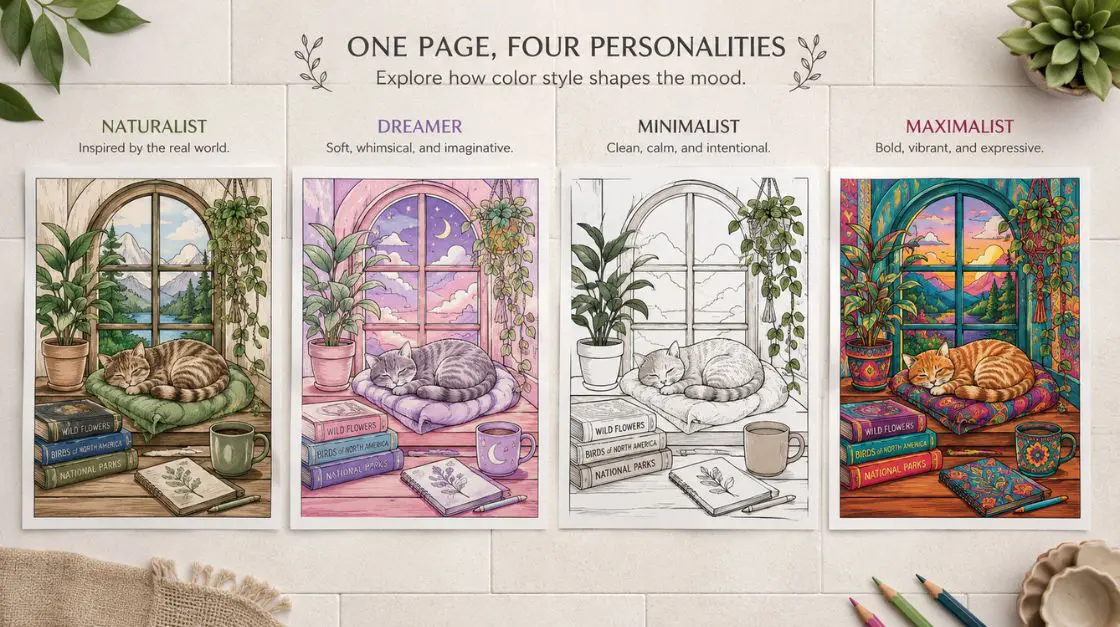
One of the most delightful things about using adult coloring as a creative relaxation technique is that there are no rules — only preferences. Here are a few visual approaches to inspire your practice:
The Naturalist: Earthy tones — sage greens, terracotta, warm ochres. Perfect for botanical and landscape designs. Creates a grounding, forest-bathing aesthetic.
The Dreamer: Soft pastels — blush, lavender, sky blue, mint. Ideal for floral and whimsical designs. Evokes a peaceful, cloud-like calm.
The Minimalist: Monochromatic or limited palette — shades of one color across a design. Especially powerful for geometric and mandala pages. Forces focused, meditative attention.
The Maximalist: Bold, saturated, contrasting hues. Energizing and joyful, great for days when you need a creative boost rather than deep calm.
You might find your style shifts day to day — and that’s completely normal. Your color choices can become a subtle form of emotional expression, which is precisely what makes art therapy for stress so uniquely personal.
Recommended Collections for Stress Relief
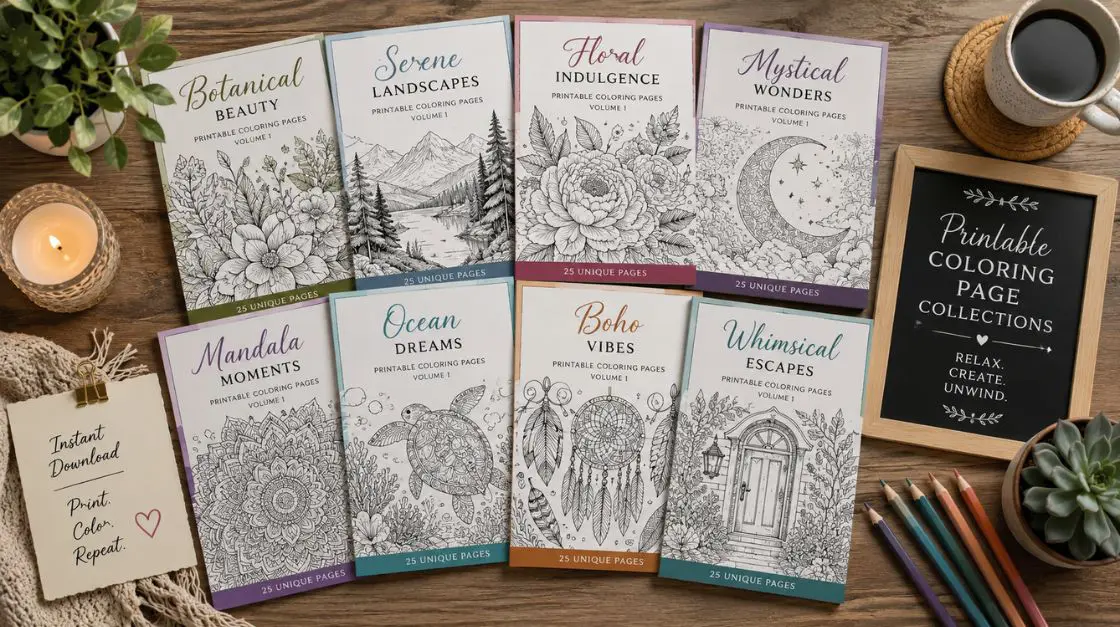
🌸 Printable Wildflower Coloring Pages — 35+ Botanical Designs
Detailed meadow blooms, garden florals, and nature-inspired designs are ideal for creative relaxation. Perfect for anyone who finds peace in nature imagery. Download the Wildflower Collection →
🏙️ Printable City Coloring Pages — 46 Urban Escape Designs
Famous landmarks, cityscapes, and architectural wonders from around the world. A wonderful option for art therapy for stress with an escapist, travel-inspired twist. Explore City Coloring Pages →
🏔️ Printable Landscape Coloring Pages — 50 Scenic Designs
Sweeping nature scenes from forests to coastlines. Ideal for those seeking wide-open mental space and visual decompression. Browse Landscape Pages →
🦁 Animal Coloring Pages Bundle — Farm, Jungle & Ocean Set
A playful, mood-lifting collection for when you want your art therapy for stress management practice to feel joyful and light. Get the Animal Bundle →
🌿 Calm Corner Coloring Pages — Emotional Regulation Pack
Originally designed for K–2 classrooms, these soothing, simple designs are also perfect for adults who prefer gentle, less-intricate pages — especially during high-anxiety moments. Shop Calm Corner Pages →
FAQ: Art Therapy for Stress and Adult Coloring
Q1: What is art therapy for stress, and how does coloring fit into it?
A: Art therapy for stress is a therapeutic practice that uses creative activities — like drawing, painting, or coloring — to reduce anxiety, process emotions, and promote relaxation. Adult coloring fits within this framework because it combines focused attention, gentle creativity, and repetitive movement to activate the brain’s relaxation response. It’s one of the most accessible creative relaxation techniques available because no artistic experience is required.
Q2: How long should I color to feel the stress-relief benefits?
A: Most people notice a reduction in tension within 5–10 minutes of focused coloring. For deeper, more lasting benefits from your art therapy for stress practice, sessions of 20–30 minutes several times per week are ideal. Even a brief coloring session during a stressful moment can serve as an effective reset.
Q3: Do I need to be artistic to benefit from coloring as art therapy?
A: Absolutely not. This is one of the most important things to understand about art therapy for stress management — the coloring page does the creative “work” for you. Your only job is to add color. In fact, research suggests that people with no artistic confidence often experience the deepest relaxation, precisely because the absence of creative pressure allows full mental release.
Q4: What types of coloring pages are best for anxiety relief?
A: Mandala and geometric designs are particularly effective for anxiety, as their repetitive patterns guide the mind into a meditative rhythm. Floral and nature-based designs are excellent for mood elevation. For very intense anxiety, simpler designs with larger areas to fill — like calm corner coloring pages — may be most accessible.
Q5: Can coloring replace professional therapy for stress and anxiety?
A: Coloring is a powerful creative relaxation technique and a valuable self-care tool, but it’s not a replacement for professional mental health support. Think of it as an accessible, daily wellness practice — similar to meditation or journaling — that works best alongside (not instead of) professional help when that’s needed.
Q6: What art supplies are best for adult coloring?
A: Colored pencils are the most recommended starting tool — they’re precise, blendable, and forgiving. Gel pens work beautifully for intricate details. Fine-tip markers offer vivid, saturated color. Watercolor pencils are great for dreamier, blended effects. For art therapy for stress management, the best supplies are simply the ones that feel enjoyable and comfortable to use.
Q7: Are printable coloring pages as effective as coloring books?
A: Yes — and often more so. Printable coloring pages let you choose exactly the design that resonates with you at a given moment, enhancing the therapeutic quality of the experience. They also allow you to revisit favorites, print on different paper types, and access new designs instantly, making your art therapy for stress practice more flexible and sustainable.
Q8: Can I use coloring pages as part of a mindfulness practice?
A: Absolutely. Mindful coloring — where you bring full, nonjudgmental attention to each color choice, each stroke, and each sensation — is one of the most effective creative relaxation techniques for anchoring yourself in the present moment. It’s sometimes called “active meditation,” and many mindfulness teachers recommend it as an entry point for people who struggle with traditional seated meditation.
Q9: How often should I color for ongoing stress management?
A: For ongoing art therapy for stress management, consistency matters more than duration. Coloring 3–5 times per week — even for just 15 minutes — produces more lasting benefits than occasional long sessions. Think of it as a gentle daily practice rather than a one-time event.
Q10:Can children and adults practice art therapy for stress together?
A: Yes — coloring is a wonderful shared activity for families. While adult coloring pages feature more intricate designs, there are many options suitable for all ages. Shared creative time reduces stress for both adults and children and strengthens connection. For younger children, check out our printable activities for kindergarten and early finisher activities.
Related Resources {#internal-link-hub}
Deepen your creative relaxation practice with these curated resources from EG Creativity:
- 🌸 Wildflower Coloring Pages for Adults — 35+ botanical designs for nature-inspired calm
- 🏔️ Landscape Coloring Pages — Scenic escape designs for visual decompression
- 🏙️ City Coloring Pages — Landmark and cityscape art therapy for stress with a travel twist
- 🎨 Anime Coloring Pages for Adults — Intricate character designs for deep creative focus
- 🦁 Animal Coloring Pages Bundle — Playful, mood-boosting designs for joyful relaxation
- 🌿 Calm Corner Coloring Pages — Gentle designs for high-anxiety moments
- 🌼 Living Room Wall Decor — Turn your completed coloring pages into beautiful wall art
- 🐾 Easter Crafts Printables — Seasonal coloring for spring renewal
- 🎆 New Year Crafts for Adults — Reflective seasonal coloring to mark new beginnings
Your Calm Is Waiting — Start Today
Stress doesn’t have to be your default state. Art therapy for stress is one of the few wellness practices that asks almost nothing of you — no gym membership, no app, no prior experience — and gives back so much: a quieter mind, a steadier mood, and the simple, deep satisfaction of creating something beautiful.
Every page you color is a small act of self-care. A few minutes of focused coloring can interrupt the anxiety spiral, slow your breathing, and remind your nervous system that right now, in this moment, you are safe and calm.
Whether you’re drawn to detailed mandalas, sweeping landscapes, delicate wildflowers, or bold urban scenes, there’s a design waiting that will feel exactly right for where you are today.
👉 Browse the full collection of adult coloring pages at EG Creativity — instant download, print at home, and start your art therapy for stress practice today.
Your calm is just one coloring page away.