The Best Early Finisher Activities for Kindergarten (No-Prep, No Chaos)
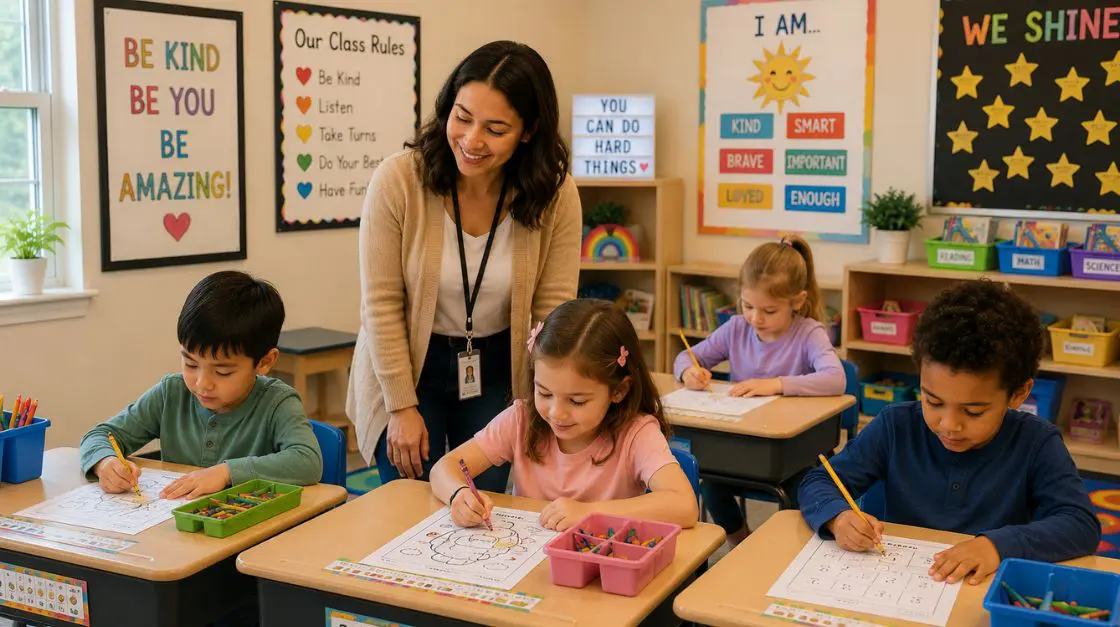
You’ve just finished your lesson. Half the class is still working. But four kids? Done. Pencils down, eyes wandering, and the quiet is already starting to unravel.
Sound familiar?
If you’re a kindergarten teacher, you know that those few minutes — when your fastest learners finish before the rest — can make or break classroom management. The right early finisher activities for kindergarten don’t just fill time. They keep curious little minds engaged, build independence, and give you the breathing room to keep supporting the rest of your class.
This guide covers everything you need: the why, the what, and the how — plus a complete toolkit of no-prep printable options you can start using tomorrow.
👉 Ready to stock your classroom with zero-prep activities your students will actually love? Browse the full printable teacher resources collection →
Quick Answer
What are the best early finisher activities for kindergarten? The best early finisher activities for kindergarten are independent, low-noise, and require zero teacher direction — think morning work printables, calm corner coloring sheets, alphabet tracing, and math pattern pages. They keep fast finishers engaged without disrupting the class, and no-prep printable versions make setup instant.
| Age / Grade | Best Early Finisher Activities | Time Needed |
|---|---|---|
| Pre-K (3–4) | Simple coloring pages, shape tracing, sorting mats | 5–10 min |
| Kindergarten (5–6) | Alphabet tracing, early finisher activity cards, simple pattern worksheets | 10–15 min |
| Grade 1 (6–7) | Math pattern worksheets, word-find puzzles, short writing prompts | 10–20 min |
| Grade 2 (7–8) | Logic puzzles, advanced coloring with color-by-number, independent journaling | 15–20 min |
For ready-to-use options at each level, see our Early Finisher Activity Cards and Kindergarten Morning Work Printables.
Why Early Finisher Activities for Kindergarten Matter
The Real Problem Isn’t the Fast Finishers — It’s the Gap
In a typical kindergarten classroom, students can finish an assigned task anywhere from two to fifteen minutes apart. That gap is where disruption lives. When early finishers have nothing purposeful to do, they do something anyway — usually talking, wandering, or entertaining themselves in ways that pull focus from the rest of the group.
The right early finisher activities for kindergarten close that gap completely. Instead of managing behavior, you’re managing learning.
The Benefits Go Beyond Busy Work
Well-designed early finisher activities aren’t filler. When they’re tied to real skills — phonics, number patterns, fine motor development, emotional regulation — those extra minutes become bonus learning time. Teachers who build a reliable system report:
- Fewer behavior interruptions during instructional time
- Stronger routines that students can follow independently
- More confidence in students who finish quickly and feel “done” too soon
- Reduced teacher stress during transitions
Real-Life Use Cases
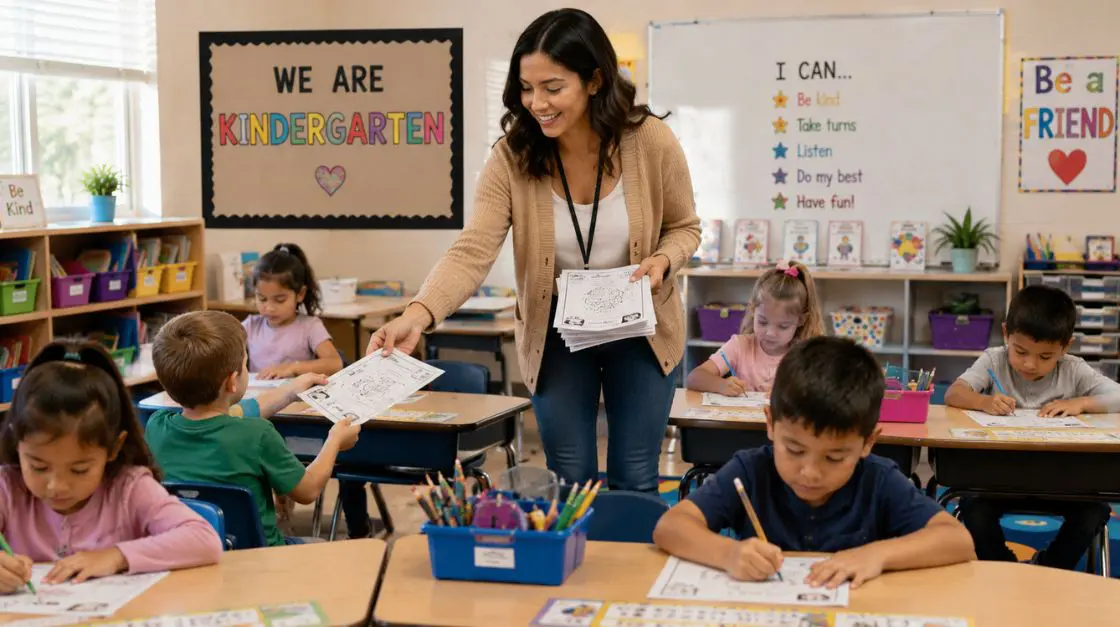
Picture this: it’s 9:15 a.m. Your morning circle just wrapped, and you’re pulling a small reading group. Five students finished their phonics worksheet. Instead of calling out for your attention, they flip open their early finisher activities folder and get to work — independently and quietly.
That’s the goal. And with the right no-prep printable system, it’s completely achievable.
What the Research Says About Independent Work
Self-Regulation Starts Early
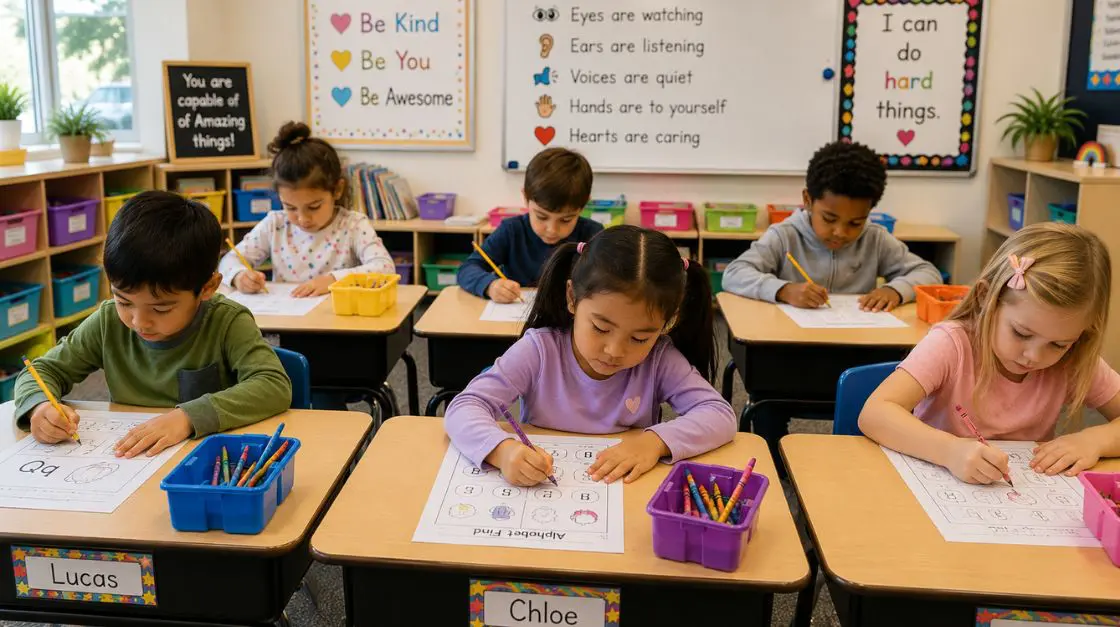
Educational psychologists have long recognized that young children benefit enormously from structured independent work time. According to research on self-regulation in early childhood, kindergarteners who regularly practice focused, low-stakes independent tasks show stronger development of executive function by first grade — including better attention, impulse control, and task persistence.
Early finisher activities for kindergarten work best when they’re predictable and familiar. The routine itself becomes a signal to the brain: I know what to do. I can do this on my own. That sense of competence is motivating for five-year-olds.
The Role of Calm-Down Tools
Research on emotional regulation in K–2 students consistently supports the use of quiet, tactile, or creative activities as reset tools. Calm corner printables — particularly coloring and tracing pages — activate the parasympathetic nervous system, lowering cortisol and bringing students back to a regulated state.
This is why calm corner printables serve double duty in a well-run kindergarten classroom: they work as early-finisher tools and as emotional-regulation support.
Why Creativity Matters for Cognitive Development
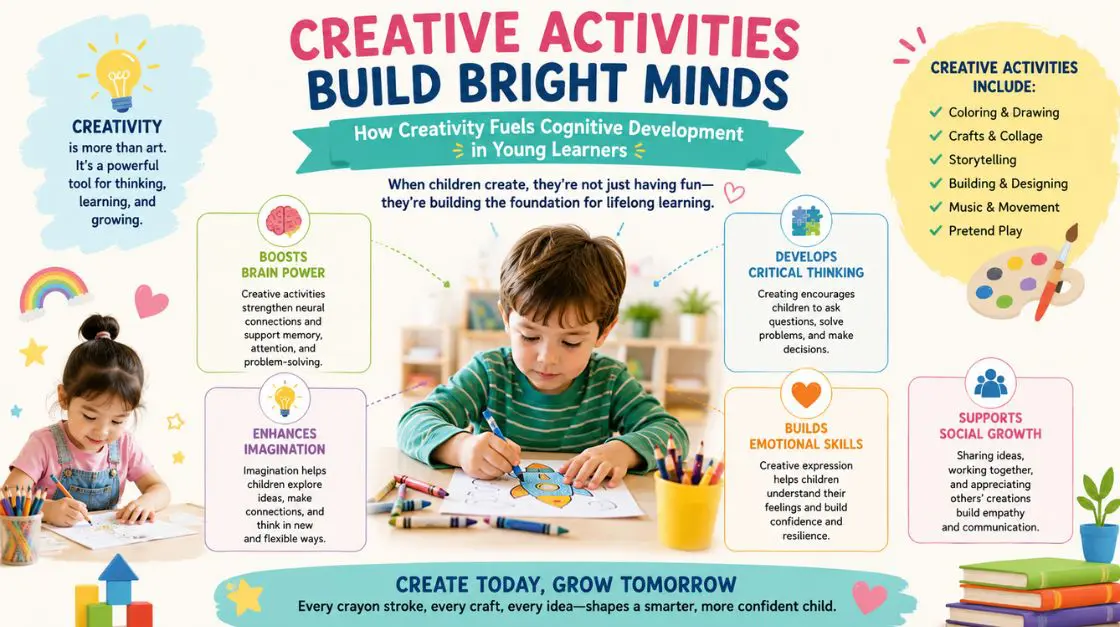
Creative tasks like coloring, pattern-making, and drawing aren’t just fun — they’re cognitively demanding in the best possible way. They require decision-making, fine motor coordination, spatial reasoning, and sustained attention. For kindergarteners, these are exactly the skills that transfer into academic success.
Types of No-Prep Early Finisher Activities
Not all early finisher activities for kindergarten are created equal. The best ones share a few things in common: they’re independent, quiet, purposeful, and require zero explanation once the system is established.
Here’s how to think about the main categories.
1. Morning Work Printables
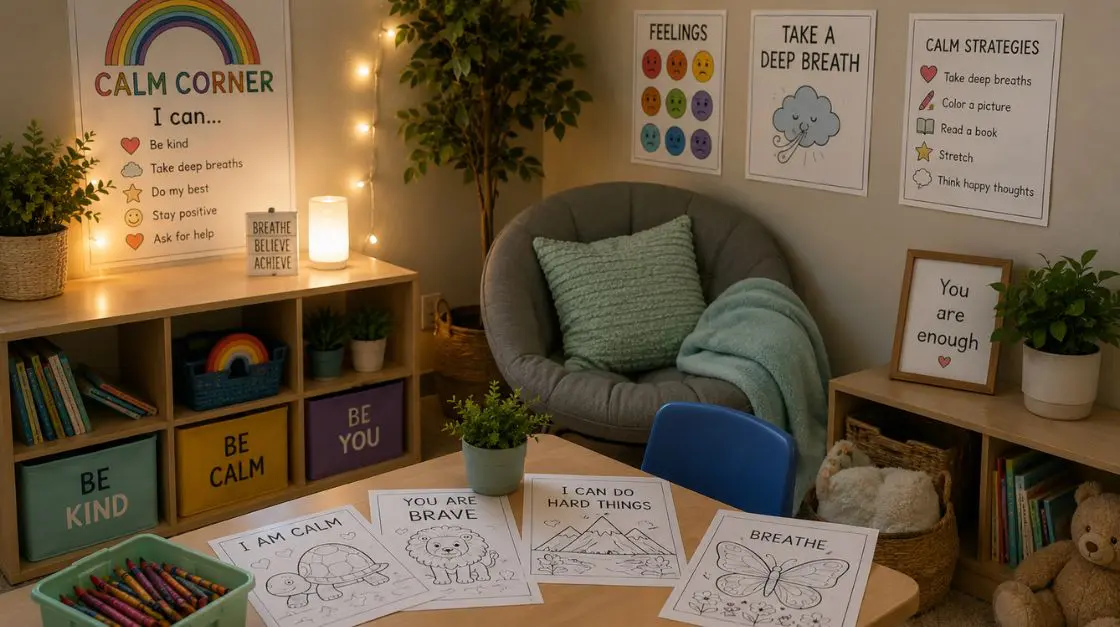
Morning work printables for kindergarten are designed for the first five to ten minutes of the day — but they work just as well as early finisher activities at any point in the day. Because students are already familiar with the format, they can complete them without asking for help.
Good morning. Work printables that kindergarten teachers rely on include a mix of skills: letter tracing, simple number patterns, picture-word matching, and draw-and-label prompts. The kindergarten morning work printables collection at EG Creativity covers four full weeks of daily pages — that’s enough content to build a complete independent work rotation.
2. Calm Corner Printables
Calm corner printables serve a specific and valuable purpose. While not every early finisher needs emotional regulation support, having soothing, low-demand activity sheets available means any student can transition gently into independent work without stress.
Think simple coloring pages with bold outlines, breathing reminder cards, or quiet doodle sheets. We’ll go deeper into calm corner printables in the next section.
3. Skill-Based Printable Worksheets
These target foundational academic skills in a format students can work through independently. Examples include:
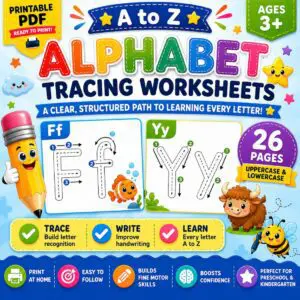
- Alphabet tracing and letter-sound matching
- Math patterning pages (AB, ABC, AABB patterns)
- Number sequencing fill-ins
- Simple word-building grids
The math patterns worksheets are a great example — no prep, clear instructions, and directly tied to K–2 math standards.
4. Creative Coloring and Drawing Activities
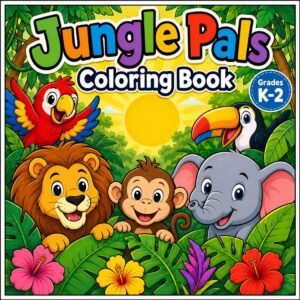
Themed coloring pages — animals, seasonal scenes, community helpers — give students a creative outlet that builds fine motor skills. For kindergarten, look for pages with bold, simple outlines. The animal coloring pages bundle covers farm, jungle, and ocean themes in one download, making it easy to rotate themes throughout the year.
5. Seasonal Activity Pages
Rotating seasonal content keeps early finisher activities for kindergarten fresh without requiring additional planning. Swapping in fall crafts for kids, winter activities for kids, or spring worksheets for classroom use gives students something to look forward to and naturally connects to classroom themes.
Calm Corner Printables: More Than Just Coloring
What Are Calm Corner Printables?
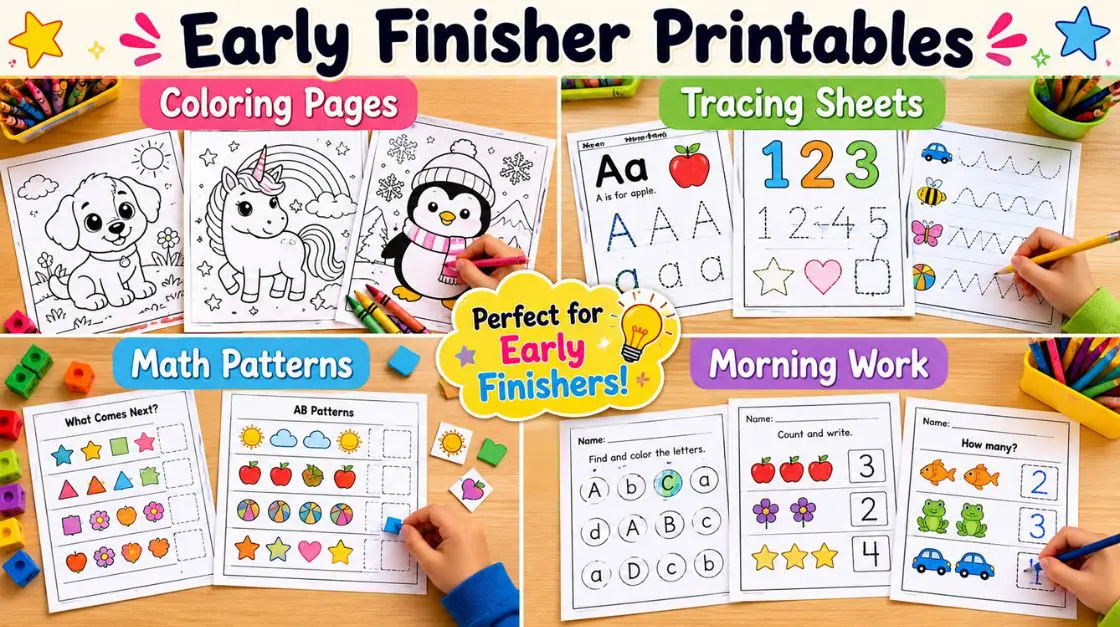
Calm corner printables are low-demand activity sheets specifically designed to help children self-regulate, decompress, and refocus. In a kindergarten setting, they’re most often used in a designated calm-down space — but they’re equally effective as early finisher activities for students who need a slower, quieter transition after completing their work.
The best calm corner printables for classroom use include simple coloring pages with soothing themes, breathing exercise visuals, emotion check-in prompts, and mindfulness-style doodle grids.
Why Calm Corner Printables Belong in Every Kindergarten
Here’s the honest truth: not every student who finishes early does so from a place of calm readiness. Some rushed through to be first. Some are overwhelmed and retreating into task completion. Some are running on high energy and need a reset before they can engage in anything else.
Calm corner printables meet the needs of all these students without requiring teacher intervention. A student who finishes early and feels wound up can move to the calm corner, pick up a coloring sheet, and come back regulated — without pulling your attention away from the group.
The calm corner coloring pages pack was designed specifically for K–2 classrooms, with emotional regulation in mind. Soothing, simple designs at 300 DPI in both A4 and US Letter — print once and keep a stack in your calm corner all year.
How to Integrate Calm Corner Printables Into Your System
Calm corner printables work best when:
- They’re physically accessible (in a folder or tray that students can reach on their own)
- They’re separate from “work” activities — this space should feel different
- The routine is explicitly taught and practiced during the first weeks of school
- Students have a choice of two or three options (coloring, drawing, breathing cards)
Pair calm corner printables with your printable teacher resources hub to build out a complete independent work toolkit.
Morning Work Printables Kindergarten Teachers Swear By
What Makes a Good Morning Work Printable for Kindergarten?
Morning work printables for kindergarten need to pass a simple test: Can a five-year-old pick this up, understand what to do, and complete it independently within ten minutes? If the answer is yes, it works.
The best morning work printables kindergarten classrooms use include:
- Tracing and handwriting practice — supports pencil control and letter formation
- Simple coloring with labels — vocabulary reinforcement without reading pressure
- Number recognition and sequencing — brief and confidence-building
- Pattern completion — low-stakes but cognitively engaging
- Seasonal draw-and-color prompts — spark creativity and seasonal vocabulary
The key is consistency. When students know exactly what their morning work printables look like, they settle into them without direction. That means you start the day with a calm, focused room — not a noisy transition.
Morning Work as a Double-Duty Strategy
Here’s a classroom management move that experienced K teachers know well: use the same type of page for both morning work and early finisher activities. When a student finishes early, they don’t need new instructions — they grab from the same familiar stack.
This strategy is particularly effective with a rotating set of morning work printables that kindergarten-level students build familiarity with over time. The kindergarten morning work printables collection is structured as a four-week rotation, so the format stays consistent even as the content changes.
Pairing Morning Work with Free Printable Options
If you’re just getting started, it’s worth grabbing a few free options to test what your students respond to. The free printable activities for kindergarten page includes no-prep morning work and early-finisher pages that you can download instantly — no purchase required.
Printable vs. Non-Printable: Quick Comparison
| Feature | Printable Early Finisher Activities | Non-Printable (Bins, Manipulatives) |
|---|---|---|
| Prep Time | Zero (instant download, print and go) | Requires setup, sorting, resetting |
| Cost | Low one-time download fee | Ongoing supply costs |
| Independence Level | High — students work without guidance | Moderate — instructions often needed |
| Noise Level | Very low | Moderate to high |
| Skill Reinforcement | Direct (tied to curriculum skills) | Variable |
| Seasonal Flexibility | Easily rotated with new downloads | Requires buying or making new materials |
| Storage | Minimal (a folder per student) | Bins, trays, shelf space required |
| Calm Corner Compatibility | Yes — soothing and screen-free | Partially — depends on the activity |
| Reusability | Print as many copies as needed | Items may wear out or go missing |
| Accessibility | Print from any device, anywhere | Must be physically present in the classroom |
How to Set Up an Early Finisher Activities System in Your Classroom
Step 1: Decide on Your Format
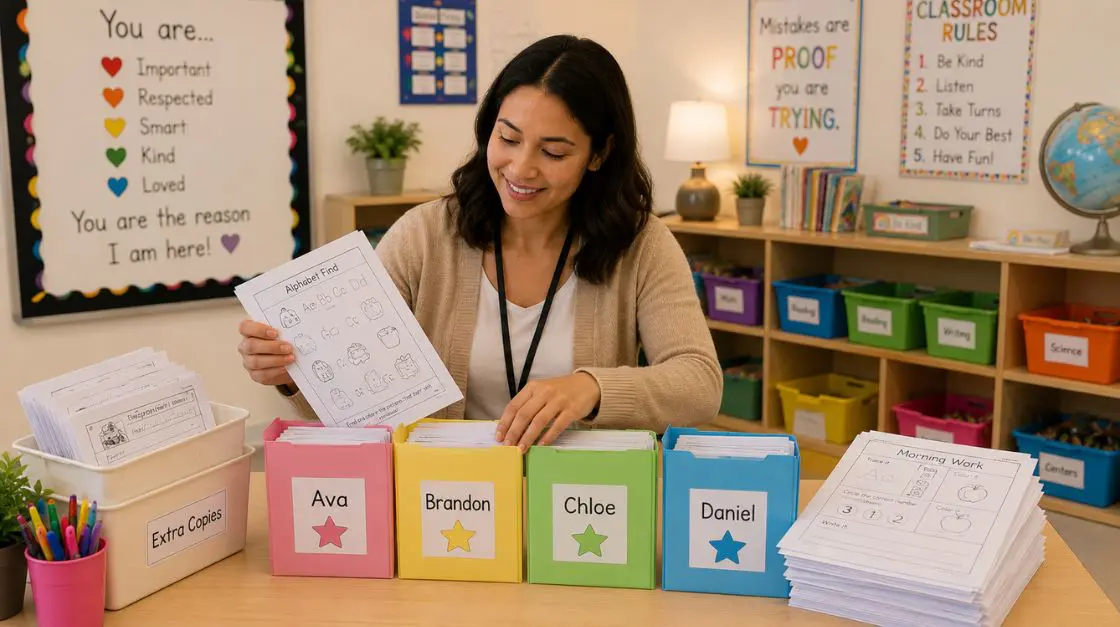
Choose whether students will have individual folders, a shared activity tray, or access to a designated early finisher station. Folders give the most independence — students don’t need to move or ask permission.
Tip: Label folders by student name with a small clip. Keep five to seven pages per student at a time, refreshed weekly.
Step 2: Select Two to Three Activity Types
Don’t overwhelm students (or yourself) with too many options at first. Start with:
- One skill-based sheet (tracing, math patterns, word work)
- One creative option (coloring page, draw-and-label)
- One calm corner option (soothing coloring page or doodle sheet)
Step 3: Teach the Routine Explicitly
Spend ten minutes during the first week of school practicing the early finisher routine. Model exactly what students should do: finish work, put it in the finished pile, open the folder, and begin quietly. Role-play it. Practice it multiple times.
Tip: Create a simple anchor chart showing the three steps. A picture cue works better than text for kindergarteners.
Step 4: Print and Organize Your Resources
Download and print at least two to three weeks of materials before school starts. Use the year-round teacher activity bundle for a comprehensive set covering morning warm-ups, math patterning, early-finisher tasks, and seasonal activities — all in one download.
Step 5: Rotate Content Regularly
Replace the activities in student folders every 1 to 2 weeks. Seasonal rotations work well — swap in spring worksheets in March, summer coloring pages in May, and so on. This keeps early finisher activities for kindergarten feeling fresh without adding to your planning load.
Step 6: Build in the Calm Corner as a Parallel Option
Position your calm corner as a choice, not a default. Some students will prefer the energy of skill-based work; others will gravitate toward the calm corner printables. Both are valid. The goal is independent, quiet engagement — not uniformity.
Step 7: Evaluate and Adjust After Two Weeks
After your first two weeks with the system running, take a quick mental note: Are students settling into the routine quickly? Are there activities that are too easy or too hard? Are any students consistently needing teacher support?
Adjust formats based on what you observe. The beauty of printable early finisher activities for kindergarten is that you can swap a page overnight with zero effort.
Visual Ideas to Inspire Your Classroom Setup
The “Just-Right” Early Finisher Station
Imagine a small corner of your room: a low shelf with student folders stacked neatly, a pencil cup, a small basket of crayons, and a little sign with three picture steps (“Finish → File → Folder”). Clean, uncluttered, inviting.
The activity sheets themselves set the tone. Bold seasonal coloring pages — a cozy fall pumpkin scene, a snowy winter woodland, bright spring flowers — signal that this space is for calm, creative work.
Calm Corner Aesthetic
Calm corners work best when they feel visually different from the regular workspace. Soft colors, a cushion or bean bag, and soothing imagery on the wall all help. Pair printed calm corner coloring pages with nature themes: ocean scenes, simple botanical doodles, gentle animal illustrations.
The ocean animal coloring pages and jungle animal coloring pages both work beautifully in this setting — bold outlines, familiar animals, no reading required.
Seasonal Gallery Displays
One low-prep way to celebrate early finisher work: create a rotating seasonal display using completed coloring pages. Students finish a page, add their name, and it goes on the “gallery wall” for the week. This turns independent work into something worth caring about.
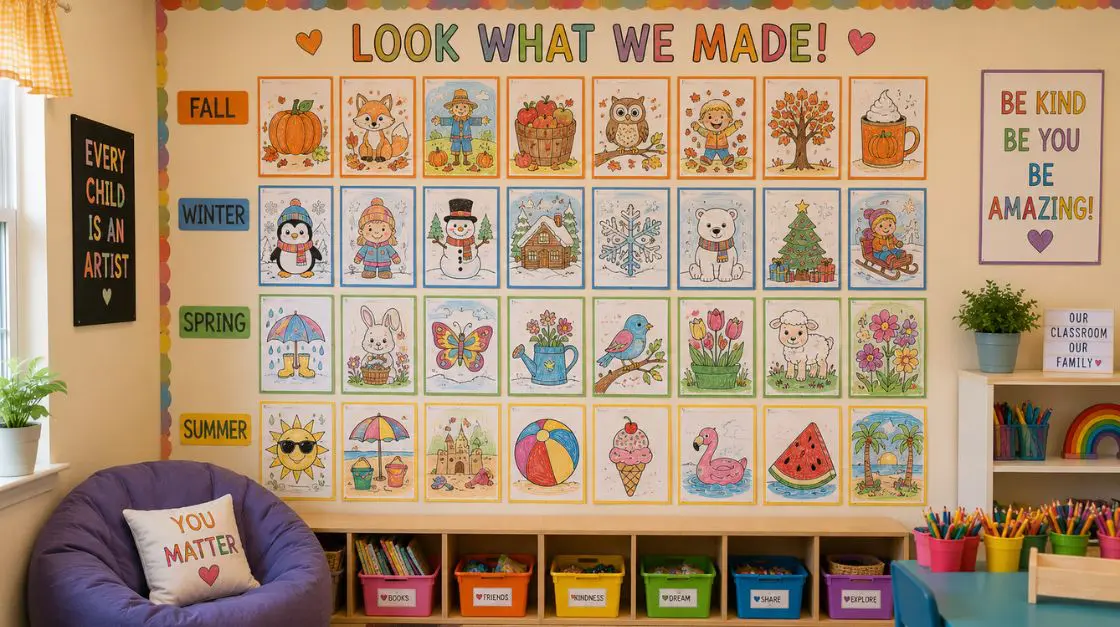

Printable Activities for Kindergarten — Seasonal Bundle | No-Prep
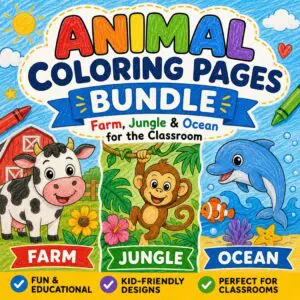
Animal Coloring Pages Bundle — Farm, Jungle & Ocean Classroom Set
One Last Thing Before You Go
You don’t have to choose between teaching well and managing your classroom effectively. The best early finisher activities for kindergarten do both at once — they keep every student productively engaged while you do the work that actually requires you.
The system doesn’t need to be complicated. A folder. A stack of printables. A clear routine was practiced in the first week. That’s it.
Whether you start with calm corner printables to create a quiet reset space, morning work printables to anchor your daily routines, or a full bundle that covers the whole year, the most important step is having something ready before the next student looks up from their worksheet and asks, “Now what?”
👉 Browse the full printable teacher resource library →
👉 Grab free early finisher printables to try first →