Calm Corner Ideas for Classroom Use: The Complete K–2 Setup Guide
Picture this: a kindergartner melts down during transition time. The noise level rises. Three other kids start to wobble. You need a solution that actually works — not a timeout chair, not a stern look, but a real, supportive space where little learners can return to calm on their own.
That’s exactly what a well-designed calm corner can do.
Whether you’re setting one up for the first time or refreshing a space that isn’t quite working, this guide walks you through everything — from the science behind emotional regulation to the exact supplies, printables, and layout strategies that make calm corners truly effective in K–2 classrooms.
Ready to transform your classroom culture? Let’s build your calm corner together.

⚡ Quick Answer
A calm corner is a designated classroom space where students ages 5–8 can independently regulate their emotions. To set one up, choose a quiet corner, add soft seating, include sensory tools, emotion visuals, and calming activities like coloring pages. Keep it simple, accessible, and student-led.
Why Every K–2 Classroom Needs Calm Corner Ideas That Work
Young learners — especially kindergartners and first graders — don’t yet have the neurological wiring to manage big emotions on their own. They need guidance, practice, and most importantly, a safe place to try.
Calm corner ideas for classroom use aren’t just trendy. They’re rooted in decades of research on self-regulation, trauma-informed teaching, and social-emotional learning (SEL). And when done well, they reduce behavioral disruptions, increase on-task time, and help kids feel seen.
Benefits for Students
- Builds emotional vocabulary and self-awareness
- Teaches kids to recognize their own feelings before they escalate
- Gives them agency — they choose when they need a break
- Reduces shame around big emotions (it’s a tool, not a punishment)
- Supports sensory needs without singling anyone out
Benefits for Teachers
- Fewer interruptions to whole-class instruction
- Less time spent managing behavior, more time teaching
- A visible, physical reminder that your classroom values feelings
- Easy to integrate with your existing SEL curriculum
- Pairs beautifully with morning meeting routines and check-ins
Real-Life Scenarios Where It Helps
A child who just had a hard drop-off at school. A student who struggles with transitions between activities. A kid who’s overwhelmed by noise during center time. In every one of these moments, calm corner ideas for classroom use give students a clear, independent path back to readiness.

The Science Behind Why Calm Corner Printables Work
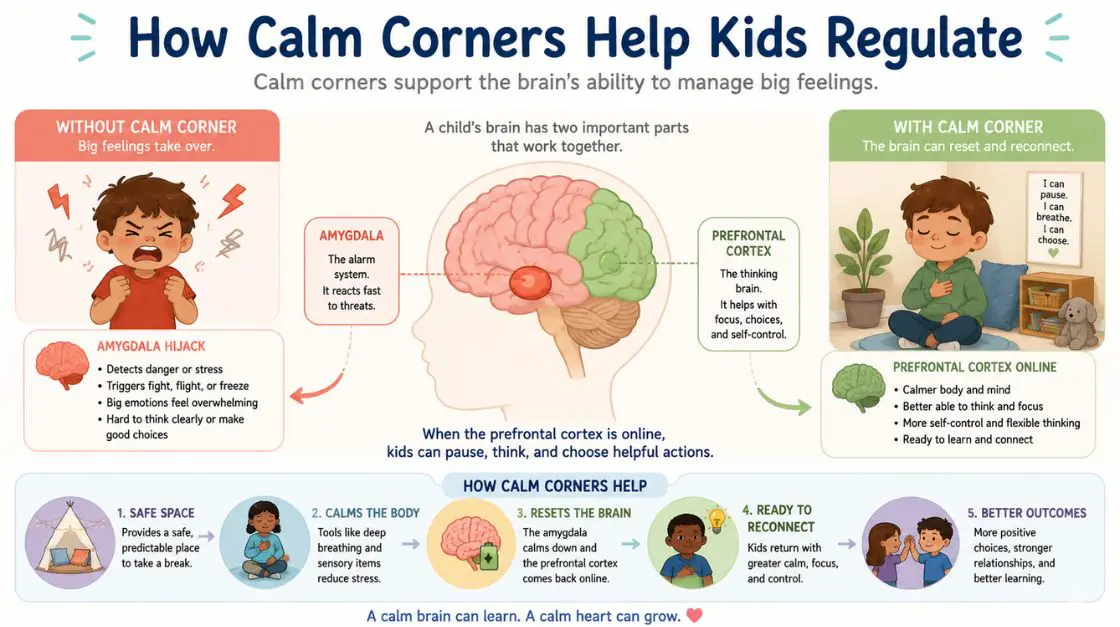
Here’s what’s actually happening in a child’s brain when they’re dysregulated: the amygdala — the brain’s alarm system — is in overdrive. The prefrontal cortex, responsible for reasoning and decision-making, goes temporarily offline.
No amount of “calm down” instructions reaches a child in that state. What does reach them? Safety, sensory input, and low-stimulation environments.
Calm corners work because they address the brain’s needs directly:
- Soft textures and muted colors signal physical safety to the nervous system
- Breathing visuals and fidget tools redirect the body’s stress response
- Coloring and drawing engage the calm, focused parts of the brain
- Emotion charts help kids name what they feel, which research shows reduces emotional intensity
Child therapist and SEL educator Dr. Ross Greene has long emphasized that “kids do well when they can.” A properly designed calm corner gives kids the scaffolding to actually do well — on their own terms.
Mindfulness-based interventions in elementary schools have been shown to reduce anxiety and increase emotional resilience. Even just five minutes of calm corner use can help a child reset enough to return to learning productively.

Types of Calm Corner Setups for K–2 Classrooms
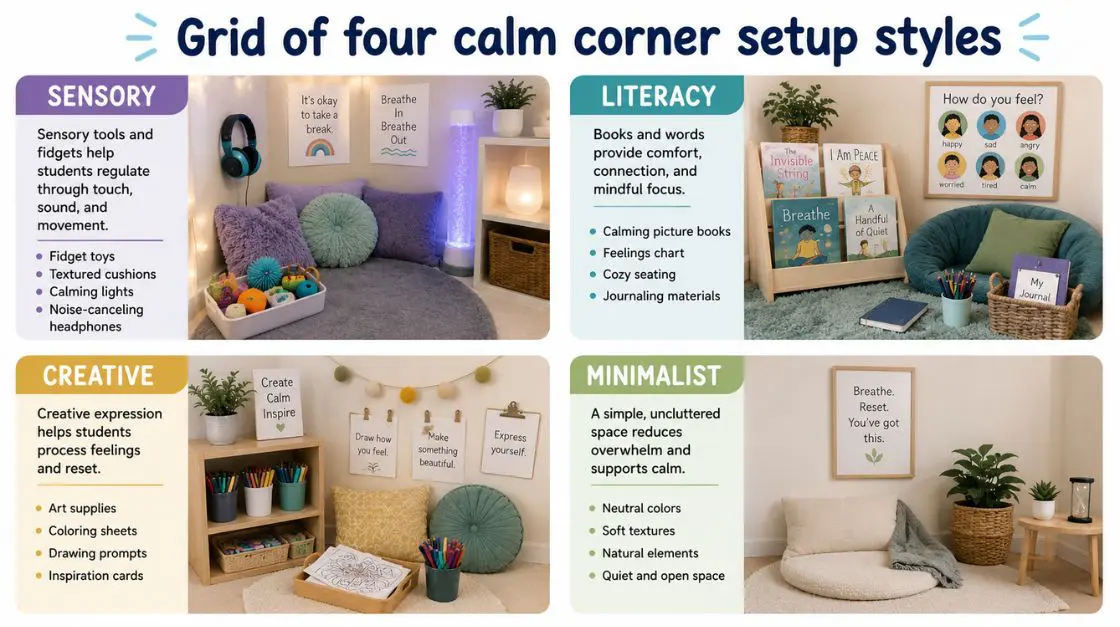
Not every classroom looks the same — and neither should every calm corner. Here are the most effective formats, each suited to different needs and spaces.
1. The Sensory Calm Corner
Best for: Students with sensory processing needs, ADHD, autism spectrum, or high energy
This setup prioritizes tactile and proprioceptive input. Think weighted lap pads, textured fidget tools, noise-canceling headphones, and kinetic sand timers. Keep visuals minimal and the color palette neutral.
Suggested use: Available to all students, especially during high-stimulation parts of the day.
2. The Feelings & Literacy Corner
Best for: Whole-class SEL integration, early readers, kindergarten, and 1st grade
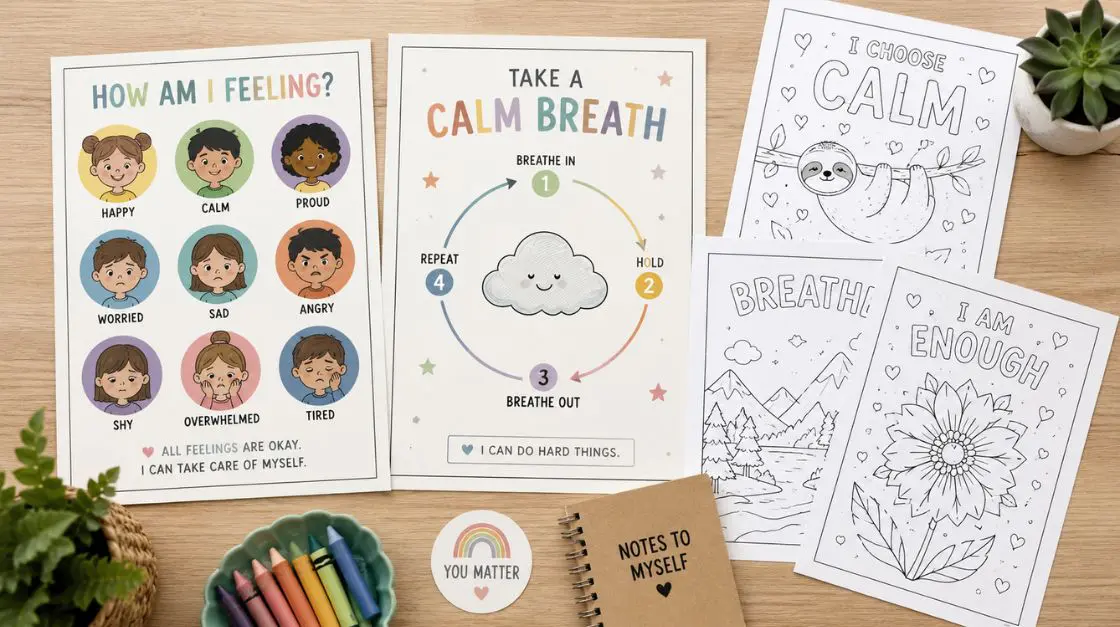
Stock this version with emotion wheels, feeling word cards, and simple journaling prompts. Add a few calm-themed picture books and calm corner printables featuring emotion faces and regulation strategies.
Suggested use: After morning meeting, during transitions, or as part of a feelings check-in routine.
3. The Creative Reset Corner
Best for: Kinesthetic learners, artistic students, or classrooms that already use art as a tool
Include coloring pages, blank drawing paper, crayons, and guided breathing posters. Calm corner coloring pages designed specifically for emotional regulation work especially well here — they give kids a calming, screen-free activity that requires just enough focus to interrupt the stress response.
Suggested use: As a go-to during or after emotional moments, or as a quiet, independent activity for early finishers.
4. The Minimalist Corner
Best for: Small classrooms, teachers just getting started, or low-budget setups
A single floor cushion, a simple breathing poster, and two or three calm corner printables. That’s it. You don’t need much for it to work — consistency and clear expectations matter more than stuff.

Calm Corner Supplies for Classroom Use
Once you know what type of corner fits your space, gathering the right calm corner supplies for classroom use becomes much easier. Here’s a practical breakdown:
Essential Supplies
| Category | What to Include | Why It Helps |
|---|---|---|
| Seating | Floor cushion, bean bag, or small chair | Physical grounding signals safety |
| Visuals | Emotion chart, breathing poster, calm-down menu | Supports independent regulation choices |
| Tactile tools | Stress ball, fidget cube, textured fabric swatch | Redirects nervous energy through the hands |
| Calming activities | Coloring pages, drawing paper, crayons | Engages the focused, creative brain |
| Books | 2–3 emotion-themed picture books | Normalizes big feelings through story |
| Timer | Sand timer or visual timer | Gives kids a concrete sense of time |
Calm Corner Supplies for Classroom — Optional Extras
- Noise-canceling headphones (especially helpful for sensory-sensitive learners)
- Lavender-scented playdough or a small sensory bin
- A small mirror (for practicing calm breathing and facial expressions)
- Calm music on a simple speaker or tablet
- A “feelings journal” for students who like to write or draw what they feel
The key principle: less is more. Too many options overwhelm rather than calm. Start with five to seven items and refine over time.
Calm Corner Printables That Actually Help
Printables are one of the most cost-effective and versatile components of any calm corner. The right calm corner printables do three things at once: they guide kids through regulation strategies, they make the space feel intentional, and they give students something to do with their hands and eyes while they reset.
Must-Have Calm Corner Printables
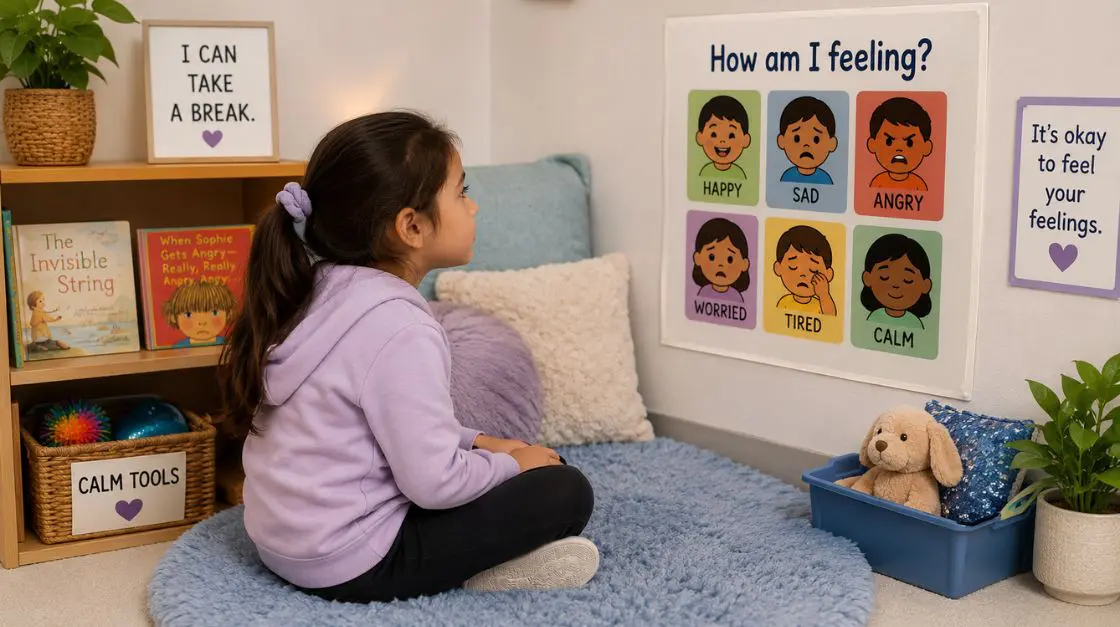
Emotion Check-In Charts — These help students identify and name their feelings before choosing a strategy. Simple faces with labeled emotions work best for K–2.
Calm-Down Strategy Menus — A visual list of options (take five deep breaths, squeeze a stress ball, count to ten, color a page) empowers kids to choose their own reset tool.
Breathing Guides — Star breathing, box breathing for little ones, or “smell the flowers, blow out the candles” visuals are especially effective.
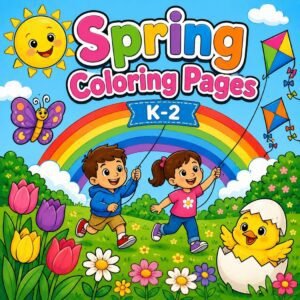
Coloring Pages Designed for Calm — Not all coloring pages are created equal. Calm corner coloring pages designed specifically for emotional regulation feature soothing imagery — simple patterns, nature scenes, gentle animals — that naturally lower arousal.
You can laminate these printables for durability, or print multiple copies and replace them as needed. If you’re looking for a ready-made set, the 12 Calm Corner Coloring Pages — K–2 Emotional Regulation Pack is a great starting point.
For teachers who also want to round out their independent work station, early finisher activities for kindergarten pair naturally with calm corner printables — both are screen-free, low-prep, and designed to keep kids meaningfully engaged.

Calm Corner for Kindergarten: Age-Specific Tips
Kindergartners are a special case. They’re 5–6 years old, often in their first structured classroom environment, and they’re still learning to understand feelings as separate from action. A calm corner for kindergarten needs to account for all of that.
What Makes a Kindergarten Calm Corner Different
Visuals must be simple and concrete. An emotion wheel with written words won’t help a non-reader. Use large, expressive face illustrations and limit the choices to four to six core emotions: happy, sad, angry, scared, surprised, calm.
Physical grounding is essential. Kindergartners regulate through their bodies first. A soft surface, a weighted lap pad, or even just a cozy spot with a stuffed animal can make a significant difference.
The routine matters as much as the space. Introduce the calm corner during the first week of school. Practice using it together. Role-play what it looks like to choose it independently.
Keep it joyful. A calm corner for kindergarten shouldn’t feel clinical or punitive. Soft colors, a favorite class mascot nearby, and cheerful (but not overstimulating) decorations make the space welcoming.
Coloring is magic for this age. Simple, soothing coloring pages give kindergartners a structured sensory activity that doesn’t require reading or verbal processing. Calm corner coloring pages with gentle imagery — animals, nature, simple patterns — are ideal.
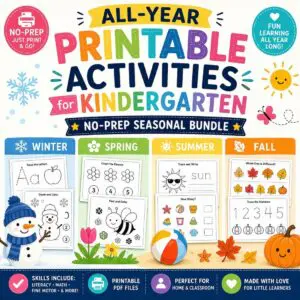
You can also connect your calm corner to seasonal learning by rotating seasonal materials throughout the year. Printable activities for kindergarten, with seasonal themes, give the corner a fresh feel while maintaining familiar routines.
Comparison: DIY Calm Corner vs. Ready-Made Resources
| Feature | DIY Calm Corner | Ready-Made Calm Corner Resources |
|---|---|---|
| Cost | Lower upfront, more time investment | Small cost, saves hours of prep |
| Customization | Fully customizable to your class | Usually flexible for classroom use |
| Setup Time | Several hours of sourcing and creating | Minutes — print and laminate |
| Quality | Variable depending on materials | Consistent, professionally designed |
| Accessibility | Requires design skills | No design skills needed |
| Reprintability | Limited (handmade originals) | Unlimited — reprint as needed |
| Best For | Teachers with time and creativity | Busy teachers who want it done right |
For most K–2 teachers, a hybrid approach works best: use ready-made calm corner printables for the visual elements (emotion charts, breathing guides, coloring pages) and personalize the physical space with items that reflect your classroom community.
How to Set Up a Calm Corner — Step by Step
Learning how to set up a calm corner doesn’t have to be overwhelming. Follow these steps, and you’ll have a functional, beautiful corner ready within a weekend.

Step 1: Choose the Right Location
Look for a corner that is:
- Away from high-traffic areas (doors, cubbies, group tables)
- Partially enclosed if possible (a bookshelf on one side creates coziness)
- Visible to you from most teaching positions for safety monitoring
- Quiet and low-stimulation
Pro tip: Avoid placing it near the pencil sharpener, classroom door, or any noisy equipment.
Step 2: Set Up Comfortable Seating
Start simple. A floor cushion, a small bean bag, or even a folded yoga mat works. The goal is physical comfort that signals “this is a safe, soft place.” You don’t need to spend a lot.
Step 3: Add Your Visual Supports
Laminate and mount these at eye level for a seated child:
- Emotion check-in chart
- Calm-down strategy menu
- Breathing guide
These are the backbone of independent emotional regulation. Without them, the corner is just a cozy seat.
Step 4: Create a Calm Activity Station
Add a small basket or tray with:
- 5–6 calm corner coloring pages (rotate weekly or monthly)
- Crayons or colored pencils
- One or two fidget tools
- A small sensory item (stress ball, textured ring)
The 12 Calm Corner Coloring Pages pack gives you a ready-to-use collection specifically designed for this purpose.
Step 5: Establish Clear Expectations
Before students use the corner, teach it explicitly:
- Who can use it and when
- How long they can stay (2–5 minutes is typical)
- What to do when they feel ready to return
- That it’s a tool, not a reward or consequence
Post the expectations as a simple visual reminder nearby.
Step 6: Introduce It to Students
Do a class walkthrough. Model using it yourself. Use puppets or role-play scenarios for kindergarten. Let students practice choosing it during a low-stakes moment before they need it in a high-stakes one.
Step 7: Maintain and Refresh It
Rotate coloring pages monthly. Check that supplies are replenished. Consider connecting it to seasonal themes — spring worksheets or winter activities can add seasonal freshness without disrupting the space’s calm function.
Visual Inspiration: What Great Calm Corner Ideas for Classroom Use Look Like
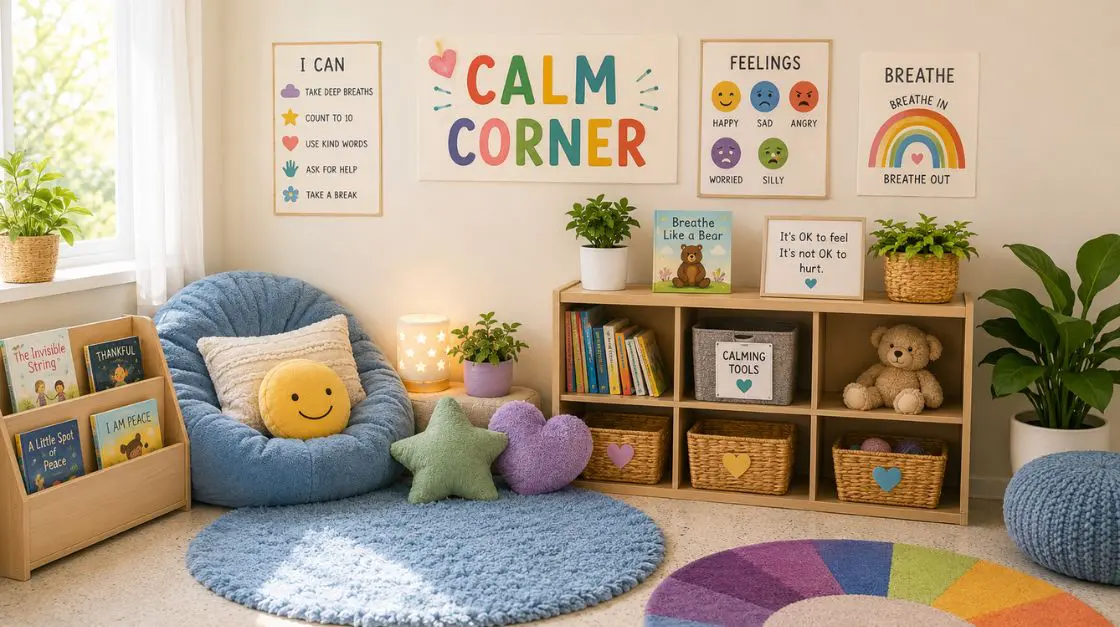
A well-designed calm corner should feel like a breath of fresh air — visually quiet, warm, and inviting without being stimulating. Here’s what to aim for:
Color Palette: Soft greens, muted blues, warm creams, and light lavender. These colors are shown to lower heart rate and promote a sense of safety. Avoid primary-color overload, busy patterns, or neon.
Lighting: If possible, add a small warm-toned lamp or string lights (low watt, no fire hazard). Natural light filtered through a sheer curtain works beautifully. Overhead fluorescent lighting alone is not ideal.
Wall Display: Keep it intentional. Two or three laminated printables at the child’s eye level — not a gallery wall of 15 things. Use soft-toned frames or just laminate directly.
Textures: A faux fur cushion, a small knit throw, a smooth wooden bead fidget ring. Texture variety soothes through sensory input without overwhelming.
Personalization: A class-made “calm corner welcome” sign, a small plant (if appropriate), or a rotating “calm book of the week” makes the space feel alive and valued.

Featured Calm Corner Resources
🎨 12 Calm Corner Coloring Pages — K–2 Emotional Regulation Pack
Best for: All K–2 classrooms, special education settings, and homeschool environments
This ready-to-print pack includes 12 soothing coloring pages designed specifically to support emotional regulation. Images are simple, calming, and appropriate for ages 5–8. Available as high-resolution PDFs in both A4 and US Letter formats.
→ Download the Calm Corner Coloring Pages Pack

📚 Early Finisher Activities for Kindergarten
Best for: Teachers who want calm, independent activities beyond the calm corner
These no-prep printables are perfect to use alongside your calm corner setup — especially for students who finish work early and need a screen-free, low-stimulation option.
→ Explore Early Finisher Activities for Kindergarten
🍂 Seasonal Activity Bundles
Rotate fresh, seasonally-themed content into your calm corner throughout the year. The Printable Activities for Kindergarten Seasonal Bundle covers all four seasons in one download — fall crafts, winter activities, spring worksheets, and more.
→ Browse the Seasonal Kindergarten Bundle
FAQ about Calm Corner Ideas for Classroom
Q1: What is a calm corner in a classroom?
A: A calm corner is a designated, low-stimulation space in a K–2 classroom where students can independently manage big emotions and return to a regulated state. It typically includes soft seating, visual supports for emotion, sensory tools, and calming activities such as coloring or breathing exercises.
Q2: How do I introduce calm corner ideas for classroom use to young students?
A: Start during the first week of school. Walk the class through the space together, model how to use it, practice with role-play, and explain it as a tool — not a consequence. Consistency and positive framing are key.
Q3: What are the best calm corner supplies for classroom settings?
A: The most effective calm corner supplies for classroom use include a comfortable seat, an emotion check-in chart, a calm-down strategy menu, a breathing visual, sensory tools (stress ball, fidget cube), and calming coloring pages. Start small and add based on student needs.
Q4: How long should students spend in the calm corner?
A: Most K–2 students benefit from two to five minutes. Set a visual timer so students can self-monitor. The goal is a short reset, not an extended withdrawal from the classroom community.
Q5: Can calm corner printables replace purchased materials?
A: Yes — calm corner printables are often the most effective materials in the space. A well-designed emotion chart or breathing guide printed and laminated outperforms most commercial products. The key is choosing printables designed specifically for emotional regulation, not just any decorative poster.
Q6: Is a calm corner the same as a timeout spot?
A: No. A timeout is teacher-directed and often consequence-based. A calm corner is student-directed and emotionally supportive. The distinction matters enormously — timeout carries shame; the calm corner builds self-regulation skills.
Q7: How do I set up a calm corner specifically for kindergarten?
A: For a calm corner for kindergarten, prioritize large visual emotion faces (no reading required), physical comfort (soft seating, textured tools), and simple coloring pages as the main activity. Keep expectations concrete and routine-based, and model their use during low-stress moments before you need them during high-stress ones.
Q8: What calm corner printables work best for ages 5–8?
A: The best calm corner printables for this age range include large-face emotion charts, simple breathing guides (star breathing or belly breathing visuals), calm-down choice menus with pictures, and soothing coloring pages. Avoid text-heavy materials for kindergarten.
Q9: How often should I refresh my calm corner?
A: Monthly rotation keeps the space feeling fresh and relevant. Swap out coloring pages, add seasonal materials, and do a quick inventory of supplies at the start of each month. Connecting the corner to seasonal themes — like fall crafts for kids in autumn or spring worksheets in March — can make updates easy and natural.
Q10: Do calm corners work for the whole class or just certain students?
A: Calm corner ideas for classroom use work best when they’re available to every student, not just those identified as having behavioral challenges. Universal access reduces stigma, normalizes emotional regulation as a life skill, and benefits children whose needs might otherwise go unnoticed.
Related Links
Explore more classroom-ready resources from EG Creativity:
- 🎨 Calm Corner Coloring Pages — K–2 Emotional Regulation Pack — Printable coloring pages designed for emotional regulation in the classroom, calm corner
- 📋 Early Finisher Activities for Kindergarten — No-prep printable ideas for independent learning time
- 🌸 Printable Activities for Kindergarten — Seasonal Bundle — Four-season bundle for year-round classroom engagement
- ❄️ Winter Activities for Kids — 10 printable seasonal designs for K–2 winter learning
- 🌷 Spring Worksheets for Classroom — 10 seasonal activity sheets for spring classroom use
- 🍂 Fall Crafts for Kids — Autumn printable activity set for K–2 classrooms
- 🐾 Animal Coloring Pages Bundle — Farm, jungle, and ocean sets for creative classroom time
Build Your Calm Corner — Starting Today
You don’t need a Pinterest-perfect setup or a big budget. You need a corner, a cushion, a few thoughtful printables, and a commitment to treating your students’ emotional lives as part of their education.
Calm corner ideas for classroom use aren’t just about managing behavior — they’re about building a classroom where children feel safe enough to learn, brave enough to try, and supported enough to come back from hard moments.
Start small. Start today. And watch what happens when your kindergartners know they have a place to go when the world feels like too much.
👉 Download the 12 Calm Corner Coloring Pages — K–2 Emotional Regulation Pack and have your activity station ready by tomorrow morning.