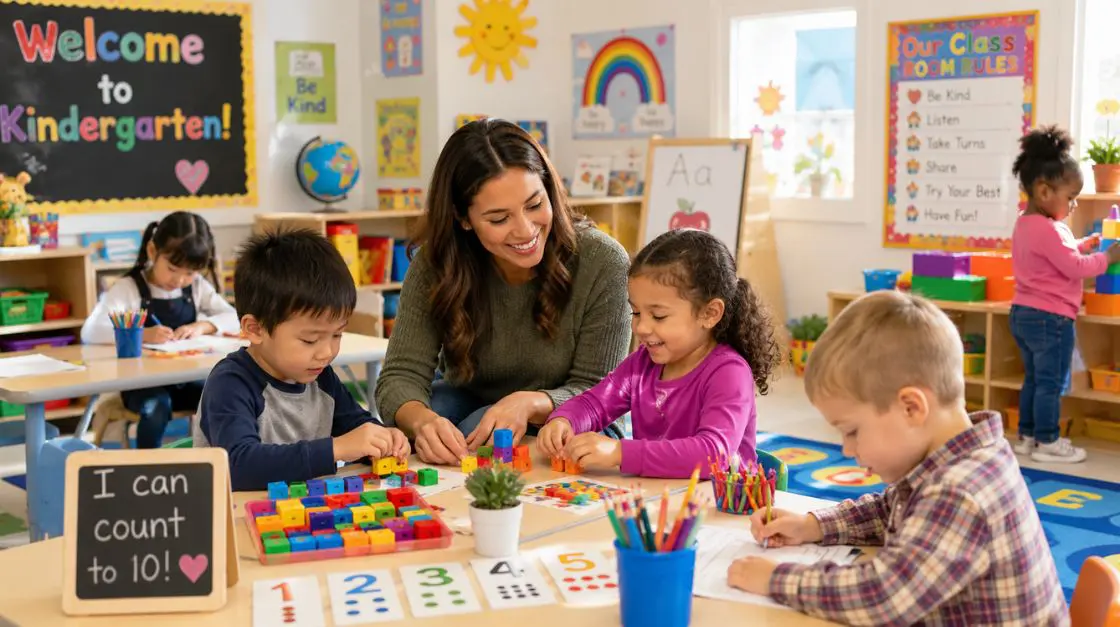
The Best Educational Games for Kids: No-Prep Activities Every Kindergarten Teacher Needs
You’ve got 22 five-year-olds, a substitute teacher on the way, and zero prep time. Sound familiar?
Whether it’s a last-minute lesson gap, a restless Friday afternoon, or that five-minute window between transitions, kindergarten teachers know the panic of needing something that actually works right now. The good news? The best educational games for kids don’t require scissors, laminating pouches, or a Sunday afternoon of prep. They just require a little know-how — and this guide has you covered.
In this post, you’ll find the most effective no-prep kindergarten classroom activities organized by type, backed by early childhood research, and ready to use tomorrow. From quick kindergarten brain breaks to deep learning games, you’ll have a full toolkit by the time you finish reading.
👉 Ready to simplify your classroom? Browse our free printable activities for kindergarten — no prep required.
Quick Answer
The best no-prep educational games for kindergarten kids include oral storytelling rounds, movement-based counting games, call-and-response phonics chants, and simple sorting challenges with classroom objects. These kindergarten classroom activities require no materials, take 2–5 minutes to set up, and keep young learners actively engaged while supporting literacy, numeracy, and social development.
Why No-Prep Activities Matter in Early Childhood Education
The Reality of the Kindergarten Classroom
Teaching kindergarten is one of the most demanding jobs in education. You’re simultaneously managing behavior, differentiating instruction, supporting emotional development, and trying to hit 15 different learning standards — all before snack time.
Early childhood education activities that require zero prep aren’t a shortcut. They’re a survival strategy. And when done right, they’re often more effective than over-engineered lessons because they stay responsive to the actual energy and needs of your students in the moment.
Who Benefits Most from No-Prep Educational Games for Kids?
- Kindergarten and first-grade teachers managing transitions, sub days, or filler time
- Homeschool parents who need spontaneous learning moments
- Substitute teachers walking into an unfamiliar room with a simple plan
- Paraprofessionals and classroom aides are looking for ways to support small groups
- Special education and ESL teachers who need adaptable, low-barrier activities
- Preschool teachers introducing structured play to younger learners
The Hidden Power of Simple Classroom Activities
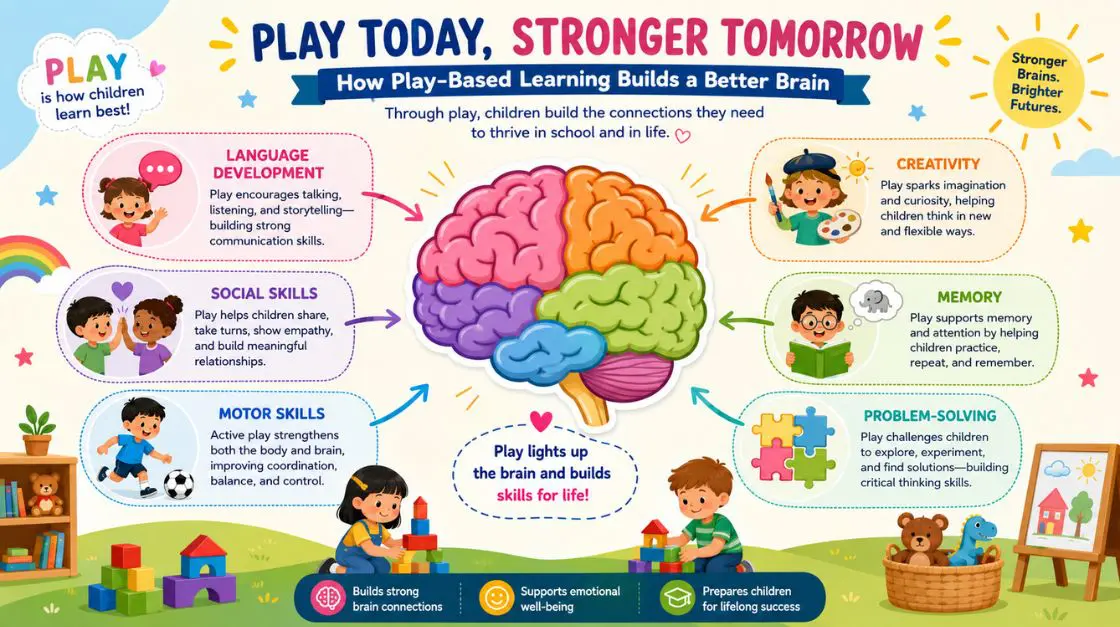
Here’s what research confirms and experienced teachers already know: young children don’t need elaborate setups to learn deeply. The brain is primed for play-based discovery. Kindergarten classroom activities that use movement, repetition, social interaction, and sensory engagement are often the ones that create the strongest neural connections.
In fact, spontaneous educational games for kids — the kind that grow from a teacher’s quick thinking — tend to produce some of the richest conversations, most creative thinking, and strongest community building in the classroom.
Benefits of no-prep early childhood education activities:
- Reduce teacher stress and burnout
- Increase student engagement during transition times
- Build classroom community through shared experiences
- Support differentiation without extra planning
- Can be adapted for any learning objective on the fly
- Work across a wide range of developmental levels
“The best kindergarten classroom activities aren’t the ones that took you the most time to make — they’re the ones that meet kids exactly where they are.”
The Science Behind Play-Based Learning
Why Educational Games for Kids Work — Especially at This Age
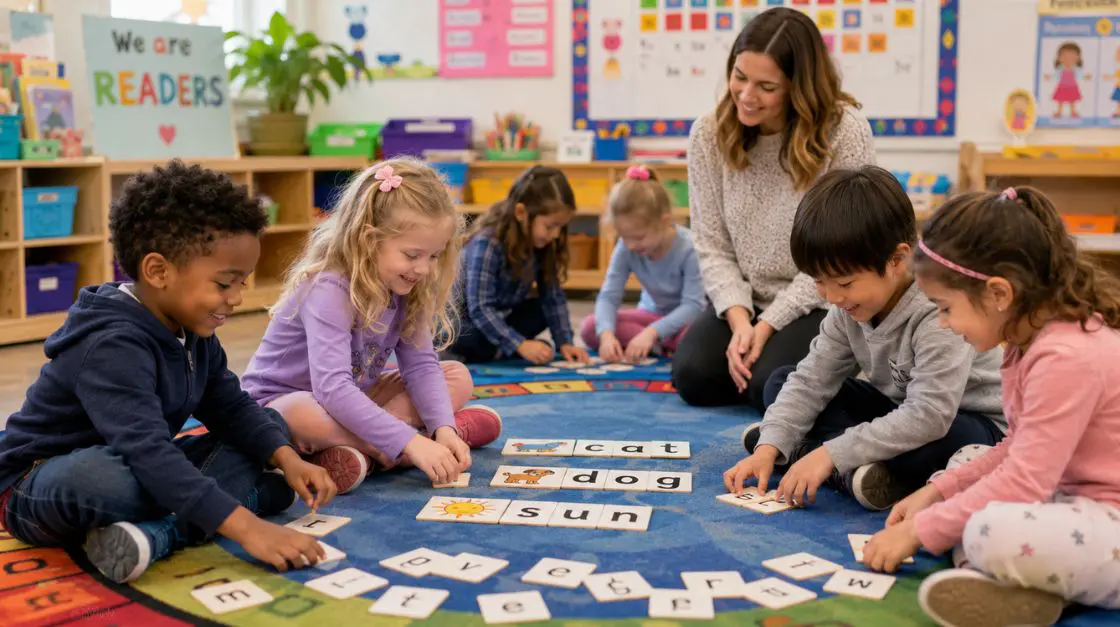
Educational psychology is clear on this point: children aged 4–7 learn best through active, play-based engagement. The kindergarten brain is in a critical window for language acquisition, social development, executive function, and foundational numeracy. Educational games for kids at this stage aren’t just fun — they are the pedagogy.
Here’s why no-prep kindergarten brain breaks and movement games work on a neurological level:
1. Movement activates the whole brain. When children stand up, clap, jump, or gesture, they activate the cerebellum — the part of the brain that governs both physical coordination and learning consolidation. Kindergarten brain breaks aren’t wasted time. They are learning time in disguise.
2. Repetition through play builds memory. Chants, rhythm-based games, and call-and-response activities engage auditory processing and help young learners encode information more reliably than passive instruction.
3. Social interaction deepens comprehension. Peer-to-peer educational games for kids activate language processing, perspective-taking, and self-regulation — all areas that are rapidly developing during the kindergarten years. These are core goals of early childhood education activities.
4. Low-stakes play reduces anxiety. Young learners perform better and take more intellectual risks in playful, relaxed environments. Informal games remove the pressure of “getting it right” and replace it with curiosity.
A Note on Executive Function
Many kindergarten classroom activities — especially those involving turn-taking, rule-following, and self-monitoring — directly build executive function skills. These include working memory, cognitive flexibility, and inhibitory control. All three are strong predictors of academic success in later years, and all can be developed through simple, no-prep educational games for kids.
Types of No-Prep Educational Games for Kids
1. Literacy & Language Kindergarten Classroom Activities
Best for: Building phonemic awareness, vocabulary, storytelling, and listening skills.
These are among the most powerful early childhood education activities, as language development is so central to the kindergarten year. None of these requires materials.
Top no-prep literacy activities:
- Story Buildup: Start a sentence (“One day a tiny frog…”) and go around the circle. Each child adds one sentence. This builds narrative structure, listening skills, and imaginative language.
- Sound Sorting: Call out a word and have children signal (thumbs up/down, stand/sit) whether it starts with a specific sound. Instant phonemic awareness practice.
- Rhyme Tennis: You say a word, a child volunteers a rhyme. Builds phonological awareness in 60 seconds flat.
- I Spy with Letters: “I spy something in our classroom that starts with the /m/ sound.” Connects phonics to the real environment.
- Sentence Stretching: Say a simple sentence (“The cat sat.”) and challenge students to make it longer together. Builds syntax awareness naturally.
These educational games for kids work beautifully during morning meeting, transitions, or any moment when you need to refocus attention.
2. Math & Counting Kindergarten Classroom Activities
Best for: Number sense, counting, basic operations, and mathematical reasoning.
Math doesn’t need manipulatives to be meaningful. These kindergarten classroom activities build number fluency using only voices, bodies, and thinking.
Top no-prep math activities:
- Count Around the Circle: Students count in sequence. When they hit a multiple of 5 (or any target number), they clap instead of saying it. Builds skip counting and attention.
- Number Guess: Think of a number between 1 and 10. Students guess. Teacher gives “higher/lower” clues. Introduces mathematical reasoning and number order.
- Finger Math: Pose simple addition problems and have children show the answer on their fingers before calling on someone. All students respond simultaneously — nobody hides.
- Calendar Challenges: Turn daily calendar routine into a game. How many days until Friday? What’s one more than today’s date?
- Shape Hunt: “I’m thinking of a shape with 4 equal sides — find something in the room that is that shape.” Connects geometry to the environment.
These early childhood education activities require zero prep, zero materials, and produce measurable math thinking every time.
3. Kindergarten Brain Breaks
Best for: Resetting attention, releasing physical energy, and preparing children for focused learning.
Kindergarten brain breaks are among the most evidence-based tools a teacher can use. After 15–20 minutes of seated instruction, young children’s cortisol levels rise and focus drops. A 2–3 minute movement activity resets the system.
Top no-prep kindergarten brain breaks:
- Freeze Dance (Teacher’s Choice): Play an imaginary instrument — children copy until you say “freeze!” Works with or without music.
- Animal Movement Chain: “Walk like a penguin to the door and back. Now buzz like a bee.” Silly, physical, and instantly engaging.
- Simon Says Remix: Use academic vocabulary. “Simon says touch your shoulder — that’s a joint! Simon says show me 7 fingers.” Content-connected brain breaks.
- Cross-Body Movements: Touch right hand to left knee, left hand to right elbow. These crossing midline movements specifically support reading readiness.
- Breathing Breaks: “Smell the flowers (inhale), blow out the candles (exhale).” Simple mindfulness for kindergarteners that takes 90 seconds and noticeably calms a group.
Making kindergarten brain breaks a consistent part of your daily rhythm is one of the highest-leverage moves you can make as a K–2 teacher.
4. Social-Emotional Learning Activities
Best for: Building empathy, self-awareness, conflict resolution, and classroom community.
These educational games for kids support the whole child and are especially valuable in the first months of school when routines and relationships are being established.
Top no-prep SEL activities:
- Compliment Popcorn: One student gets a compliment from whoever raises their hand first. Fast, warm, and community-building.
- Feelings Check-In: Use a simple visual scale (or just hands: thumbs up/sideways/down) to start each day with emotional awareness.
- Would You Rather? “Would you rather have wings or gills?” Low-stakes discussion that builds conversational skills, perspective-taking, and turn-taking.
- Conflict Scenario Role Play: Present a simple scenario (“Your friend wants the red crayon and you do too”) and discuss options. Builds problem-solving vocabulary.
5. Creative & Arts-Based Early Childhood Education Activities
Best for: Imagination, self-expression, fine motor development, and integrating content across subjects.
Even without art supplies, you can engage children’s creative thinking. And when you do want to add a simple printed page, having a go-to collection makes a huge difference.
For those days when you want to add a simple printed component to your early childhood education activities, our printable teacher resources for K–2 classrooms are designed for zero-prep use — download, print, done.
Children also love coloring as a self-regulation and creativity tool. Our kindergarten coloring pages are simple enough for little hands but engaging enough to hold attention, making them ideal for early finishers, indoor recess, or morning arrival.
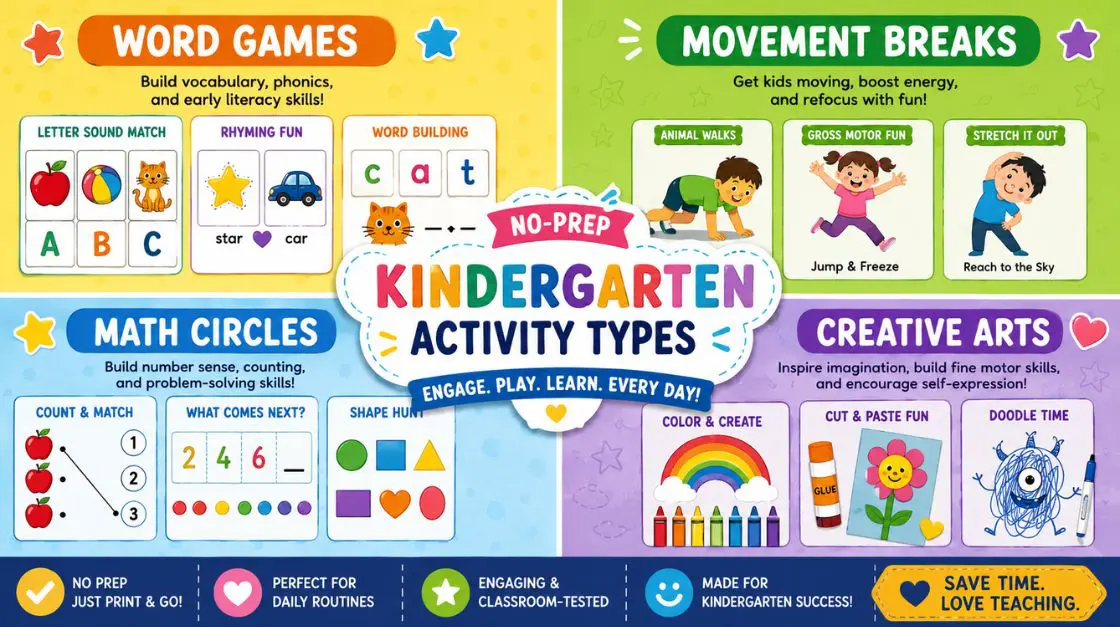
Comparison: No-Prep vs. Traditional Prep Activities
| Feature | No-Prep Educational Games for Kids | Traditional Prep Activities |
|---|---|---|
| Setup Time | 0–2 minutes | 20–60+ minutes |
| Materials Cost | $0 | Varies (paper, ink, laminating) |
| Flexibility | High — adapt in the moment | Low — fixed once created |
| Differentiation | Easy — adjust verbally | Requires separate versions |
| Engagement Level | High (active, social) | Variable |
| Reusability | Unlimited | Often single-use |
| Sub-Friendly | Very — oral instructions only | Requires explanation sheets |
| Best Use Case | Transitions, brain breaks, spontaneous learning | Structured stations, assessments |
| Works for ESL/SPED | Easily adaptable | Needs redesign |
Step-by-Step: How to Use Educational Games in Your Classroom
Step 1: Build Your Mental Toolkit
Pick 3–5 go-to educational games for kids in each category (literacy, math, movement) that you can pull from memory at any moment. Familiarity makes transitions smooth.
Tip: Write your favorites on an index card in your pocket or keep a shortlist on your classroom whiteboard for easy reference during sub days.
Step 2: Match the Activity to the Moment
Not all kindergarten classroom activities work in all situations. Learn to read the room:
- High energy, distracted students? → Start with kindergarten brain breaks before pivoting to academic content.
- Quiet, low-energy group? → Use creative oral activities that invite gentle engagement.
- Transition gap? → Quick math counting games or phonics activities fill time productively.
- Post-lunch slump? → Movement-based educational games for kids reactivate learning readiness.
Step 3: Introduce Rules Simply and Positively
Young children thrive when expectations are clear and low-stakes. Introduce any new activity with:
- One simple rule (“In this game, we take turns.”)
- One demonstration round
- A quick check for understanding
Step 4: Layer in Learning Objectives
The beauty of no-prep early childhood education activities is that they’re infinitely adaptable. Once children know a game format, you can swap in any content:
- Same game structure + new vocabulary = new lesson
- Same movement activity + different math concept = new learning target
- Same story format + different topic = cross-curricular connection
Step 5: Add Printables to Extend the Learning
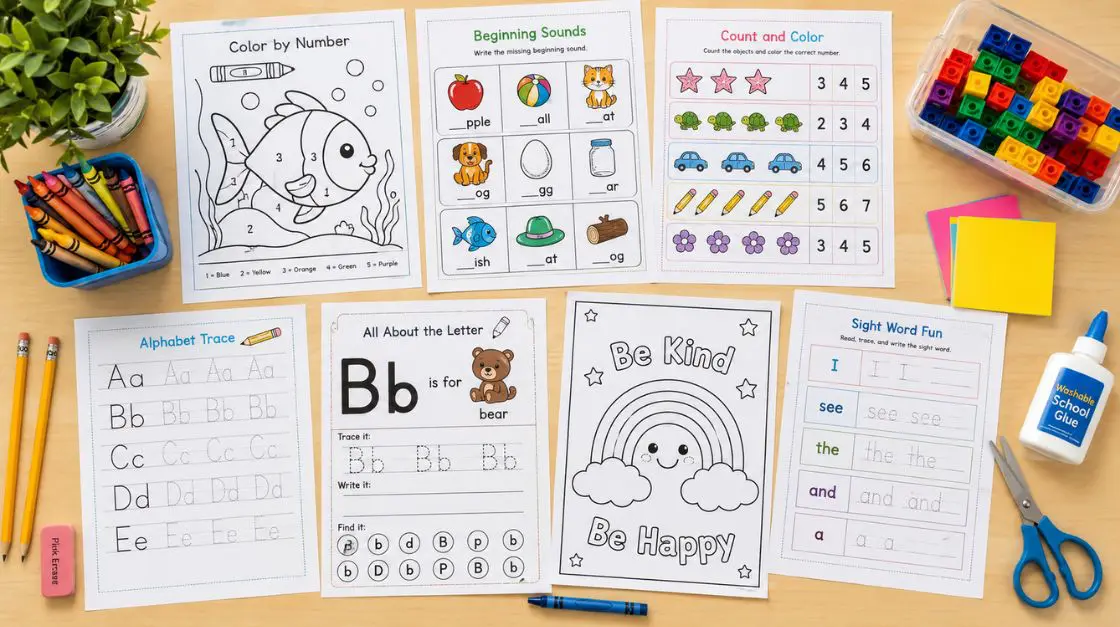
When you want to move beyond oral activities, no-prep printables bridge the gap beautifully. Our morning work printables for K–2 are structured for daily use with zero teacher prep required. Four weeks of content, ready to print.
For screen-free seasonal extensions, our summer coloring pages for kids double as activity pages for summer school programs, camp settings, or end-of-year wind-down weeks.
And for foundational literacy support, our printable set of alphabet tracing worksheets gives students structured handwriting practice that pairs perfectly with phonics-based educational games for kids.
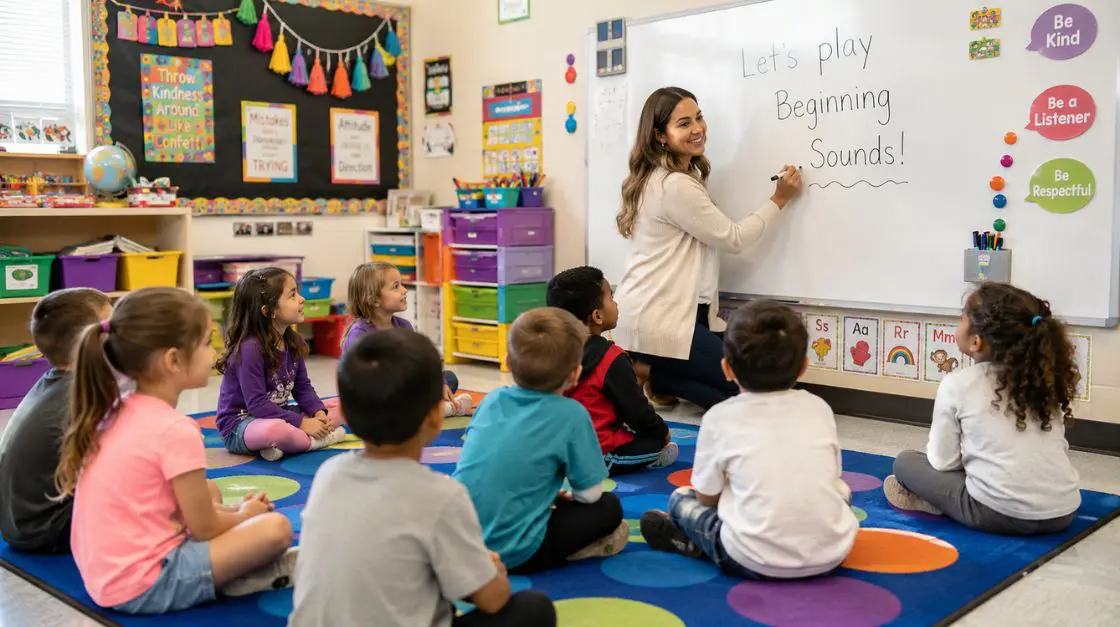
Visual Inspiration: What These Activities Look Like in Action
What a Great No-Prep Kindergarten Morning Looks Like
Picture this: It’s 8:10 AM. Children are arriving, bags everywhere, energy all over the place. Instead of waiting for everyone to settle, you start a gentle “I Spy with Letters” — pointing around the room, inviting early arrivers to join. By the time attendance is done, the class is already practicing phonics, laughing together, and ready to learn.
Then, after your first structured block, you notice attention drifting. You call a 90-second freeze dance kindergarten brain break — arms up, wiggle, freeze! Laughter, reset, refocus.
During math, instead of a worksheet, you run a counting movement game where students hop on even numbers and clap on odd ones. The kinesthetic engagement makes the concept stick in a way that pencil-and-paper practice alone never quite does.
And when you need a quiet, calming transition into rest time or afternoon work? A simple coloring page from our free printable activities for kindergarten gives children a creative, low-stimulation wind-down that settles the room beautifully.
This is the rhythm that no-prep educational games for kids make possible. Not chaos. Not a time-filler. Intentional, joyful, low-prep learning.
Color, Creativity, and Calm
For classrooms incorporating art-based early childhood education activities, simple coloring pages serve double duty: they support fine motor development while giving children a self-regulation tool. Our world cultures coloring pages for kids are a particularly powerful classroom resource — they spark conversations about diversity, geography, and empathy while children color.
For culturally responsive kindergarten classroom activities, the cultural competence coloring pages guide pairs beautifully with classroom discussions about community and belonging.
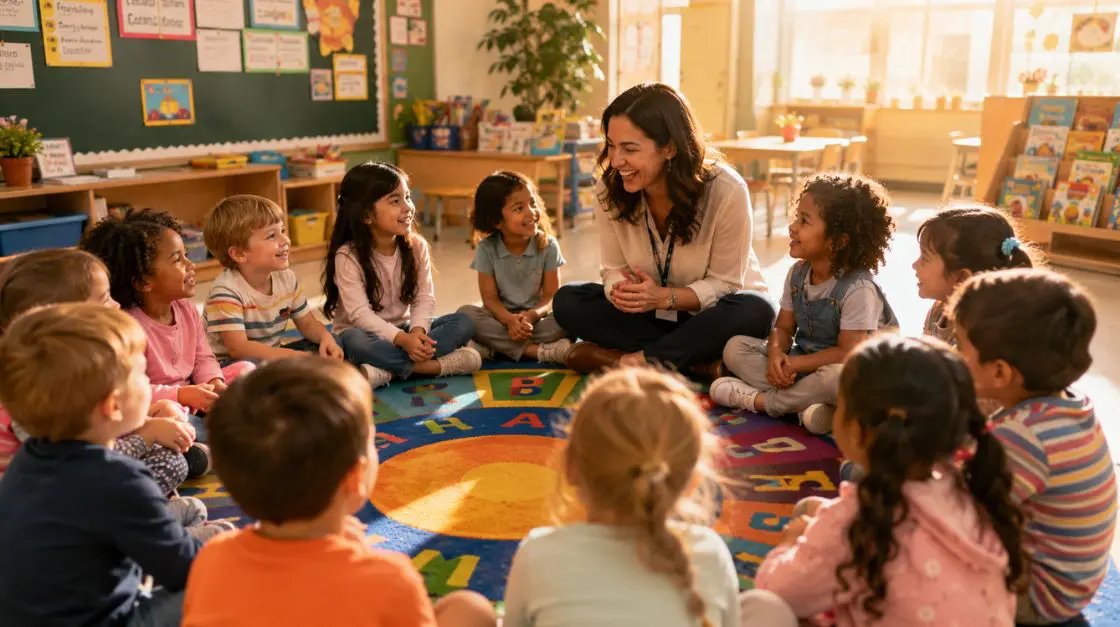
Top Resources & Printables for K–2 Teachers
🖨️ Morning Work Printables for K–2 — 4 Weeks of No-Prep Daily Pages
Best for: Kindergarten and first-grade teachers who want structured morning routines without daily prep. These pages cover literacy, math, and fine motor skills across four weeks of content. 👉 Explore Morning Work Printables
✏️ Alphabet Tracing Worksheets Printable — Full A–Z Set
Best for: Kindergarten teachers, ESL educators, and early literacy support. A complete A–Z tracing set that reinforces handwriting and phonics simultaneously — perfect alongside your oral educational games for kids. 👉 Get the Alphabet Tracing Set
🌍 World Cultures Coloring Pages for Kids — Screen-Free Learning
Best for: K–2 teachers building culturally responsive classrooms and social studies connections. 35 designs covering global cultures, traditions, and community. A natural fit for early childhood education activities focused on empathy and diversity. 👉 Browse World Cultures Coloring Pages
☀️ Summer Coloring Pages for Kids — No-Prep Seasonal Activity Pack
Best for: End-of-year, summer school, homeschool settings, and indoor recess days. Simple, cheerful designs that keep little hands busy and support fine motor skills. 👉 Get the Summer Activity Pack
🎁 Free Teacher Resources — Printables That Actually Work
Best for: Budget-conscious teachers, substitutes, and aides looking for instant classroom tools. A growing library of free downloads, including coloring pages, activity sheets, and K–2 printables. 👉 Access Free Teacher Resources
FAQs
Q1: What are the best educational games for kids in kindergarten?
A: The best educational games for kids in kindergarten combine movement, language, and social interaction — all with minimal or no materials. Top picks include phonics chants, counting movement games, story-building circles, “I Spy” letter activities, and kindergarten brain breaks like freeze dance or cross-body movement exercises.
Q2: How do kindergarten brain breaks help learning?
A: Kindergarten brain breaks interrupt periods of sustained attention (which are short for 5-year-olds) and give the brain a chance to reset. Movement activates the cerebellum, improves blood flow, and reduces cortisol. Research in early childhood education consistently shows that regular movement breaks improve focus, retention, and behavior for the rest of the learning block.
Q3: What are good no-prep kindergarten classroom activities for substitute teachers?
A: Substitute teachers do best with oral, whole-group educational games for kids that require no materials: story chains, rhyming games, number-guessing games, “Would You Rather?” discussions, and simple movement activities. Keep a printed backup list of your top 10 on your sub plans — it makes a huge difference.
Q4: How long should early childhood education activities last?
A: Most kindergarten classroom activities work best in short bursts: 3–10 minutes for games, 2–3 minutes for brain breaks, and 15–20 minutes maximum for structured activities before another movement or sensory break. Young children’s attention windows are short by design — varied, frequent transitions are developmentally appropriate.
Q5: Can educational games for kids meet academic standards?
A: Absolutely. Well-designed educational games for kindergarteners can target specific Common Core standards in ELA and math without students realizing they’re being assessed. Phonemic awareness, counting fluency, narrative structure, and mathematical reasoning can all be addressed through no-prep game formats.
Q6: Are these activities suitable for special education or ESL students?
A: Yes — in many cases, no-prep kindergarten classroom activities are more accessible for students with diverse learning needs because they’re flexible, movement-based, and don’t require reading. They can be easily modified for different language levels, sensory needs, or motor abilities.
Q7: How do I manage a large group during no-prep educational games?
A: Clear, consistent signals (a clap pattern, a hand signal, a phrase like “1-2-3, eyes on me”) are essential. Start with whole-group games, then gradually introduce partner or small-group formats as routines are established. Brief, clear instructions before each activity reduce confusion.
Q8: What are the best kindergarten brain breaks for transitions?
A: Top transition brain breaks include: 10-second dance freeze, “walk like an animal” movement prompts, count-down stretches, hand-clap rhythm patterns, and breathing exercises. The key is choosing activities that are short, predictable, and fun — not so stimulating that they make it harder to settle afterward.
Q9: How often should I use educational games for kids?
A: Daily. Even 10 minutes of intentional play-based learning spread across transitions and brain breaks adds up to significant engagement time. High-functioning kindergarten classrooms integrate educational games for kids throughout the day, not just during “free play.”
Q10: Where can I find free no-prep printables for kindergarten?
A: Our free printable activities for kindergarten page offers a curated selection of no-prep activity sheets, coloring pages, and classroom resources — all instant download, no sign-up required.
Internal Link Hub
Related teacher resources and classroom printables:
- Morning Work Printables for K–2 — four weeks of structured, no-prep daily pages
- Free Printable Activities for Kindergarten — instant downloads, no sign-up
- Free Teacher Resources — printables designed for K–2 classroom use
- Printable Teacher Resources for K–2 — premium organized collections
- Alphabet Tracing Worksheets Printable — full A–Z literacy support
- World Cultures Coloring Pages for Kids — culturally responsive art-based activities
- Summer Coloring Pages for Kids — seasonal no-prep activity pack
- Kindergarten Coloring Pages — simple, age-appropriate designs for fine motor practice
- Coloring Pages for Kids — Benefits, Activities & Free Prints — research-backed guide for parents and educators
- Cultural Competence Coloring Pages Guide — world cultures for young learners
- Fantasy Coloring Pages for Kids — Dragons, Unicorns & Fairies — imaginative art for creative extension activities

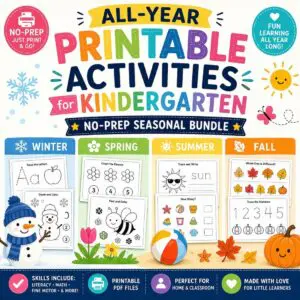
Printable Activities for Kindergarten — Seasonal Bundle | No-Prep
Final Thoughts: You’ve Got This, Teacher
Here’s the truth: your students don’t need a perfectly crafted lesson to have a powerful learning experience. They need you — present, flexible, and confident in your ability to turn any moment into something meaningful.
The educational games for kids in this guide are tools, not scripts. Use them, adapt them, make them yours. Layer them into your kindergarten classroom activities the way a skilled musician uses scales — not as the performance itself, but as the foundation that makes everything else possible.
When you have kindergarten brain breaks that actually work, when your early childhood education activities feel joyful rather than exhausting, when you can walk into a room with no prep and still feel capable — that’s when teaching becomes sustainable.
Your classroom is already full of everything you need. Now you just have a few more ideas for what to do with it.
📥 Start today: Grab your free printable activities for kindergarten and our free teacher resources — no sign-up, instant download.