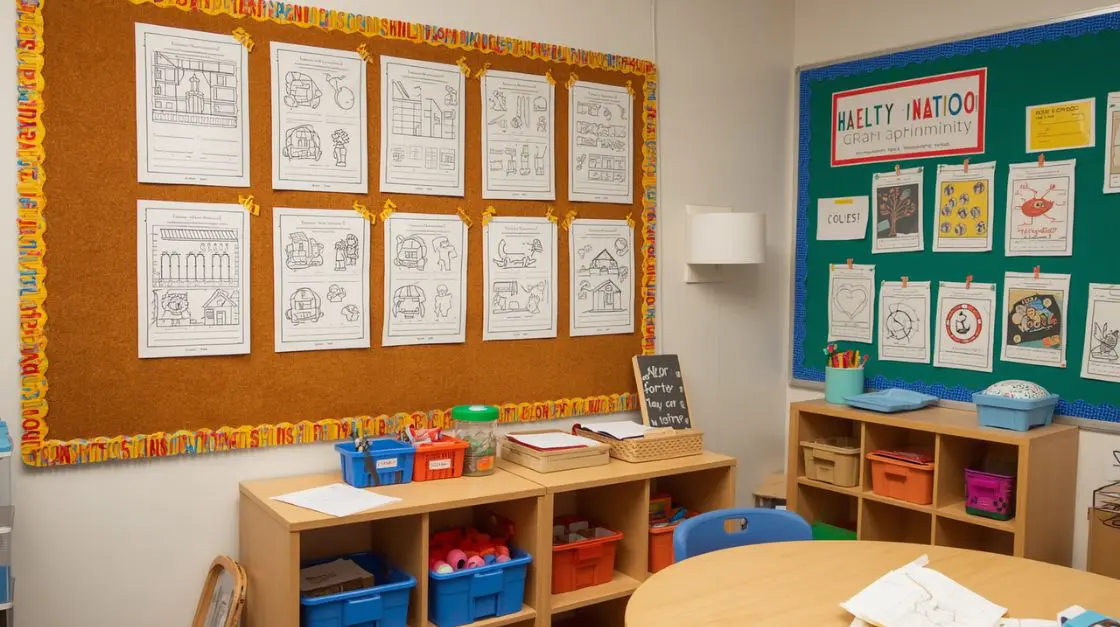
No-Prep Printable Worksheets for Kindergarten Teachers Ready to Print
It’s 9 p.m., the lesson plans for tomorrow are still half-finished, and you’re staring at a blank Sunday-night to-do list, wondering how you’re going to fill morning work, early-finisher time, and that one stretch of the afternoon when the whole class suddenly seems to need something to do at once.
If that scene feels familiar, you’re not alone — and you’re exactly who this guide is for.
Worksheets for kindergarten don’t have to mean hours of cutting, laminating, and prepping bins of manipulatives. The right set of printable pages can be the difference between a calm, productive classroom and a frantic scramble for “anything to keep them busy.” This guide rounds up 15 no-prep printable activities — covering morning work, alphabet practice, math patterns, calm-down coloring, and seasonal fun — that you (or your students) can use the moment they come off the printer.
Here’s the promise: every idea below is genuinely no-prep. No cutting, no sorting tiny pieces, no spending your evening at the laminator. Just print, hand out, and teach.
Ready to build your own no-prep toolkit? Let’s get into it — and if you want to start stocking your binder right away, you can browse the free printables library while you read.
Quick Answer: What Are the Best No-Prep Printables for Kindergarten?
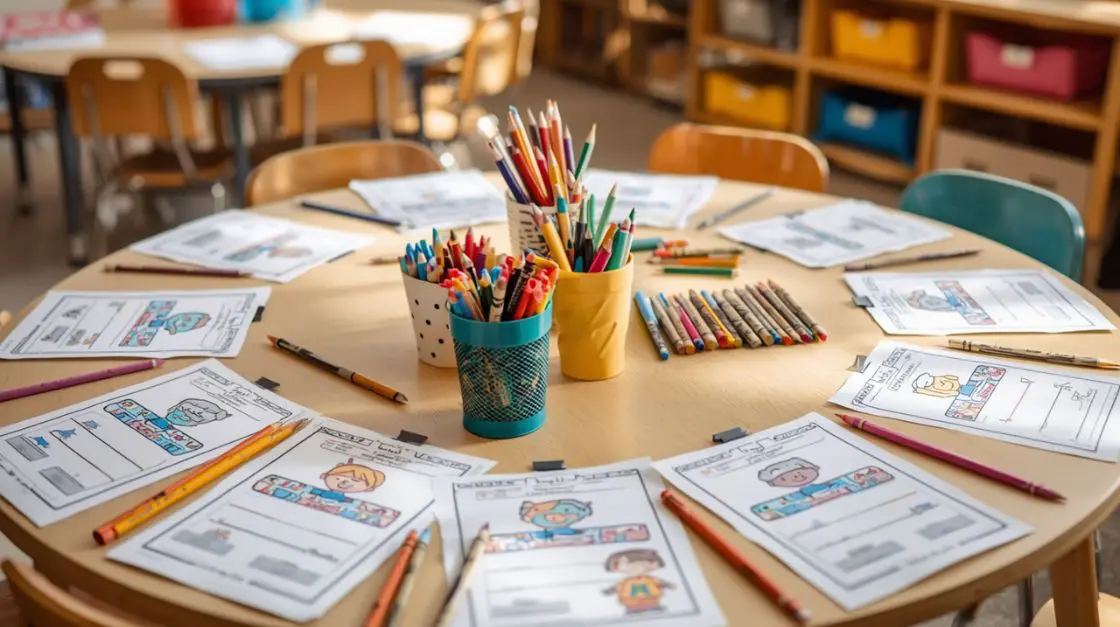
The best printable kindergarten worksheets combine skill-building with simplicity: alphabet tracing, number and shape patterns, calm-corner coloring pages, morning work routines, and seasonal activity sheets. These worksheets for kindergarten require zero setup — just print and go. They support letter recognition, fine motor skills, focus, and independent work habits, all while saving teachers and parents hours of prep time every week.
Why No-Prep Worksheets for Kindergarten Matter
Kindergarten is a juggling act. You’re teaching letters, numbers, social skills, routines, and independence — often to 20+ five- and six-year-olds at very different developmental stages. No-prep printables aren’t just a convenience; they’re a classroom management tool, a confidence builder, and (let’s be honest) a sanity saver.
For Teachers: Time Back in Your Week
- Grab-and-go lesson filler — perfect for sub binders, early finishers, or “I’m done!” moments
- Consistent skill practice without writing new worksheets every night
- Differentiation made easy — print a slightly different sheet for students who need more or less challenge
- Less laminating, less cutting, less Sunday-night stress
For Parents & Homeschool Families: Structure Without the Stress
Homeschooling families and parents looking for screen-free downtime love free printable worksheets for kindergarten because they create a quiet, focused block of time without needing a degree in lesson planning. A single printed page can buy you 15–20 minutes of calm while dinner cooks or a sibling naps.
For Kids: Confidence Builders
- A sense of “I can do this on my own.”
- Repetition that builds mastery (tracing the same letter several times in different fonts, for example)
- A calming, low-pressure activity between higher-energy lessons
In short: whether you’re a classroom teacher, a grandparent watching the grandkids for the afternoon, or a homeschool parent building your weekly rhythm, printable kindergarten worksheets give you a reliable, ready-made activity that actually supports learning — not just busywork.
The Expert Insight: Why These Worksheets for Kindergarten Actually Work
It’s tempting to think of worksheets as “just busywork,” but early childhood educators and occupational therapists generally agree that well-designed printable activities support several key developmental areas at once — when they’re used thoughtfully and in balance with hands-on, play-based learning.
Fine Motor Development
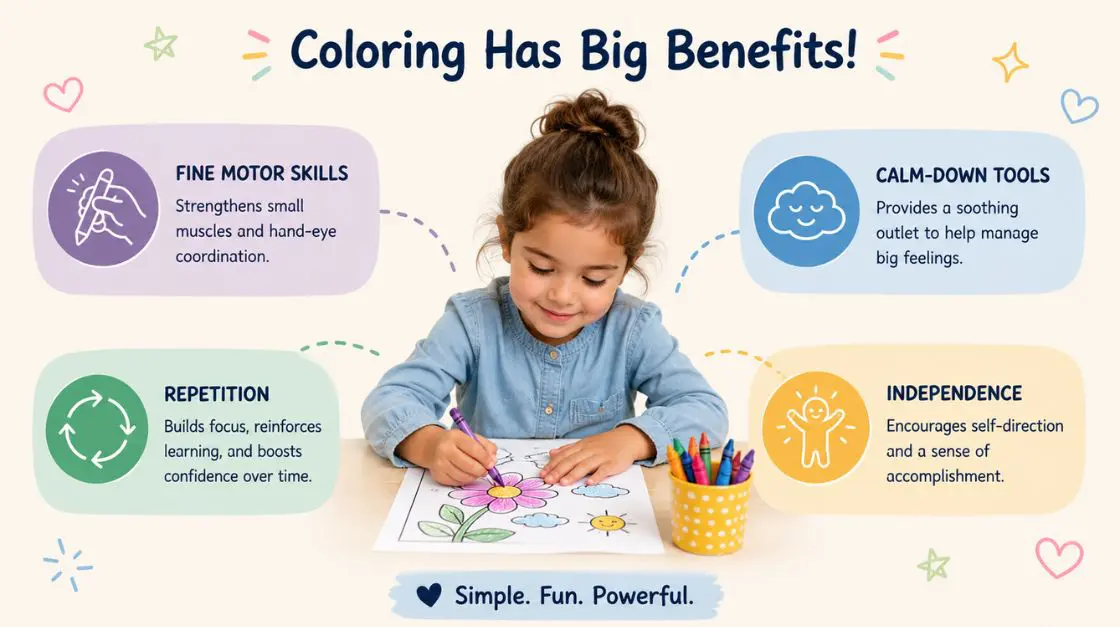
Tracing letters, coloring within lines, and connecting dots all strengthen the small hand muscles kids need for handwriting. Repetitive practice — like the kind you’ll find in a good printable activities for kindergarten set — builds pencil control gradually, without the pressure of a formal handwriting lesson.
Repetition Builds Confidence
Kindergartners thrive on repetition. Seeing the same letter, number, or pattern in slightly different formats helps cement recognition. A worksheet a child can complete independently — even if it’s similar to one from last week — reinforces “I know this” far more than a brand-new, unfamiliar task.
Calm-Down and Self-Regulation Tools
Coloring and quiet tracing activities are widely used in classroom “calm corners” to help young children self-regulate after a big transition, a conflict with a friend, or simply too much stimulation. A simple coloring page can act as a reset button — more on this in the calm corner ideas for the classroom guide.
Independent Work Habits
Worksheets that kids can complete with minimal instruction help build the “I can work on my own” muscle — a skill that pays off enormously once first grade ramps up independent seatwork expectations.
15 No-Prep Printable Activities for Kindergarten Teachers
Here are 15 ideas, grouped into five easy categories. Each one is designed to be printed and used immediately — no prep required.
Category 1: Morning Work & Early Finisher Pages as Worksheets for Kindergarten
Morning work sets the tone for the whole day, and early-finisher pages keep fast workers engaged without disrupting the class.
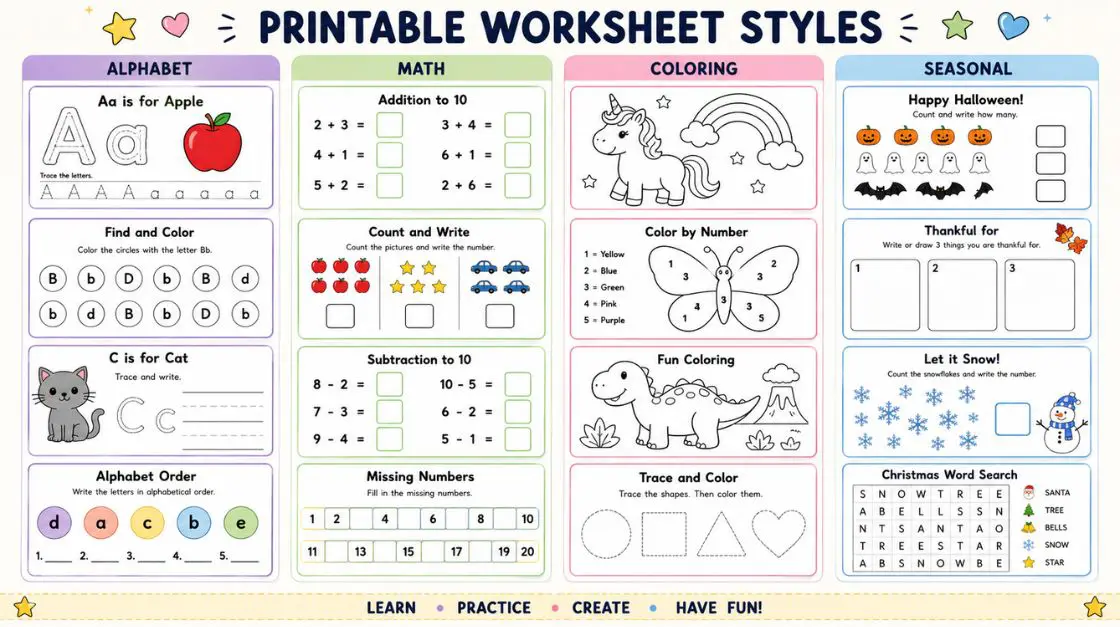
1. Morning Work Warm-Up Sheets Best for: Whole-class morning routines Use it for: The first 10–15 minutes of the day — review letters, numbers, shapes, and simple patterns before instruction begins. The Morning Work Printables for K–2 collection gives you four full weeks of these ready to rotate through.
2. Early Finisher Task Cards Best for: Students who consistently finish ahead of the group. Use it for: A “finished folder” station. These Early Finisher Activity Cards are reusable and designed for independent, quiet completion.
3. Weekly No-Prep Activity Packet Best for: Sub binders, transition days, or “just in case” backups Use it for: Five days of mixed review — a little bit of everything so you always have something on hand. The full Early Finisher Activities for Kindergarten guide walks through building this packet step by step.
Category 2: Alphabet & Letter Recognition Worksheets
Letter recognition is one of the biggest building blocks of early literacy, and tracing practice is one of the simplest ways to reinforce it.
4. Trace-and-Color Letter Pages Best for: Whole-class literacy centers Use it for: Pairing letter formation with a coloring element so kids stay engaged longer. The Alphabet Tracing Worksheets with Coloring set blends both skills on a single printable page.
5. Letter Hunt Worksheets Best for: Small groups or centers Use it for: Finding and circling a target letter among a row of similar-looking letters — a quick, no-prep way to build visual discrimination skills.
6. Full A–Z Tracing Set Best for: Building a complete letter-practice binder for the year. Use it for one letter per day or send it home as homework. The Alphabet Tracing Worksheets Printable (Full A–Z Set) covers every letter, so you only need to print once.
Category 3: Math & Pattern Practice Sheets
Early math skills — patterns, counting, and shape recognition — translate beautifully into printable formats.
7. Shape & Number Pattern Strips Best for: Math centers or whole-group warm-ups Use it for: Identifying and continuing simple AB, AAB, and ABC patterns. The 18 Math Patterns Worksheets K–2 set gives you nearly three weeks of pattern practice without repeating a page.
8. Counting and Sorting Mats Best for: Hands-on math practice with manipulatives kids already have (crayons, blocks, buttons). Use it for: Reinforcing one-to-one correspondence — a foundational counting skill — with a simple printed mat as the only prep needed.
9. Morning Math Review Pages Best for: Daily number-sense practice Use it for: A quick 5-minute warm-up that pairs well with the Year-Round Teacher Activity Bundle, which combines morning work and math in one set.
Category 4: Calm-Down & Fine-Motor Coloring Pages
Coloring pages aren’t just “filler” — used intentionally, they support fine motor skills and emotional regulation.
10. Calm Corner Coloring Sheets Best for: Self-regulation stations Use it for: Giving a student a quiet, screen-free way to reset after a tough moment. The Calm Corner Coloring Pages set is designed specifically for K–2 emotional regulation.
11. Classroom Coloring Pack Best for: Free-choice time, rainy days, or end-of-day wind-down Use it for: A flexible, no-instructions-needed activity. The 18 Classroom Coloring Pages pack covers a wide range of simple, age-appropriate designs.
12. Simple Kindergarten Coloring Pages Best for: Mixed-ability classrooms (designs are simple enough for all skill levels). Use it for: Building fine motor control through coloring within bold, easy-to-follow lines. Browse the full Kindergarten Coloring Pages collection for more options.
Category 5: Seasonal & Themed No-Prep Pages
Seasonal worksheets keep things fresh and tie into classroom themes throughout the year.
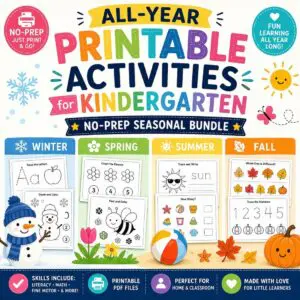
13. Four-Season Activity Bundle Best for: Teachers who want a full year of variety without separate purchases. Use it for: Rotating themes every few months. The Printable Activities for Kindergarten – Seasonal Bundle covers fall, winter, spring, and summer in one download.
14. Indoor Day Activity Sheets Best for: Snow days, rainy days, or any time recess gets canceled. Use it for: A backup plan that doesn’t require running to the supply closet. See 10 Indoor Activities for Snow Days for more zero-prep ideas.
15. Spring & Fall Themed Worksheets Best for: Tying seasonal vocabulary into literacy and math practice. Use it for: Combining seasonal fun with skill practice — check out the Spring Worksheets for Classroom and Fall Crafts for Kids sets to round out your seasonal rotation.
Printable Worksheets for Kindergarten vs. Traditional Workbooks
How do printable pages stack up against a store-bought workbook? Here’s a quick comparison.
| Feature | Printable Worksheets for Kindergarten | Traditional Workbook |
|---|---|---|
| Cost | Often free or low-cost per set; reusable across classes/years | One-time purchase, but limited to one child or consumed |
| Convenience | Print only what you need, when you need it | Must store, transport, and keep track of physical books |
| Flexibility | Mix and match topics, seasons, and skill levels | Fixed sequence; harder to skip around |
| Customization | Print in A4 or US Letter, choose specific pages | One-size-fits-all format |
| Accessibility | Instant digital download, available anytime | Requires shipping or in-store purchase |
| Reusability | Reprint endlessly for multiple students or years | Single-use (pages get written on and discarded) |
Bottom line: for teachers managing tight budgets and packed schedules, printable kindergarten worksheets offer more flexibility per dollar — and per minute of prep time.
How to Use These Printable Kindergarten Worksheets: A Step-by-Step Guide
Having a stack of great worksheets only helps if you have a simple system for using them. Here’s a beginner-friendly approach.
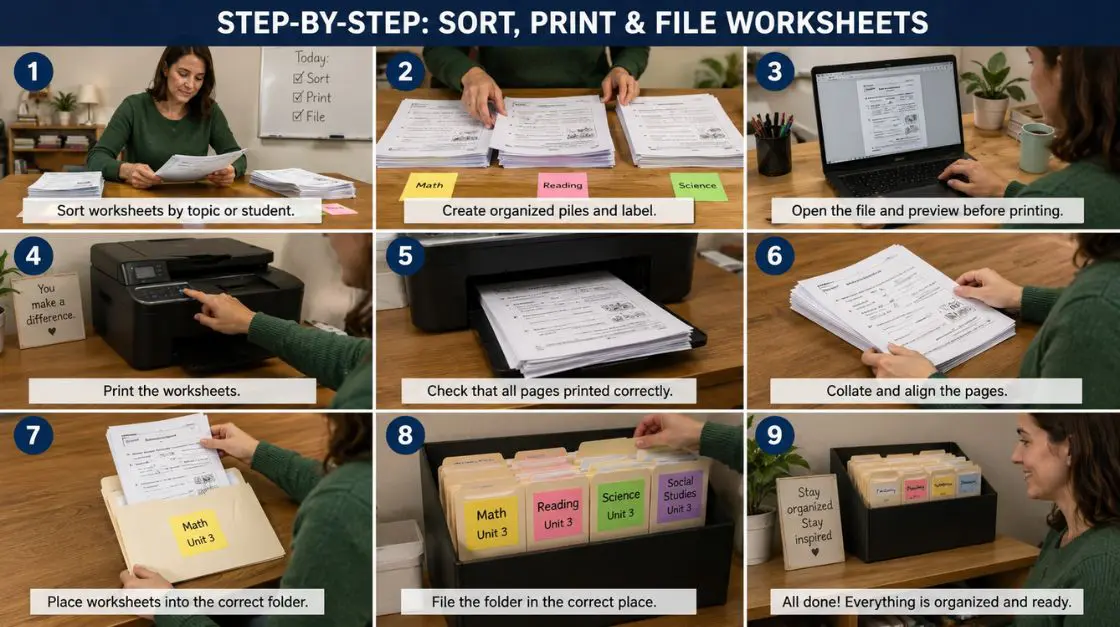
Step 1: Sort by Skill and Season
Start by grouping your printables into broad categories — literacy, math, fine motor/coloring, and seasonal. A simple filing system (a few labeled folders or a binder with dividers) keeps everything easy to find later.
Tip: Print a small thumbnail of each page and tape it to the folder tab so you can identify pages at a glance.
Step 2: Print in Batches
Rather than printing one page at a time, set aside 30 minutes every couple of weeks to print a batch of worksheets for kindergarten in bulk. This turns prep into one quick task instead of a daily interruption.
Tip: Print double-sided where possible to save paper, unless a page has color on the back that students will need separately.
Step 3: Decide What to Laminate (and What Not To)
Not everything needs lamination — and that’s the point of “no-prep.” Save laminating for pages you’ll reuse with dry-erase markers (like pattern strips or counting mats); print single-use pages (like coloring sheets to send home) on regular paper.
Step 4: Build a Grab-and-Go Bin
Create a simple bin or folder labeled “Anytime Activities” with a mix of finished, ready-to-hand-out pages. This becomes your go-to for early finishers, substitute teachers, or unexpected schedule changes.
Step 5: Pair Printable Kindergarten Worksheets with Routines
Connect specific printables to specific classroom routines — morning work pages for arrival time, coloring pages for the calm corner, pattern strips for math centers. When kids know when certain pages appear, transitions become smoother.
Step 6: Rotate and Refresh Seasonally
Every few months, swap out your seasonal pages and refresh your bin with new themes. This keeps the free printable worksheets for kindergarten feeling fresh for students, even if the underlying skills recur.
Visual Inspiration: What These Printable Kindergarten Worksheets Look Like in Action
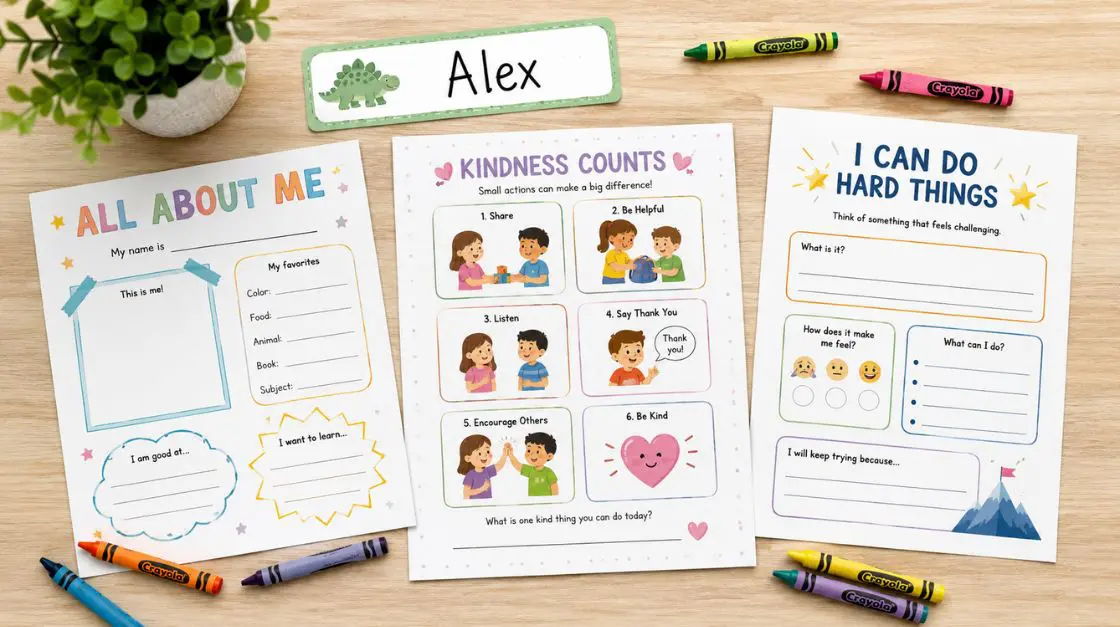
Picture a kindergarten classroom corner with a soft rug, a small shelf of crayons sorted by color, and a wall pocket chart labeled “Early Finishers.” Inside each pocket sits a stack of cheerful, simply-designed pages — bold outlines, friendly characters, and plenty of white space for little hands to work in.
In a homeschool setting, imagine a binder organized by month, each section tabbed with a seasonal cover page — a pumpkin for fall, a snowflake for winter, a flower for spring — making it easy for a parent to flip straight to the right activity.
The best printable activities for kindergarten share a few visual traits:
- Bold, simple line work that’s easy for small hands to color within
- Bright but not overwhelming color palettes — cheerful without being chaotic
- Generous white space so pages don’t feel cluttered or intimidating
- Consistent themes (seasons, animals, classroom routines) that tie activities together
Whether you’re decorating a calm corner, building a homeschool binder, or setting up a morning work station, the visual consistency of a well-designed printable set makes your classroom feel calmer and more organized — even on chaotic days.
Featured Resources for Kindergarten Teachers & Homeschool Families
If you’re ready to build out your no-prep toolkit, here are a few collections worth bookmarking:
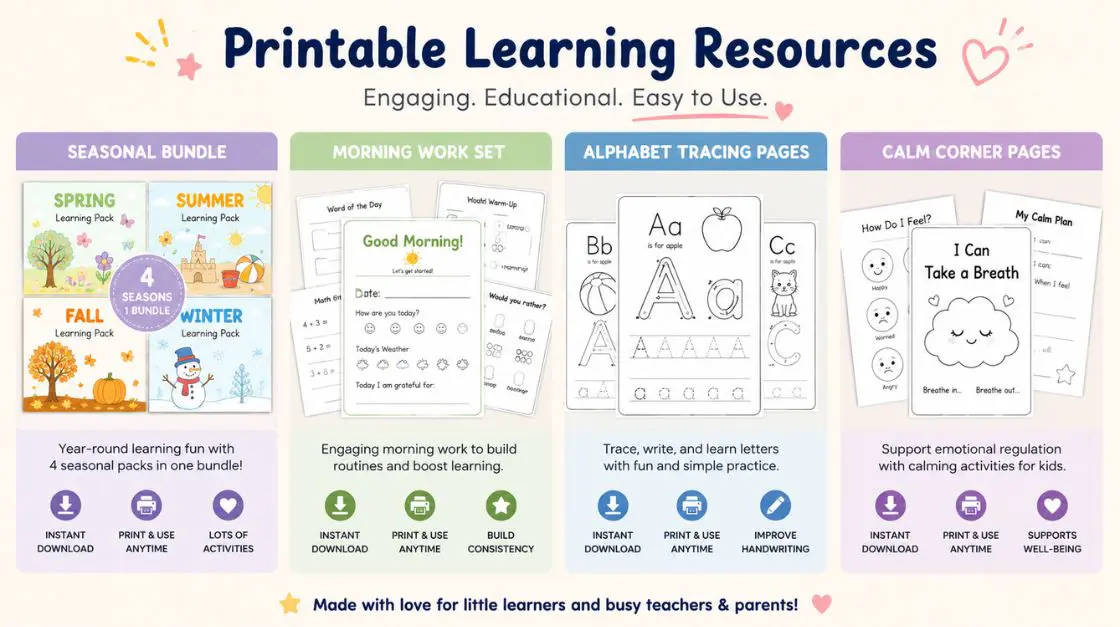
Printable Activities for Kindergarten – Seasonal Bundle: A full four-season set of printable activities for kindergarten, perfect for teachers who want a single download that covers the whole year. Browse the seasonal bundle →
Morning Work Printables for K–2 Four weeks of ready-to-go morning routines — ideal for building consistency without daily prep. See the morning work set →
Alphabet Tracing Worksheets (Full A–Z Set) A complete letter-practice resource you’ll use again and again throughout the year. Get the full alphabet set →
Calm Corner Coloring Pages: Soothing, screen-free designs built specifically for K–2 emotional regulation spaces. Explore calm corner pages →
Free Teacher Resources. Not ready to commit? Start with the free collection and see what fits your classroom first. Visit free teacher resources →
Frequently Asked Questions
Q1: What are the best no-prep worksheets for kindergarten?
A: The best no-prep worksheets for kindergarten combine a clear learning goal with minimal setup — think alphabet tracing pages, simple math pattern strips, and calm-down coloring sheets. These can be printed and handed out immediately, with no cutting, sorting, or laminating required.
Q2: Are free printable worksheets for kindergarten actually effective for learning?
A: Yes, when used as part of a balanced routine. Free printable worksheets for kindergarten are most effective for reinforcing skills already introduced through hands-on or guided instruction — they work best for practice and review, not as a replacement for active teaching.
Q3: How many worksheets does a kindergarten classroom need per week?
A: Most classrooms do well with a small rotating set — roughly 5 to 10 printable kindergarten worksheets per week across morning work, math, literacy, and free-choice coloring. Having a larger backup stock on hand helps cover early finishers and unexpected schedule changes.
Q4: Can printable kindergarten worksheets be reused?
A: Many can be. Pages designed for writing or coloring are typically single-use, but pattern strips, sorting mats, and activity cards can be laminated and reused with dry-erase markers or manipulatives for ongoing practice.
Q5: What paper size should I print kindergarten worksheets in?
A: Most printable kindergarten worksheets are designed for both A4 and US Letter formats, so you can print using whichever size paper is standard in your country or school without any resizing needed.
Q6: Are these printables suitable for homeschooling, not just classrooms?
A: Absolutely. Worksheets for kindergarten work just as well in a homeschool setting — many families use them as the backbone of a daily routine, mixing morning work pages, alphabet tracing, and seasonal activities to create structure.
Q7: How do I keep kindergarten students engaged with worksheets?
A: Pair worksheets for kindergarten with familiar routines (like morning arrival or calm-corner time), rotate themes seasonally to keep things fresh, and choose designs with bold lines and friendly characters that feel approachable rather than overwhelming.
Q8: What age range are these printable activities designed for?
A: While built with kindergarten in mind, most of these printable kindergarten worksheets work well for children roughly ages 4 to 7 — making them useful for late preschool, kindergarten, and early first-grade review.
More Free & Printable Kindergarten Resources
Looking to keep building your collection? Here are a few related guides and resources worth exploring next:
- Calm Corner Setup Guide — Learn how to build a full calm corner for your classroom, including printable supplies and layout tips.
- No-Prep Educational Games — Pair your worksheets with hands-on activities from this educational games for kids guide.
- Using Coloring Pages as Classroom Resources — A deeper dive into how to use coloring pages effectively across the school day.
- Free Printable Activities for Kindergarten — Start with this no-cost collection before exploring paid bundles.
- Coloring Pages for Kids: Benefits & Activities — Understand the research-backed benefits of coloring for young learners.

Printable Activities for Kindergarten — Seasonal Bundle | No-Prep
Ready to Build Your No-Prep Kindergarten Toolkit?
Teaching kindergarten is demanding enough without spending your evenings cutting, laminating, and hunting for “just one more activity.” With a solid stack of worksheets for kindergarten sorted, printed, and ready to go, you give yourself back something priceless: time, and you give your students something just as valuable: confidence-building practice they can complete on their own.
Start small. Pick two or three categories from this list — maybe morning work and calm corner coloring — and build those first. Once they’re in place, add seasonal pages and math practice as you go.
And if you want a head start, browse the free printables library for no-cost downloads, or grab the Printable Activities for Kindergarten – Seasonal Bundle for a full year of printable kindergarten worksheets in one go.
Your future self — the one not scrambling on a Sunday night — will thank you.