Calm Corner Ideas for Classroom: The Complete K–2 Setup Guide
⚡Quick Answer:A calm corner is a designated space in the classroom where students ages 5–8 can independently manage and regulate their emotions. To create one, pick a quiet corner, add soft seating, and stock it with sensory tools, emotion visuals, and calming activities such as coloring pages — keeping the setup simple, accessible, and student-directed rather than teacher-imposed.
Picture this: a kindergartner melts down during transition time. The noise level rises. Three other kids start to wobble. You need a solution that actually works — not a timeout chair, not a stern look, but a real, supportive space where little learners can return to calm on their own.
That’s exactly what great calm corner ideas for classroom spaces can do.
Whether you’re building a kindergarten calming corner for the first time or refreshing a quiet corner in classroom life that isn’t quite working, this guide walks you through everything — the science, the supplies, the layout, and the printables that make these spaces genuinely effective in K–2 classrooms.
Why Every Classroom Needs Calm Corner Ideas That Work
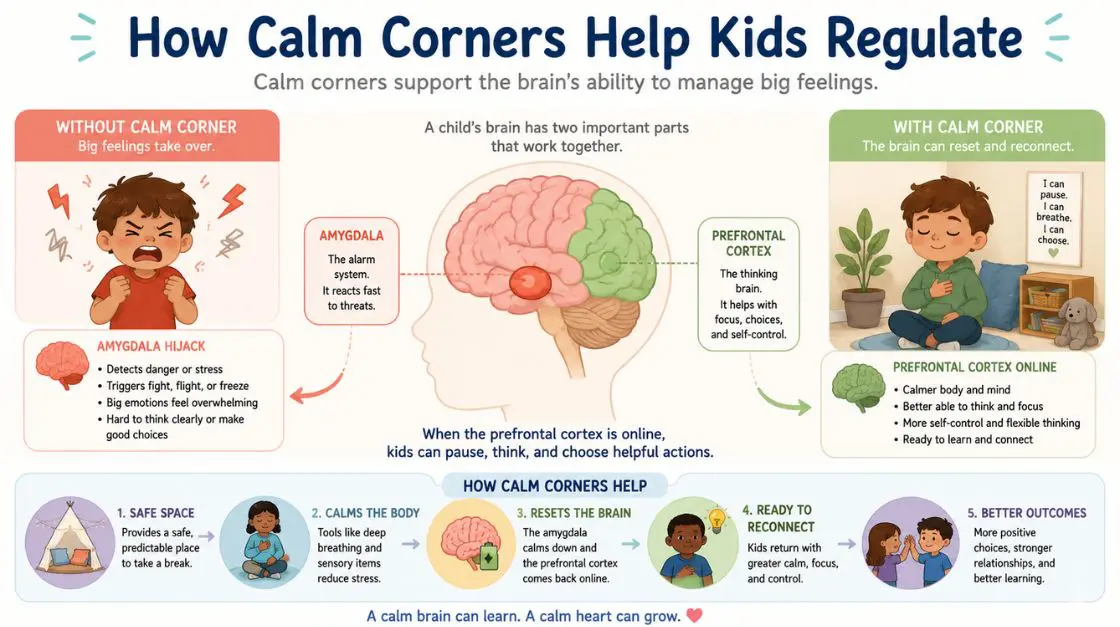
Young learners don’t yet have the neurological wiring to manage big emotions alone. Calm corner ideas for classroom use aren’t just trendy — they’re rooted in research on self-regulation, trauma-informed teaching, and social-emotional learning (SEL). Done well, they cut down on disruptions, protect instructional time, and help kids feel seen.
Benefits for students:
- Builds emotional vocabulary and self-awareness
- Gives them agency to choose a break before things escalate
- Removes shame around big feelings — it’s a tool, not a punishment
Benefits for teachers:
- Fewer interruptions to whole-class instruction
- A visible reminder that your classroom values feelings
- Pairs naturally with morning meeting and check-in routines
Kindergarten Calming Corner: What Makes It Different
A kindergarten calming corner has to work for five- and six-year-olds who are often in their first structured classroom environment and are still learning that feelings and actions are separate things.
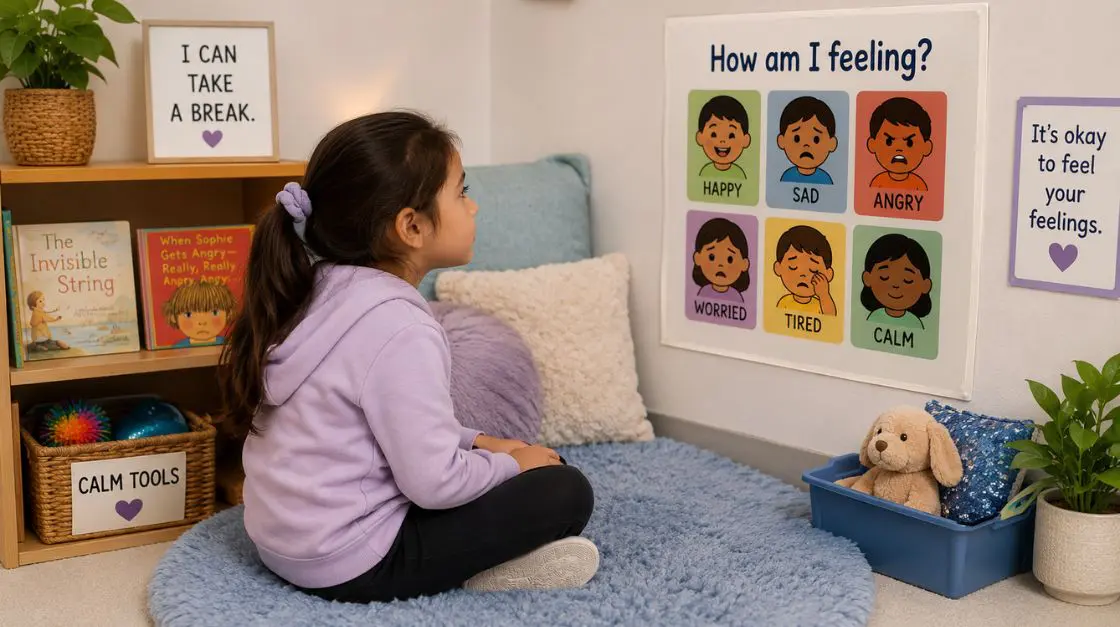
- Keep visuals simple and concrete. Large expressive faces beat word-based emotion wheels for non-readers. Stick to four to six core emotions: happy, sad, angry, scared, surprised, calm.
- Lead with physical grounding. A soft cushion, a weighted lap pad, or a favorite stuffed animal does more for a kindergartner’s nervous system than any poster.
- Teach the routine, not just the space. Introduce it in week one, model it together, and role-play choosing it independently.
- Keep it joyful, not clinical. Soft colors and a friendly class mascot make the corner feel welcoming rather than punitive.
Quiet Corner in Classroom Design: Choosing the Right Spot
A good quiet corner in classroom design starts with location. Look for a spot that is:
- Away from high-traffic areas like doors, cubbies, and group tables
- Partially enclosed — a bookshelf on one side instantly adds coziness
- Visible to you from most teaching positions, for safety
- Naturally quiet and low-stimulation
Pro tip: avoid placing it near the pencil sharpener, classroom door, or any other noisy fixture — even the calmest quiet corner classroom ideas fall apart next to constant traffic.
Calming Corner Classroom Setup: Step by Step
Once the spot is chosen, building out your calming corner classroom setup only takes a weekend.
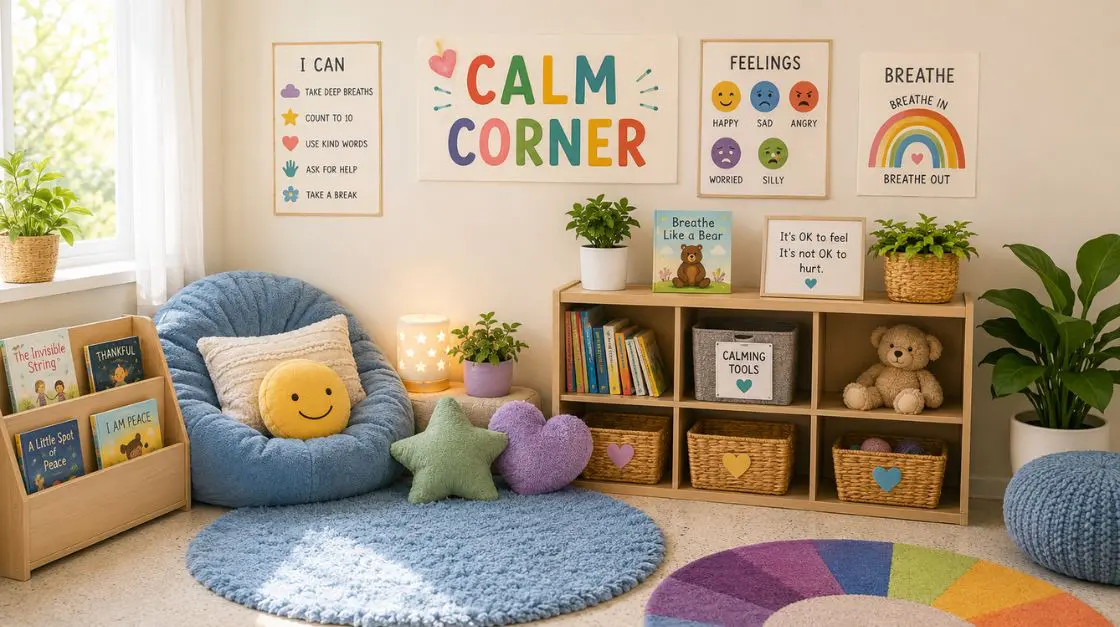
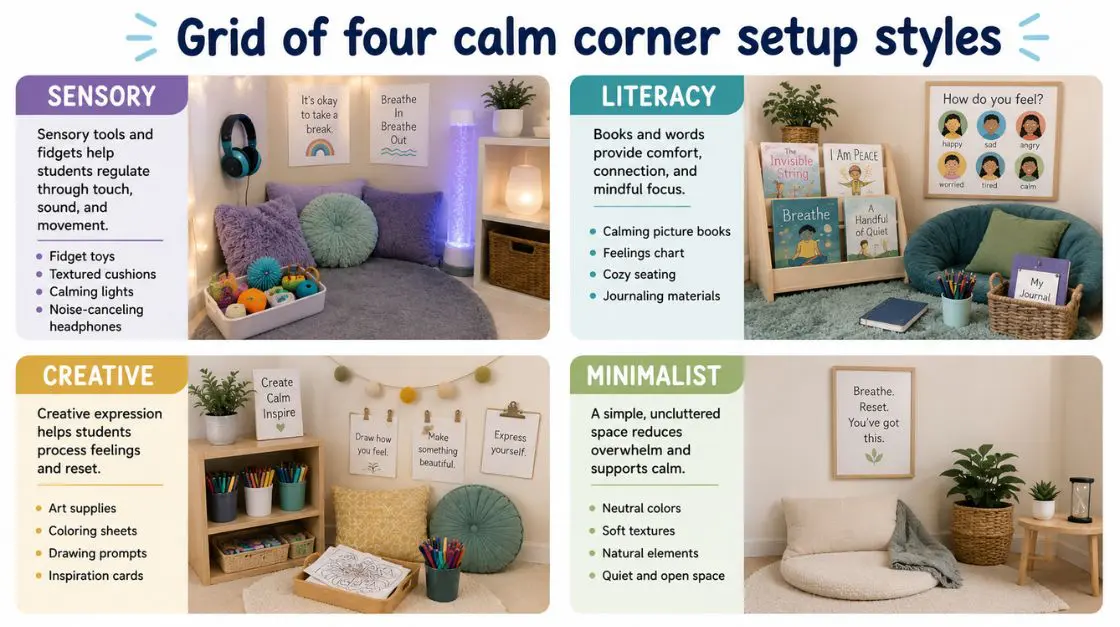
- Add comfortable seating. A floor cushion, small bean bag, or folded yoga mat signals “this is a safe, soft place.”
- Mount visual supports at eye level. An emotion check-in chart, a calm-down strategy menu, and a breathing guide are the backbone of independent regulation.
- Create a calm activity station. A small basket with coloring pages, crayons, a fidget tool, and a sensory item goes a long way.
- Establish clear expectations. Who can use it, how long (2–5 minutes is typical), and how to return to the group.
- Introduce it explicitly. Walk the class through it, model using it yourself, and let kids practice during a low-stakes moment.
- Refresh it monthly. Rotate coloring pages and restock supplies so the space stays inviting.
Calm Down Corner Kindergarten vs. Cool Down Corner Classroom: Which Fits Your Room?
Teachers often ask whether a calm down corner kindergarten setup should look different from a cool down corner classroom built for older K–2 students. In practice, the core elements overlap, but the emphasis shifts:
| Feature | Calm Down Corner (Kindergarten) | Cool Down Corner (Classroom-Wide) |
|---|---|---|
| Visuals | Large faces, minimal text | Emotion wheels with labeled words |
| Activity | Simple coloring, sensory play | Journaling prompts, breathing guides |
| Duration | 2–3 minutes, teacher-supported | 3–5 minutes, more independent |
| Setup | Extra-soft textures, mascot nearby | Slightly more structured, choice-menu driven |
Either way, the goal is the same: a calm corner ideas for classroom space that lets a child self-regulate without singling them out.
Emotion Corner and Emotions Corner Essentials
An emotion corner — sometimes searched as an emotions corner — is built around naming feelings before choosing a coping strategy. The essentials:
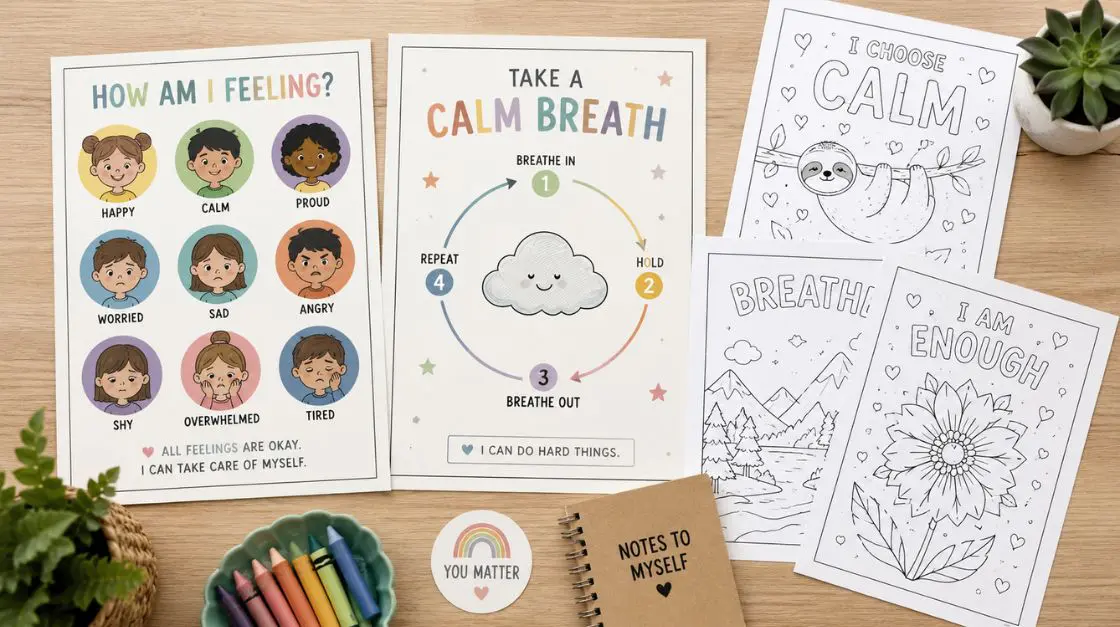
- Emotion check-in charts with simple labeled faces
- Calm-down strategy menus showing pictures of options like deep breaths, counting, or coloring
- Breathing guides — star breathing or “smell the flowers, blow out the candles” work well for young kids
- A small mirror so students can practice calm facial expressions
These printables do double duty: they guide regulation and make the space feel intentional rather than random.
Calm Corner Kindergarten Supplies List
A well-stocked calm corner kindergarten setup doesn’t need to be elaborate. Start with five to seven items and build from there:
| Category | What to Include | Why It Helps |
|---|---|---|
| Seating | Floor cushion, bean bag, or small chair | Physical grounding signals safety |
| Visuals | Emotion chart, breathing poster, calm-down menu | Supports independent choices |
| Tactile tools | Stress ball, fidget cube, textured fabric | Redirects nervous energy |
| Calming activities | Coloring pages, drawing paper, crayons | Engages the focused brain |
| Books | 2–3 emotion-themed picture books | Normalizes big feelings |
| Timer | Sand timer or visual timer | Gives a concrete sense of time |
The key principle: less is more. Too many choices overwhelm rather than calm.
Calm Corner Resources That Actually Help
If you’re short on time, ready-made calm corner resources save hours of prep without sacrificing quality. Look for:
- Emotion check-in charts with age-appropriate faces
- Calm-down strategy menus with pictures, not just words
- Breathing guides designed for K–2 attention spans
- Coloring pages built specifically for emotional regulation — soothing imagery like nature scenes and gentle animals lowers arousal more effectively than generic coloring sheets
A ready-to-print set like the 12 Calm Corner Coloring Pages — K–2 Emotional Regulation Pack is a practical starting point if you want something classroom-ready today.
Calming Corner in Classroom Life: Making It a Daily Habit
The difference between a calming corner in classroom routines that gets used and one that becomes a forgotten cushion in the back of the room comes down to consistency:
- Reference it during morning meeting, not just in the moment of a meltdown
- Model using it yourself when you need a breath
- Rotate materials monthly so it doesn’t go stale
- Keep it available to the whole class, not just students flagged for behavior support — universal access removes stigma
FAQ: Calm Corner Ideas for Classroom
What is a calm corner in a classroom? A designated, low-stimulation space where students independently manage big emotions and return to a regulated state, typically including soft seating, emotion visuals, sensory tools, and calming activities.
How is a kindergarten calming corner different from one for older K–2 students? It relies more on large, wordless visuals, physical comfort items like weighted lap pads, and simple, guided routines rather than independent journaling or word-based emotion wheels.
What’s the difference between a calm corner and a timeout spot? A timeout is teacher-directed and consequence-based. A calm corner is student-directed and supportive — the distinction matters because timeout carries shame, while a calm corner builds self-regulation skills.
How long should students spend in a cool down corner classroom setup? Most K–2 students benefit from two to five minutes with a visual timer, enough for a short reset without extended withdrawal from the group.
Do calm corner ideas for classroom use work for the whole class? Yes — they work best when available to every student, not just those identified as having behavioral challenges, which normalizes emotional regulation as a life skill.
Build Your Calm Corner — Starting Today
You don’t need a Pinterest-perfect setup or a big budget. You need a corner, a cushion, a few thoughtful printables, and a commitment to treating your students’ emotional lives as part of their education.
Calm corner ideas for classroom use aren’t just about managing behavior — they’re about building a classroom where children feel safe enough to learn and supported enough to come back from hard moments.
👉 Download the 12 Calm Corner Coloring Pages — K–2 Emotional Regulation Pack and have your activity station ready by tomorrow morning.