
Discover the joy of learning through creativity with our Cultural Competence Educational Coloring Pages, explicitly designed for children ages 4-8. These engaging printable activities combine the fun of coloring with meaningful cultural education, fostering global awareness and nurturing creativity in young minds.
Why Cultural Competence Education Matters for Young Children
Teaching children about different cultures from an early age fosters empathy, reduces prejudice, and prepares them for our interconnected world. Research shows that children learning about cultural competence develop stronger social skills, increased creativity, and problem-solving abilities. Our cultural competence educational coloring pages make this vital learning accessible and enjoyable for preschoolers and early elementary students.
What Makes Our Cultural Competence Coloring Pages Special
Age-Appropriate Design
Every coloring page is carefully crafted for children ages 4-8, featuring:
- Simple, bold outlines are perfect for developing motor skills
- Large spaces are ideal for small hands and chunky crayons
- Engaging characters and scenes that capture young imaginations
- Clear, educational content that sparks curiosity about world cultures
Multicultural Activities Children Learning
Our collection goes beyond simple coloring to provide rich educational experiences:
Traditional Clothing and Costumes Children explore beautiful conventional dress from around the world, including Japanese kimonos, Indian saris, Scottish kilts, Mexican sombreros, and African dashikis. Each page includes fun facts about the clothing’s cultural significance and its traditional wear.
 World Geography Made Fun Young learners discover famous landmarks and geographical features through coloring, from the pyramids of Egypt to the Great Wall of China, Machu Picchu in Peru, and the Northern Lights in Scandinavia. Simple maps and location facts help children understand where different cultures are found.
Language Learning Adventures: Basic vocabulary and everyday phrases in different languages are integrated throughout the world cultures coloring pages for kids. Children learn to say “hello” in Spanish (¡Hola!), count to five in French (un, deux, trois, quatre, cinq), and recognize simple characters in Chinese writing.
Cultural Celebrations and Holidays Our cultural competence coloring pages feature diverse celebrations, such as Diwali’s beautiful rangoli patterns, Chinese New Year dragons, Day of the Dead sugar skulls from Mexico, and Kwanzaa symbols. These activities help children understand how different cultures celebrate special occasions.
Educational Benefits Beyond Coloring
Cognitive Development
- Pattern Recognition: Traditional art patterns from various cultures help develop visual processing skills
- Fine Motor Skills: Detailed coloring activities strengthen the hand muscles needed for writing
- Focus and Concentration: Completing cultural scenes improves attention span and task persistence
Seasonal celebration coloring ideas and traditions.
Social-Emotional Learning
- Cultural Awareness: Exposure to diverse traditions builds understanding and acceptance
- Empathy Building: Learning about different ways of life fosters compassion for others
- Confidence Building: Completing coloring pages boosts self-esteem and artistic confidence
Language Arts Integration
Each coloring page includes:
- Vocabulary building with culture-specific terms
- Reading comprehension through cultural fact boxes
- Storytelling opportunities about the depicted scenes
- Discussion prompts for family conversations about diversity
Parents appreciate having ready-made cultural education resources that complement social studies curricula. Our coloring pages provide structured learning activities that don’t require extensive preparation or additional materials.
Sample Cultural Learning Experiences
Exploring Asian Cultures
Children color intricate Chinese dragons while learning about their significance in Chinese culture. They discover that dragons represent good luck and strength, not scary monsters like in Western stories. The page includes simple Chinese characters for “dragon” and “good luck.”
Discovering African Traditions
Beautiful geometric patterns inspired by traditional African textiles teach children about the continent’s rich artistic heritage. They learn that different patterns often tell stories or represent family histories, making each design meaningful beyond its beauty.
Journey Through Latin America
Vibrant scenes of Mexican markets, Peruvian mountains, and Brazilian beaches introduce children to the diversity within Latin American cultures. Each page includes simple Spanish vocabulary and interesting local customs and geography facts.
European Cultural Exploration
From Dutch windmills to Greek columns, children explore European diversity while learning about architectural marvels, traditional foods, and the historical significance of different regions.
Tips for Parents
Maximizing Learning Opportunities
- Start Conversations: Use coloring time to discuss what children notice about different cultures
- Make Connections: Help children relate new cultural knowledge to their own experiences
- Extend Learning: Follow up coloring activities with books, music, or food from featured cultures
- Encourage Questions: Create a safe space for children to ask about differences they observe
Creating Cultural Appreciation
- Focus on Similarities: Help children see everyday human experiences across cultures
- Avoid Stereotypes: Use coloring pages as starting points for deeper cultural understanding
- Celebrate Diversity: Emphasize how different cultures make our world more interesting and beautiful
- Personal Connections: Encourage children to share their family traditions and backgrounds
Age-Specific Learning Outcomes
Recommended for This Topic
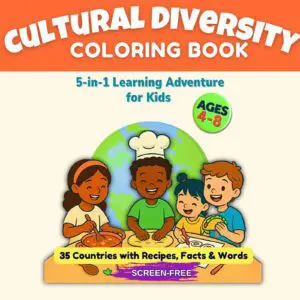
35 World Cultures Coloring Pages – Screen-Free Kids Activity
Ages 4-5 (Preschool)
- Basic color recognition and application
- Simple cultural vocabulary introduction
- Recognition of different clothing styles and celebrations
- Development of fine motor skills through coloring
Ages 6-8 (Early Elementary)
- More complex cultural concepts and traditions
- Beginning geography awareness through landmarks and maps
- Simple language learning and cultural comparisons
- Critical thinking about similarities and differences between cultures
Integration with Common Core Standards
Our cultural competence coloring pages support multiple educational standards:
Social Studies Standards
- Understanding culture and cultural competence
- People, places, and environments
- Individual development and identity
Art Education
- Creating and responding to visual arts
- Understanding art in cultural and historical contexts
- Connecting art to other disciplines
Making Learning Stick: Extended Activities
Kitchen Connections
After coloring scenes from different cultures, families can explore simple recipes together. Try making Mexican quesadillas, Italian pasta, Japanese rice balls, or Indian flatbread. These hands-on experiences reinforce cultural learning through multiple senses.
Music and Movement
Complementing activities with music from featured cultures would be great. Children can color African masks while listening to traditional drumming, or work on Irish landscape pages while enjoying Celtic melodies.
Geography Games
You can use completed coloring pages to create a world map display. Children can locate the countries they’ve “visited” through coloring and share facts they’ve learned with family and friends.
Building Global Citizens from an Early Age
Our Cultural Competence Coloring Pages plant seeds of global citizenship in young minds. Children who learn about world cultures early are likelier to become adults who appreciate diversity, communicate effectively across cultural boundaries, and contribute positively to our interconnected world.
Perfect for Gift-Giving and Special Occasions
These educational Cultural Competence coloring pages make thoughtful gifts for:
- Birthdays and holidays
- Beginning of school year activities
- Cultural heritage months
- International friendship celebrations
- Educational reward systems
Start Your Cultural Journey Today
Transform coloring time into a passport to world exploration. Our Cultural Competence Coloring Pages for Kids 4-8 perfectly combine creative expression and meaningful learning. Watch your child develop artistic skills while building cultural awareness, empathy, and global understanding.
What to read more? Cultural competence and the social and emotional development of young children in early childhood
Ready to embark on a cultural learning journey with your child? Purchase our Cultural Competence Educational Coloring Pages today and watch them develop a deeper understanding and appreciation for the world around them.
In our screen-heavy world, coloring pages offer valuable unplugged learning time. Children develop patience, creativity, and focus without digital distractions. The tactile experience of coloring engages different parts of the brain than screen-based activities, supporting well-rounded development.
🎨 Not sure where to start? Here are our most loved products.
I appreciate how this celebrates the therapeutic value of simple art.
The choice within boundaries that coloring offers suits me perfectly.
This article has reminded me why I started coloring in the first place.
What a fantastic educational tool! Teaching cultural awareness through coloring is brilliant. My kids are learning so much.
As an educator, I appreciate the thoughtful approach to cultural competence. These pages make difficult conversations accessible for young children.
Simple, clean, and effective. That’s how I’d describe these coloring pages. I print them at A4 size and they hold up beautifully.