
The Ultimate Creative Toolkit: Coloring Pages, Tutorials & Design Resources for Adults, Teachers & Small Business Owners
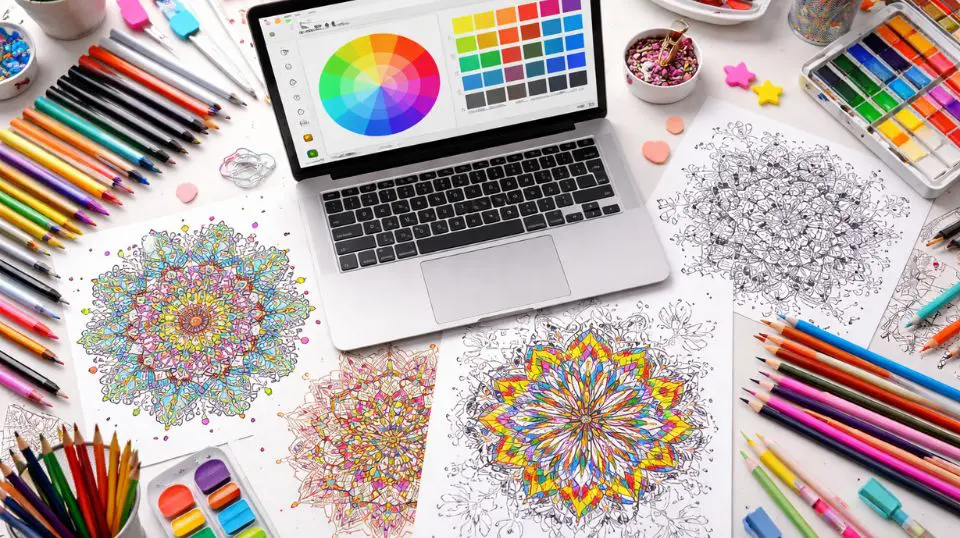
Why Creative Resources Matter More Than Ever
Creativity isn’t a luxury — it’s a skill, a stress reliever, and increasingly, a professional asset.
For adults, structured coloring activities have been shown to reduce anxiety, sharpen focus, and build fine motor consistency. For teachers, ready-to-use creative materials save hours of prep time while keeping students genuinely engaged. For small business owners, color literacy and design fluency directly impact branding decisions, social media aesthetics, and customer perception.
That’s why having access to a curated library of free creative resources isn’t just convenient — it’s strategic.
Coloring Pages: Not Just for Kids Anymore
Let’s settle this once and for all: coloring pages designed for adults are a completely different universe from what you remember from childhood.
Today’s adult-facing coloring content includes:
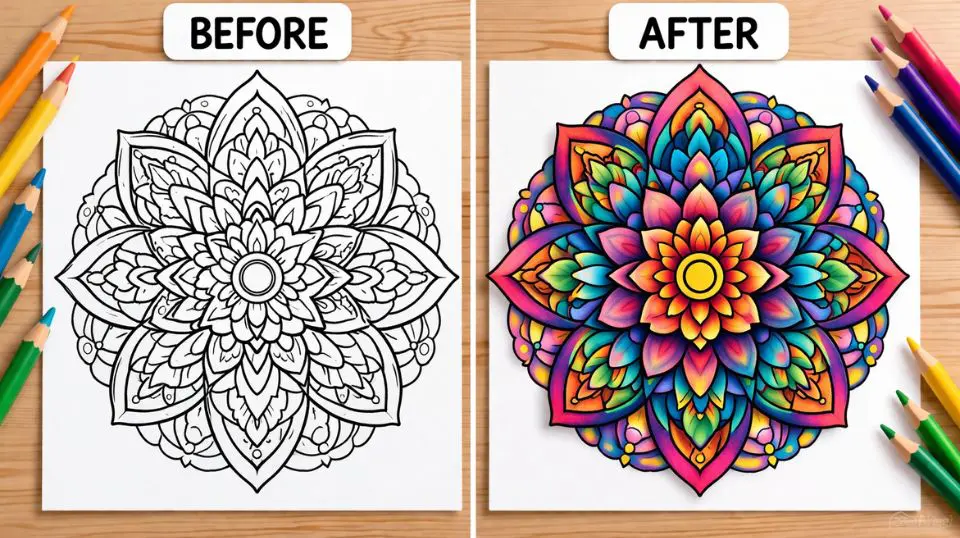
- Intricate mandalas with geometric precision that can take hours to complete
- Botanical and floral illustrations with layered petal structures and leaf textures
- Abstract pattern sheets ideal for experimenting with color theory
- Seasonal and holiday-themed designs perfect for classroom use or business marketing materials
- Architectural and landscape line art for those who prefer structured, real-world subjects
The key is knowing where to find high-quality designs — and having the right coloring pages tools to bring them to life digitally or on paper.
→ Browse our full collection of adult coloring pages here
Free Coloring Pages
Mandalas, animals, patterns & more. Instant PDF downloads for all skill levels.
Free Coloring Tutorials
Learn blending, shading, and color theory with step-by-step guides.
Free Creative Tools
Use palette generators, quizzes, and interactive tools to boost creativity.
Free Printable Cards
Download and print beautiful cards for birthdays, holidays, and more.
How to Use a Free Color Palette Maker to Level Up Your Work
Here’s where things get genuinely exciting for both creatives and professionals.
A free color palette maker is exactly what it sounds like: an online tool that helps you generate, test, and save combinations of colors based on design principles like complementary hues, analogous tones, triadic schemes, and more.
Why It’s a Game-Changer for Teachers
Instead of guessing which marker combinations work well together, teachers can use a free color palette maker to pre-select a set of cohesive colors and share them with students. This turns a simple coloring session into a legitimate lesson on color theory — without requiring a graphic design background.
Why Small Business Owners Should Care
Your brand colors communicate before your words do. Using a free color palette maker lets you experiment with combinations that reflect your brand personality — warm and approachable, sleek and modern, bold and energetic — before committing to anything in print or on screen.
→ Try our recommended free color palette maker here
It’s one of the most underused yet powerful free creative resources available today.
Coloring Tutorials: The Missing Link Between Supplies and Results
Having great coloring pages and a beautiful palette means nothing if you don’t know how to apply color with intention. That’s where coloring tutorials come in.
Good coloring tutorials don’t just tell you to “shade here” and “blend there.” The best ones explain why certain techniques work — and that understanding transforms how you approach every future project.
What to Look for in Quality Coloring Tutorials
Technique coverage: Look for tutorials that cover blending, layering, burnishing, shading, and color blocking — not just one isolated skill.
Medium specificity: Colored pencils, alcohol markers, watercolor pencils, and gel pens all behave differently. The best coloring tutorials are medium-specific so advice is actually applicable.
Progressive difficulty: Whether you’re a complete beginner or an experienced colorist, tutorials should have a clear skill progression — not assume you already know everything.
Visual step-by-step format: Still images with annotations are great; video walkthroughs with close-up camera work are even better. The ability to pause, rewind, and reference at your own pace is essential.
→ Access our full library of coloring tutorials for all skill levels
Creative Resources Designed for Small Business Owners
Small business owners often underestimate how much creative content they need — and how much time it takes to produce it.
Consider what you regularly need:
- Social media graphics with on-brand colors
- Promotional cards, loyalty cards, and thank-you notes
- Seasonal marketing materials (holiday mailers, event flyers)
- Behind-the-scenes content that feels polished and intentional
Using a combination of structured coloring pages tools, a reliable free color palette maker, and a library of free creative resources can dramatically reduce the time and cost of producing this content — while keeping your brand visual identity consistent.
→ Explore our ready-to-print creative card templates here
 Teachers: Transform Your Classroom with Ready-to-Use Creative Materials
 Teachers: Transform Your Classroom with Ready-to-Use Creative Materials
For educators, the creative toolkit looks slightly different — but the need is just as urgent.
Great classroom creative materials need to:
- Align with learning objectives (color theory, fine arts, cultural studies)
- Be age-appropriate without being condescending
- Require minimal teacher prep while maximizing student engagement
- Be reproducible without licensing headaches
This is exactly why well-designed coloring pages and structured coloring tutorials have become so popular in educational settings. When paired with a free color palette maker, they transform a passive “quiet activity” into an interactive design thinking exercise.
Ideas for classroom use:
- Use botanical coloring pages as a visual science supplement during a plant biology unit
- Assign mandala completion as a mindfulness activity during high-stress exam seasons
- Pair abstract pattern sheets with a lesson on color mixing and the color wheel
- Use architectural line art to introduce concepts of proportion and perspective
→ See our teacher-ready resource bundles here
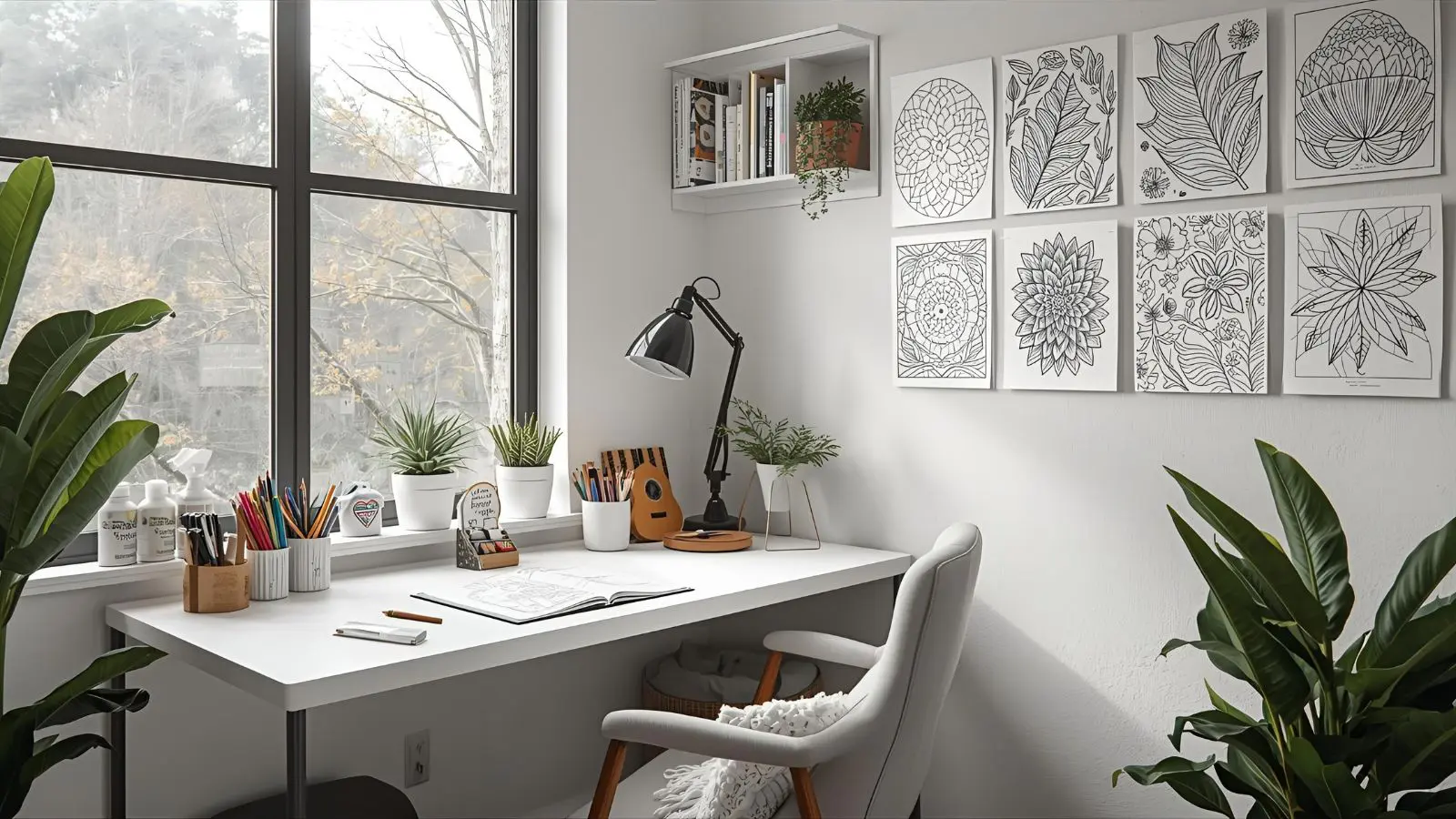
Coloring Pages Tools: Digital vs. Physical — And Why You Need Both
There’s an ongoing (and somewhat unnecessary) debate in creative communities about whether digital coloring is “as good as” physical coloring. The short answer: they’re different experiences with different strengths.
Physical Coloring
- Tactile, meditative, screen-free
- Great for stress relief and mindfulness
- Produces a tangible finished product
- Best paired with quality paper weight (at least 80 lb / 120 gsm)
Digital Coloring Tools
- Undo button — need we say more?
- Ability to test colors before committing
- Works with apps like Procreate, Adobe Fresco, Sketchbook
- Infinitely shareable and editable
The smartest approach? Use your coloring pages tools for physical exploration, and your free color palette maker for digital planning. Then combine both: plan your palette digitally, then execute on paper. This hybrid method is increasingly popular in both professional design circles and art therapy settings.
How to Get the Most Out of Every Creative Session
Whether you have 20 minutes or 2 hours, here’s a framework for a productive creative session:
Step 1 — Choose your subject. Select a coloring page that matches your current interest or project goal. Botanical for calm, geometric for focus, abstract for experimentation.
Recommended for This Topic
Step 2 — Build your palette first. Before touching a marker or pencil, use a free color palette maker to decide your color story. Limit yourself to 4–6 colors maximum for cohesion.
Step 3 — Review a quick technique. Spend 5 minutes on a relevant coloring tutorial — even a short video refresher on blending or layering can dramatically improve your output.
Step 4 — Work in layers. Start light, build depth. This applies to both colored pencils and markers. Patience at this stage is the difference between flat and dimensional results.
Step 5 — Document and share. Photograph your finished work with good natural lighting. If you’re a business owner or teacher, share process shots — not just finished results. Audiences and students connect more with the journey than the product.
 The Bigger Picture: Creativity as a Competitive Advantage
 The Bigger Picture: Creativity as a Competitive Advantage
In a world increasingly saturated with AI-generated visuals and templated content, original creative work stands out. Whether you’re submitting student portfolios, building a brand identity, or simply looking for a richer personal creative life — the skills you develop through consistent practice with quality free creative resources have compounding value.
The creators, teachers, and business owners who invest time in building their color literacy, design intuition, and technical coloring skills today are building a competitive edge that no algorithm can fully replicate.
Start with one coloring page. Build your first palette. Watch one tutorial. Then do it again tomorrow.
Frequently Asked Questions
Q1: What are the best coloring pages tools for adults who are just getting started?
A: The ideal starting point for adults new to coloring is a combination of detailed-but-not-overwhelming line art — think botanical or mandala designs — paired with a simple set of colored pencils or dual-tip markers. On the digital side, a free color palette maker helps you pre-plan your color choices before committing to paper, which takes a lot of the guesswork out of the process. Many adults find that starting with structured designs and a pre-selected palette makes the experience immediately more satisfying and less intimidating.
Q2: How can teachers integrate coloring tutorials into a classroom curriculum effectively?
A: Coloring tutorials are most effective in classrooms when they’re tied to a specific learning outcome rather than used purely as filler activities. For example, a tutorial on color mixing pairs naturally with a science or art unit on the visible spectrum, while a tutorial on shading and depth connects beautifully to lessons on light and shadow in visual arts. Short, technique-specific tutorials — 5 to 10 minutes in length — work best for classroom use. Teachers can preview them in advance and pause at key moments to facilitate group discussion around what’s being demonstrated.
Q3: Can a free color palette maker really help small business owners with branding decisions?
A: Absolutely — and it’s one of the most underused free creative resources available to entrepreneurs. A free color palette maker lets you upload inspiration images (competitor sites, mood board photos, product shots) and extract the dominant colors as usable HEX or RGB codes. This means you can build a coherent brand color system without hiring a designer for the initial exploration phase. Once you’ve identified 3–5 brand colors you love, you can apply them consistently across your marketing materials, packaging, and digital presence — which is one of the most powerful things a small business can do for brand recognition.
Q4: What’s the difference between coloring tutorials for beginners versus advanced colorists?
A: Beginner coloring tutorials typically focus on foundational skills: how to apply even pressure, basic blending with two colors, understanding warm versus cool tones, and staying within lines cleanly. Advanced tutorials go much deeper — covering techniques like burnishing to create a waxy luminosity, complex layering sequences with 6 or more colors, realistic skin tone rendering, and creating texture effects that mimic fabric, fur, or natural materials. The most valuable coloring tutorials clearly state their target skill level upfront so you can self-select appropriately and actually progress rather than repeating the same basic exercises indefinitely.
Q5: How do I choose the right coloring pages for a stress-relief or mindfulness practice?
A: The best coloring pages for stress relief share a few key characteristics: repetitive geometric patterns (like mandalas), soft organic shapes (like florals or leaves), and enough detail to occupy the mind without becoming frustrating. The goal is to enter a light flow state — engaged enough to quiet mental chatter, but not so challenged that you feel stressed about making mistakes. Many adults who use coloring as a mindfulness practice also benefit from pairing it with a pre-selected palette from a free color palette maker, since decision fatigue around color choices can actually undermine the calming effect of the activity. Having your colors chosen in advance lets you drop into the coloring itself without interruption.
Q6: Are there coloring pages tools that work well for both digital and physical creative projects?
A: Yes — the most versatile approach combines a high-resolution line art file with a browser-based free color palette maker. You can open the digital file in a coloring app (like Procreate or Adobe Fresco) to test your palette and technique, then print the same file on quality paper to complete the physical version with your actual supplies. This hybrid workflow is increasingly popular among adult colorists and is particularly useful for small business owners who want to create cohesive branded illustrations or cards that bridge their digital and physical marketing materials. The key is starting with vector or high-resolution source files so quality doesn’t degrade at either stage.
Ready to build your creative toolkit? Explore our full collection of coloring pages, tutorials, and design tools — all in one place.
The marker section gave me confidence to invest in a set I’d been hesitating over. Understanding the blending behavior before buying is exactly the kind of guidance that prevents expensive mistakes.
I’ve accumulated coloring supplies over several years and never had them all compared this clearly in one place. The breakdown between wax and oil-based pencils settled a debate I’d been having with myself for months.