
Mandala Coloring Techniques for Beginners: Master Intricate Designs
There’s something deeply satisfying about bringing a mandala to life with color. The symmetrical patterns, the intricate details, and the meditative rhythm of filling each section create an experience that’s both calming and creatively fulfilling. But when you first encounter a complex mandala design, those beautiful intricacies can feel overwhelming. Where do you start? How do you choose colors that complement each other? What mandala coloring techniques for beginners will help you navigate those tiny spaces without frustration?
Part of what makes mandalas so satisfying to color is their inherent structure—the radial symmetry, the repeating patterns, the way the eye naturally moves toward the center. Whether you’re completely new to how to color mandalas for adults or looking to refine your approach, mastering a few essential techniques can transform your experience from intimidating to incredibly rewarding.
In this comprehensive guide, we’ll explore proven mandala coloring techniques for beginners that will help you create stunning artwork while maintaining the peaceful, mindful quality that makes intricate mandala printable coloring pages so therapeutic.
Understanding Mandala Design: The Foundation of Better Coloring
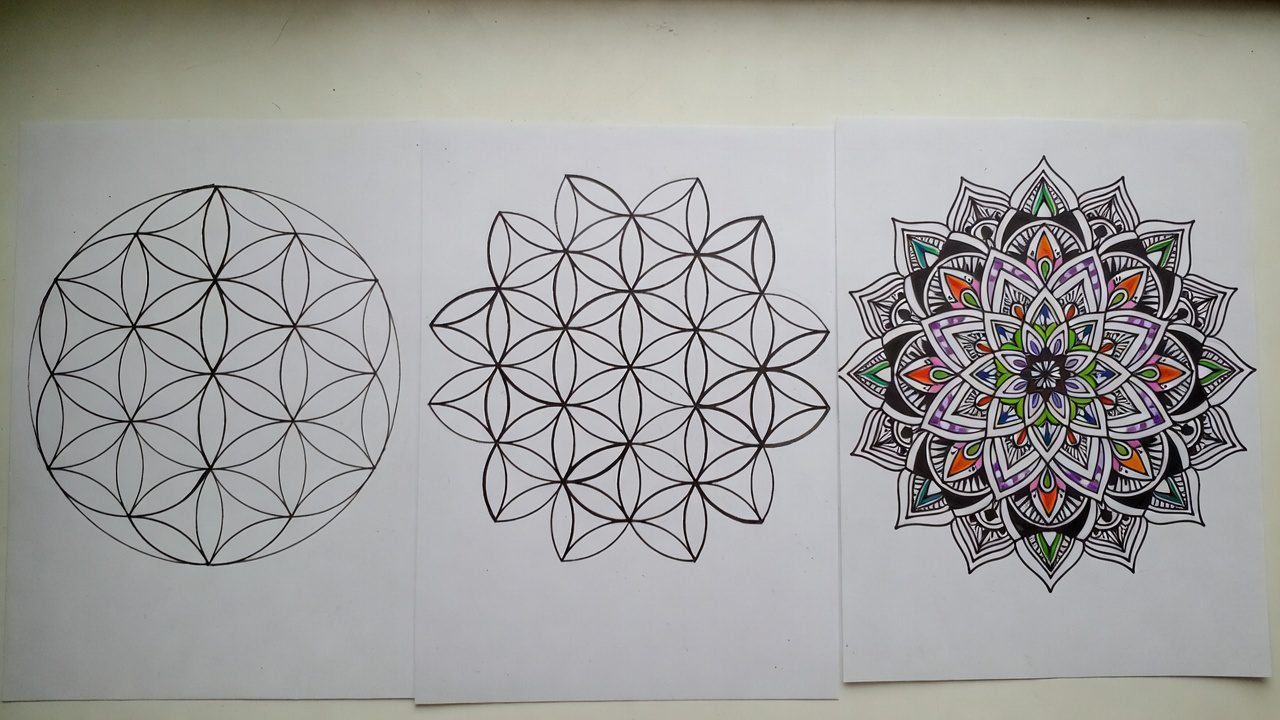
Before diving into specific mandala coloring techniques for beginners, it’s helpful to understand what makes mandalas unique. The word “mandala” comes from Sanskrit, meaning “circle,” and these designs radiate from a central point in symmetrical patterns. This inherent symmetry is your greatest ally when learning how to color mandalas for adults. Once you understand the structure, you can develop strategies that work with the design rather than against it.
Most mandalas are organized in concentric circles or radiating sections. Recognizing these natural divisions helps you plan your color approach and break down what might seem overwhelming into manageable sections. When you look at your mandala before picking up your coloring tools, take a moment to identify the repeating patterns. This simple observation will inform every technique you use and help you master how to color mandalas for adults more effectively.
Developing your coloring technique isn’t just about aesthetics—it deepens the meditative quality of the practice itself. The more fluidly your hands move, the more your mind can settle into the peaceful rhythm that makes intricate mandala printable coloring pages such powerful tools for relaxation.

Essential Mandala Coloring Techniques for Beginners
Start from the Center and Work Outward
One of the most fundamental mandala coloring techniques for beginners is to begin at the center of your design and gradually work outward. This approach mirrors the natural creation of the mandala pattern itself and offers several practical advantages when learning how to color mandalas for adults.
Starting centrally helps you establish your color scheme early on. The center often features the most intricate details, so tackling it first while you’re fresh and focused makes sense. As you move outward, you’ll have already made key color decisions that guide the rest of your work. This technique also prevents you from accidentally smudging colors you’ve already completed—your hand naturally rests on uncompleted sections rather than finished ones.
The Repeating Section Strategy
Since mandalas feature repeating patterns, you can use this to your advantage with strategic section coloring—one of the smartest mandala coloring techniques for beginners. Instead of randomly coloring here and there, complete one full “wedge” or section of the mandala from center to edge. Then, you can either repeat that exact color pattern in each corresponding section for perfect symmetry or vary it slightly for interest while maintaining overall harmony.
This approach is particularly effective for intricate mandala printable coloring pages because it breaks the design into bite-sized pieces. Completing one section gives you a sense of accomplishment and a clear template to follow for the remaining sections. You’re creating a roadmap for yourself as you go, which is essential when learning how to color mandalas for adults effectively.
Light to Dark Layering
When working with colored pencils or markers, building your colors from light to dark creates depth and dimension—a crucial technique in how to color mandalas for adults. Start with your lightest colors as a base layer, then gradually add darker tones for shading and emphasis. This mandala coloring technique for beginners is more forgiving than starting with dark colors—it’s much easier to darken a light area than to lighten a dark one.
This layering approach works beautifully on intricate mandala printable coloring pages, allowing you to build complexity gradually while maintaining control over the final result.

Color Selection Strategies for Harmonious Results
Understanding Color Relationships
The key to creating visually stunning mandalas lies in understanding how colors work together. You don’t need to be an expert in color theory to make beautiful choices, but knowing a few basic relationships will dramatically improve your mandala coloring techniques for beginners and overall results when learning how to color mandalas for adults.
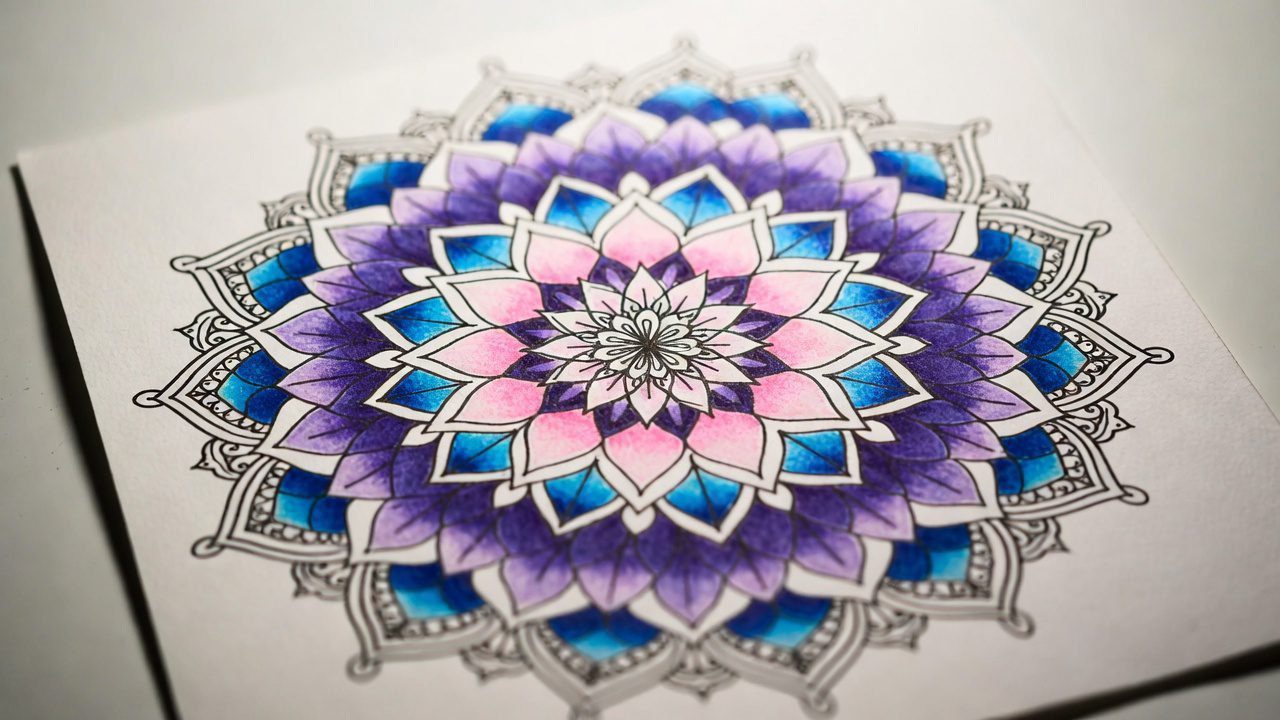
Complementary colors (opposites on the color wheel, such as blue and orange) create vibrant contrast and make your mandala stand out. Analogous colors (neighbors on the color wheel, like blue, blue-green, and green) create harmony and flow. Monochromatic schemes (variations of a single color from light to dark) produce sophisticated, cohesive results.
Many colorists find that limiting their palette to 3-5 primary colors creates the most pleasing results when working on intricate mandala printable coloring pages. Too many colors can make the design feel chaotic, while too few can make it seem monotonous.
Creating Visual Hierarchy with Color
Not all areas of your mandala need equal emphasis—an important consideration when learning how to color mandalas for adults. Using color strategically to create focal points adds visual interest and guides the viewer’s eye through your artwork. Consider using your brightest, most saturated colors at the center or in key repeating elements, while more muted tones fill supporting areas.
Alternating warm and cool colors in different sections can create a pleasing rhythm. For instance, if one section features warm oranges and reds, the adjacent section might use cool blues and purples. This temperature contrast adds dimension without requiring numerous colors—a valuable mandala coloring technique for beginners that maintains visual harmony.
If you’re drawn to combining creativity with emotional wellness, explore our comprehensive collection of emotion coloring pages for adults, featuring therapeutic designs with affirmations that complement your mandala practice perfectly.
Advanced Techniques for Intricate Mandala Printable Coloring Pages
Mastering Tiny Spaces
Those incredibly detailed areas with tiny spaces can intimidate even experienced colorists. Here’s how to approach them without frustration using effective mandala coloring techniques for beginners:
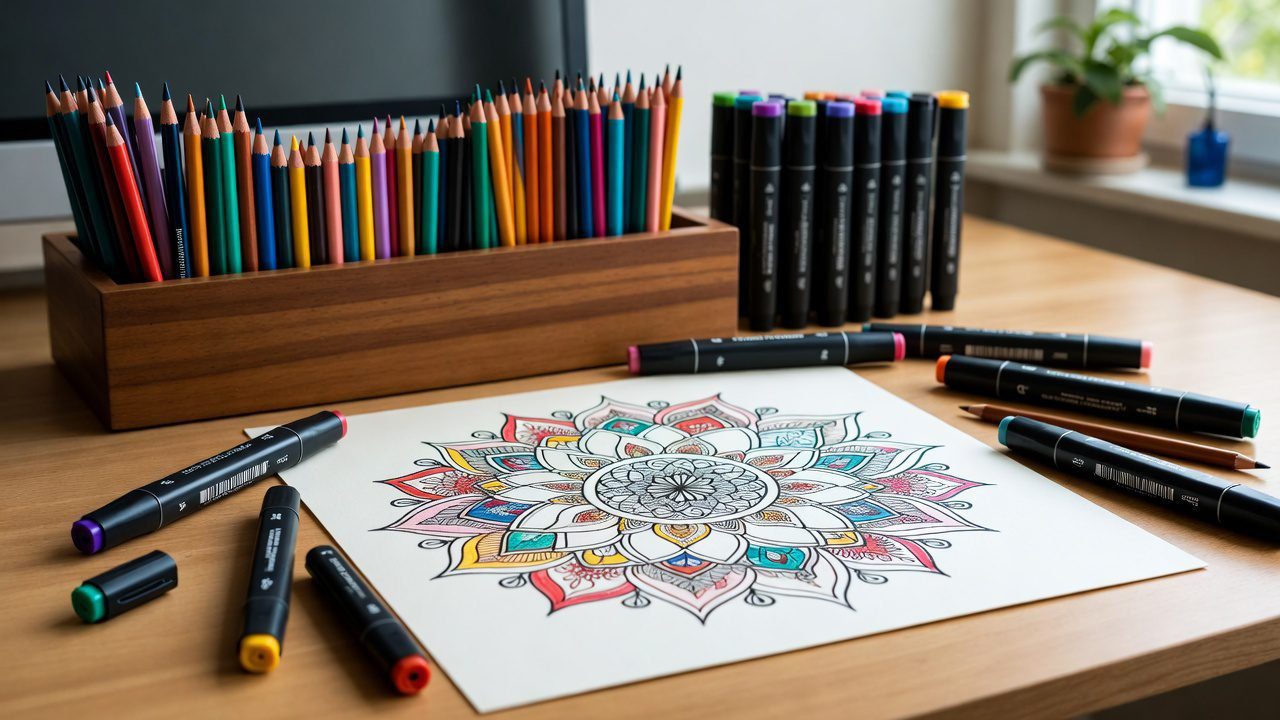
First, invest in quality fine-tipped tools. For colored pencils, keep your points sharp with a good sharpener. For markers, choose those with fine or brush tips specifically designed for detail work. When working with intricate mandala printable coloring pages, the right tools make an enormous difference.
When coloring small spaces, slow down and use controlled, deliberate strokes rather than trying to rush. Steady pressure is more effective than pressing hard—let the tool do the work. If you’re working with colored pencils, consider using a colorless blender pencil to smooth out colors in tight areas where layering is complex.
Creating Texture and Dimension
Flat, uniform color can make even the most intricate mandala printable coloring pages feel one-dimensional. Incorporating texture and shading techniques brings your work to life. Try these mandala coloring techniques for beginners:
- Gradient fills: Gradually transition from light to dark within a single petal or section
- Stippling: Use tiny dots of color to create visual texture in larger areas
- Hatching and cross-hatching: Build up color and shadow with fine parallel or crossed lines
- White space: Don’t feel obligated to fill every millimeter—strategic white space adds sparkle and prevents visual overwhelm
For those seeking additional variety in their creative practice, our free printable coloring pages collection offers stunning designs across multiple themes, perfect for practicing these techniques.

The Metallic and Accent Strategy
Adding touches of metallic gold, silver, or copper gel pens can elevate your mandala from beautiful to breathtaking. Use metallics sparingly for maximum impact—outlining key elements, adding dots at pattern intersections, or highlighting the center can create stunning focal points without overwhelming the design.
White gel pens serve a similar purpose, adding highlights that create the illusion of light reflecting off surfaces. This mandala coloring technique for beginners is particularly effective when you’ve used darker colors and want to add dimension to your intricate mandala printable coloring pages.
Practical Tips for a Better Coloring Experience
Preparing Your Workspace
How you set up your coloring environment significantly impacts your results and enjoyment when learning how to color mandalas for adults. Good lighting is essential, especially for intricate mandala printable coloring pages—natural daylight is ideal, but a quality desk lamp prevents eye strain during evening sessions.
Keep your tools organized and within easy reach. There’s nothing more frustrating than breaking your creative flow to search for the right color. A simple organizer or case keeps pencils, markers, and pens accessible and protected.
Consider your coloring surface. A smooth, hard surface works well for most mediums, but some colorists prefer a slightly padded surface under their page to prevent indentations from pressing through to pages beneath.
Protecting Your Work
As you progress through a mandala, especially one that takes multiple sessions to complete, protecting finished areas becomes essential. A clean sheet of paper placed under your hand prevents smudging and oil transfer from your skin. Some colorists even wear a thin artist’s glove on their coloring hand.
For colored pencil work, a workable fixative spray can set your colors and prevent smudging between sessions. Apply it lightly in several thin coats rather than one heavy coat. This is an often-overlooked tip when mastering mandala coloring techniques for beginners that protects your hard work.
Taking Breaks Mindfully
While the meditative quality of how to color mandalas for adults is one of its most significant benefits, even meditation needs pauses. When working on intricate mandala printable coloring pages, take brief breaks every 20-30 minutes to rest your eyes and hands. Stand up, stretch, and step away from your work. You’ll return with a fresh perspective and renewed focus.
These mindful breaks are actually part of effective mandala coloring techniques for beginners—knowing when to pause is as important as knowing how to proceed.
Troubleshooting Common Mandala Coloring Challenges
When Colors Look Muddy
If your carefully chosen colors start looking muddy or dull as you layer them, you might be over-blending or using incompatible colors. To avoid this when learning how to color mandalas for adults, test your color combinations on scrap paper first. Some colors don’t layer well together—for instance, complementary colors can create brown or gray when overlaid.
If muddiness has already occurred, try adding a fresh layer of your lightest color to lift and brighten the area, or strategically add darker accents to transform the muddy area into intentional shading. This problem-solving approach is an essential mandala coloring technique for beginners that helps achieve professional results.
Dealing with Uneven Color Coverage
Achieving even coverage in small areas takes practice. If you’re struggling with patchy color using colored pencils on intricate mandala printable coloring pages, try working in small circular motions rather than back-and-forth strokes. Multiple light layers create more even coverage than heavy pressure—one of the most valuable mandala coloring techniques for beginners.
For markers, the key is keeping your strokes wet. Work quickly in small sections, blending edges while they’re still damp to avoid streaks and lines.
Managing Decision Fatigue
With hundreds of tiny sections to color, decision fatigue is real when working on intricate mandala printable coloring pages. If you find yourself staring at your mandala, unable to choose the next color, simplify your choices. Stick to a predetermined color palette, or establish a simple pattern (alternating colors, repeating a sequence) that removes the need for constant decisions.
Remember, some of the most stunning mandalas use just 2-3 colors in different values and intensities. Simplicity often creates more impact than complexity—an important lesson in how to color mandalas for adults effectively.
Recommended Mandala Designs for Different Skill Levels
For Beginners
If you’re learning mandala coloring techniques for beginners, start with designs that have larger sections and clearly defined patterns. Look for mandalas with good contrast between different areas—distinct petals, clear circles, and obvious repeating elements make color decisions easier when you’re developing your skills.
Discover the therapeutic benefits of our floral mandala coloring pages PDF, where the natural beauty of flowers meets the meditative practice of mandala art in 50 detailed designs perfect for practicing your new techniques.
For Intermediate Colorists
Once you’re comfortable with basic mandala coloring techniques for beginners, challenge yourself with floral mandalas that combine organic shapes with geometric precision. These designs often feature smaller details and more complex layering opportunities when learning how to color mandalas for adults.
For Advanced Enthusiasts
When you’re ready for a real challenge with intricate mandala printable coloring pages, seek out mandalas with fine details, multiple layers of pattern, and complex symmetry. These designs reward patience and precise technique with stunning results.
Pair your mandala coloring sessions with our printable mandala coloring sheets for adults, offering detailed circular patterns ideal for testing advanced blending techniques and mastering professional-level skills.
Expanding Your Mandala Practice
Creating a Mandala Coloring Routine
Incorporating how to color mandalas for adults into your daily or weekly routine enhances both your skills and your well-being. Many people find that practicing their mandala coloring techniques for beginners first thing in the morning sets a calm, focused tone for the day, while others prefer evening sessions to unwind.
Starting with just 15-20 minutes a few times per week allows you to build the practice sustainably. As you develop comfort with various techniques, you might find yourself naturally extending these sessions or increasing their frequency with your intricate mandala printable coloring pages.
Exploring Related Designs
While traditional circular mandalas offer excellent benefits, don’t limit yourself exclusively to them. Geometric patterns and other symmetrical designs provide similar meditative qualities while challenging your mandala coloring techniques for beginners in new ways.
For those who appreciate geometric precision, our 50 geometric coloring pages for adults printable collection offers mandala and abstract designs perfect for meditation and stress relief.
Joining the Mandala Community
Sharing your completed mandalas with others, whether in person or online, adds a social dimension to this traditionally solitary activity. Many colorists find inspiration in seeing how others approach the same intricate mandala printable coloring pages with different color choices and mandala coloring techniques for beginners.
Making the Most of Intricate Mandala Printable Coloring Pages
Quality Considerations
When selecting intricate mandala printable coloring pages, paper quality significantly impacts your results when learning how to color mandalas for adults. For colored pencils, slightly textured cardstock holds pigment well and prevents bleeding. For markers, use heavier-weight paper (80-100 lb) to avoid show-through in the pages beneath.
Print settings matter too. Use the highest quality setting your printer offers, and ensure you’re printing at 100% scale rather than “fit to page,” which can distort the careful symmetry of mandala designs.
Building Your Collection Strategically
Rather than printing dozens of mandalas at once, consider a more mindful approach to learning how to color mandalas for adults. Select and print 3-5 designs that appeal to you, complete them using various mandala coloring techniques for beginners, then choose your next batch. This reduces waste and lets you appreciate each design in full, rather than feeling overwhelmed by too many options.
Expand your library with diverse themes to keep your practice fresh. Complement your mandala collection with our powerful motivational coloring pages featuring empowering designs that blend inspirational quotes with beautiful artistic elements.
The Therapeutic Benefits of Mindful Mandala Coloring
While we’ve focused primarily on mandala coloring techniques for beginners, it’s worth acknowledging why so many people are drawn to intricate mandala printable coloring pages beyond just the artistic results. The repetitive nature of coloring symmetrical patterns creates a meditative state that reduces stress and anxiety.
When you focus on choosing the next color, carefully staying within lines, and building gradual layers while learning how to color mandalas for adults, your mind naturally quiets. The structured nature of mandalas provides just enough challenge to keep you engaged without becoming frustrating, occupying the worry-prone parts of your brain with peaceful, productive activity.
Many colorists report that mandala coloring sessions help them process emotions, work through problems indirectly, and find clarity on issues that felt overwhelming. The combination of structured guidance (the printed lines) and creative freedom (your color choices) creates a perfect balance for many people practicing mandala coloring techniques for beginners.

🎨 Not sure where to start?
Here are our most loved products.
Frequently Asked Questions
🎨 Not sure where to start? Here are our most loved products.
Q1: What’s the best way to start coloring a mandala?
A: Begin at the center and work your way outward—this is one of the most essential mandala coloring techniques for beginners. This approach helps you establish your color palette early when learning how to color mandalas for adults and prevents smudging completed areas. Start with light colors that you can layer and deepen as you go, giving you more flexibility to adjust as the design on your intricate mandala printable coloring pages develops.
Q2: How do I choose colors for my mandala?
A: Limit yourself to 3-5 primary colors for a cohesive look when learning how to color mandalas for adults. Use color theory basics—try complementary colors (opposites on the color wheel) for vibrant contrast or analogous colors (neighbors on the color wheel) for harmony. Test your color combinations on scrap paper before committing to your intricate mandala printable coloring pages. This is one of the most important mandala coloring techniques for beginners to master.
Q3: What tools work best for intricate mandala designs?
A: Fine-tipped colored pencils with sharp points are ideal for detailed work on intricate mandala printable coloring pages. Quality markers with fine or brush tips also work well. Keep points sharp and consider using a colorless blender pencil for smooth color in tight spaces. The right tools make a significant difference when learning mandala coloring techniques for beginners.
Q4: How can I make my mandala coloring look more professional?
A: Focus on creating depth through light-to-dark layering, add texture with techniques like stippling or hatching, and use strategic white space. Consider adding metallic accents sparingly for focal points. Most importantly, take your time—rushed work always shows in intricate designs. Mastering these mandala coloring techniques for beginners takes practice but yields impressive results when learning how to color mandalas for adults.
Q5: Why do my colors look muddy when I blend them?
A: Muddy colors often result from over-blending or combining incompatible colors. Complementary colors can create brown when overlaid heavily. Test combinations first, use light layers, and work methodically on your intricate mandala printable coloring pages. This is a common challenge when learning mandala coloring techniques for beginners, but it’s easily avoided with proper planning.
Q6: How long does it take to color a mandala?
A: This varies widely based on the design’s complexity and your chosen techniques when learning how to color mandalas for adults. Simple mandalas might take 1-2 hours, while more complex intricate mandala printable coloring pages can be multi-session projects spanning 5-10 hours or more. Embrace the process rather than rushing to finish—the therapeutic benefits come from the journey, not just the destination.
Q7: Should I color all repeating sections the same way?
A: This is entirely your choice and an important decision in mandala coloring techniques for beginners! Many people find perfect symmetry satisfying, coloring each repeated section identically. Others prefer variety, using similar but slightly different color combinations in each section while maintaining overall harmony. Try both approaches on different intricate mandala printable coloring pages to see what you prefer when learning how to color mandalas for adults.
Q8: What if I make a mistake while coloring?
A: For colored pencils, a white gel pen can cover minor errors, or you can layer darker colors over mistakes to incorporate them into your design. With markers, mistakes are harder to correct—working slowly and mindfully prevents most issues when learning mandala coloring techniques for beginners. Remember, many “mistakes” become happy accidents that add character to your work on intricate mandala printable coloring pages.

Mastering mandala coloring techniques for beginners transforms what could be a frustrating experience into a deeply satisfying artistic practice. Whether you’re drawn to the meditative qualities, the creative challenge, or simply the beauty of intricate designs, these tips will help you create mandalas you’re proud to display.
Remember that developing your skills in how to color mandalas for adults takes time and practice. Start with simpler designs to build confidence, gradually challenging yourself with more complex intricate mandala printable coloring pages as your comfort level grows. Every mandala you complete teaches you something new about color, patience, and your own creative preferences.
The beauty of how to color mandalas for adults lies in its accessibility—you don’t need formal training to create stunning artwork using these mandala coloring techniques for beginners, just curiosity, patience, and a willingness to experiment. So choose a design that speaks to you, gather your favorite coloring tools, and begin the peaceful, creative journey that awaits in every circle, petal, and symmetrical pattern.
Ready to start your mandala coloring journey? Explore our collection of intricate mandala printable coloring pages and discover designs perfect for every skill level. From simple patterns for beginners to intricate masterpieces for experienced colorists, find the mandala that calls to you and begin creating your own meditative artwork today using these proven mandala coloring techniques for beginners.
Mandala-specific techniques are exactly what I needed. The intricate designs require different approaches than other patterns.
Working from the center out and maintaining symmetry – these tips have made my mandalas so much more satisfying to complete.
These are well crafted and clearly made for adults, not just simplified children’s designs. The complexity is satisfying without being overwhelming.