
Cozy Decor Ideas for Small Spaces: Printable Art for Reading Nooks & Corners
If you’re hunting for cozy decor ideas small spaces actually call for, the fix usually isn’t more furniture — it’s the right printable art, sized and framed to fit a single wall, a stair landing, or the sliver of space beside a window. A reading nook only needs one focal piece, a warm palette, and paper that lies flat without curling or smudging. Get those three right and even a 3-foot-wide corner reads as intentional, not accidental.
Quick Answer: How to Decorate a Small Reading Nook
For cozy decor ideas small spaces need most: pick one narrow-format print (8×10″ or 11×14″), hang it at eye level 6–8 inches above your chair back, and print on 200–250 gsm matte cardstock at 300 DPI. Warm, muted tones — rust, sage, cream — make a tiny corner feel finished rather than cluttered. One well-placed piece outperforms a cluttered gallery wall in a footprint this small.
This guide walks through choosing, printing, and hanging printable wall art for corners and nooks — plus the paper weight, DPI, and ink details that keep a $2 print looking like a $200 one.
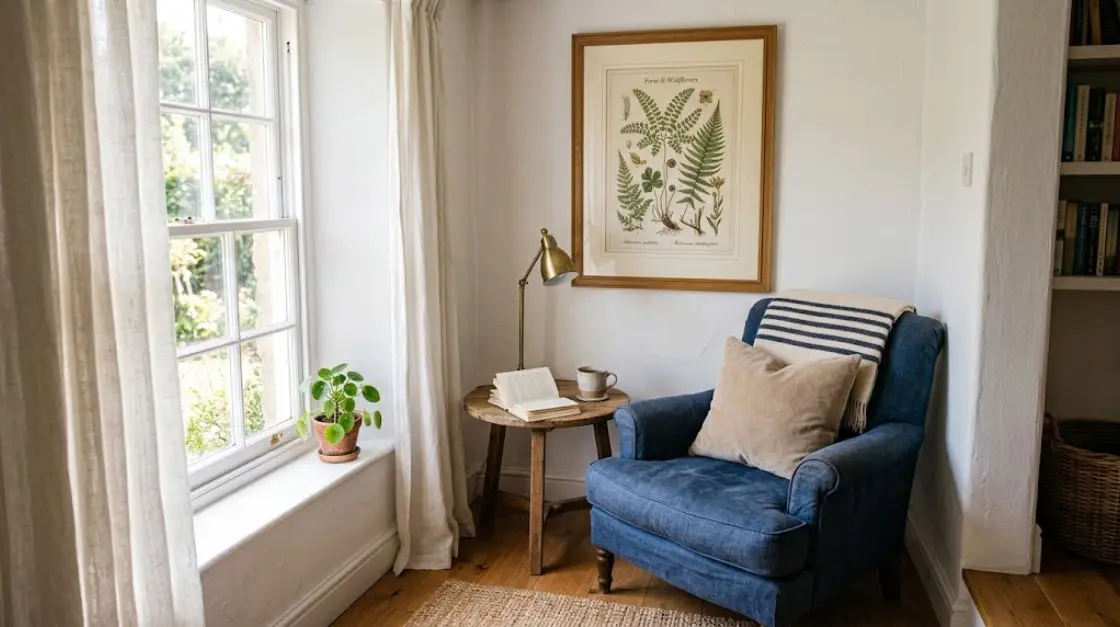
Most cozy decor ideas small spaces feature online assume you’re furnishing an entire room. In practice, the pieces that make the biggest difference are the ones sized for a single wall segment — the sliver beside a window seat, the awkward triangle under a staircase, or the narrow strip above a reading chair. Once you treat that corner as its own mini design project, small bedroom design and small living room ideas both get a lot easier to execute without a full renovation budget.
Why Small-Space Decor Deserves Its Own Approach
Small Bedroom Design Has Different Rules Than Open Rooms
Small bedroom design succeeds or fails on scale, not style. A single vertical print beside the headboard reads as calm; two mismatched horizontal frames in the same spot read as clutter.
The same logic drives good cozy decor ideas small spaces need in general — fewer, better-chosen pieces, not fewer opinions about color or theme. If you’re furnishing an actual bedroom rather than a nook, our full guide to cozy room decor ideas covers palette and framing choices in more depth.
Small Living Room Ideas for Reading Corners
Small living room ideas for a reading corner usually come down to one question: where does the eye land first? A corner chair with a floor lamp and one printed piece above it creates that landing point without demanding a redesign of the whole room.
Renters and small-space dwellers benefit here specifically because printable art is repositionable — nothing is drilled in beyond a single nail, and swapping the print costs a sheet of paper, not a new frame. Anyone building out a full living room around this idea should browse our living room wall decor collection for sizing and palette pairings.
Practical and Emotional Benefits
- Rental-friendly: swap seasonal prints without patching walls
- Budget-conscious: a single sheet of cardstock costs less than a dollar
- Mood-setting: warm palettes in a reading corner measurably change how long people linger there
- Gift-worthy: a framed print makes a thoughtful, low-cost housewarming gift
- Therapeutic: coloring-page-style line art gives the corner a hands-on, mindful activity too
- Multi-purpose: the same nook can double as a reading corner by day and a calm-down corner for kids by evening, since warm, quiet palettes serve both uses
Small-Space Cozy Decor for Multi-Use Corners
A lot of small-space cozy decor has to earn its keep twice — once as a reading corner, once as a homework nook, once as a spot to unwind after a long day. That’s part of why printable art works so well here: it’s inexpensive enough to swap between a botanical print for evenings and a brighter, kid-friendly design for daytime use.
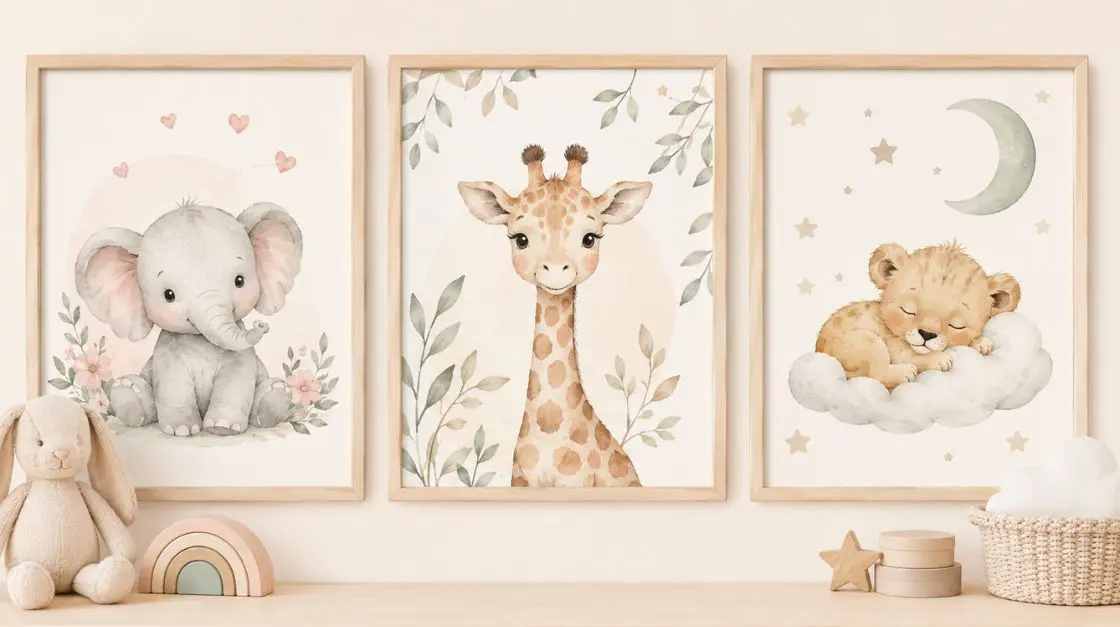
If the corner doubles as a family space, our kids wall décor collection has playful designs sized for the same narrow formats used elsewhere in this guide, so the palette stays consistent even as the artwork rotates.
The Science of Why Paper and Ink Choices Matter
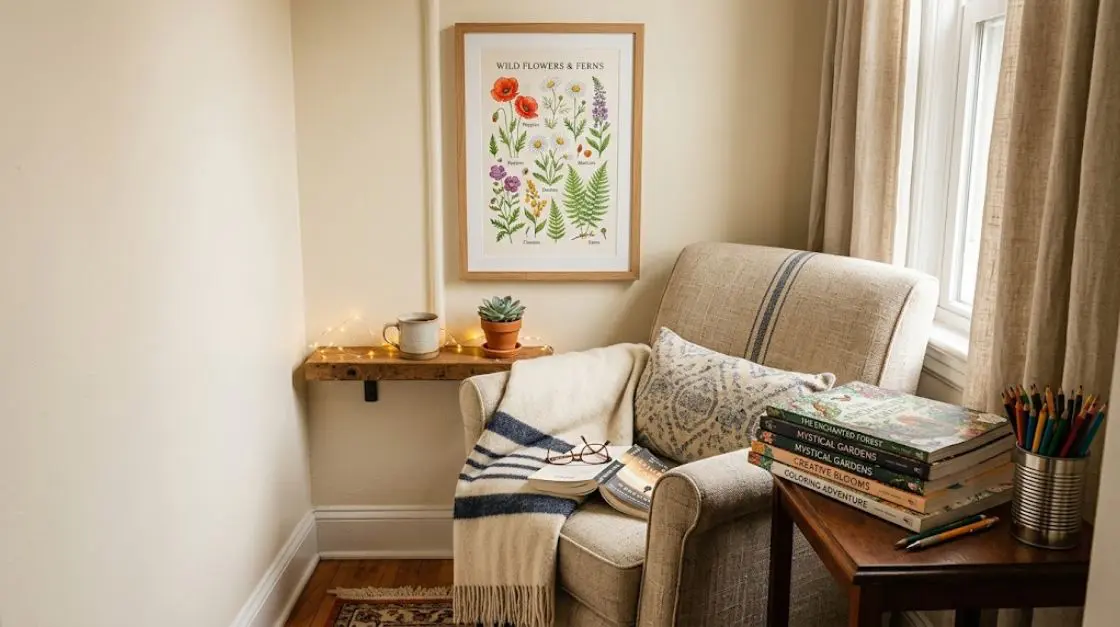
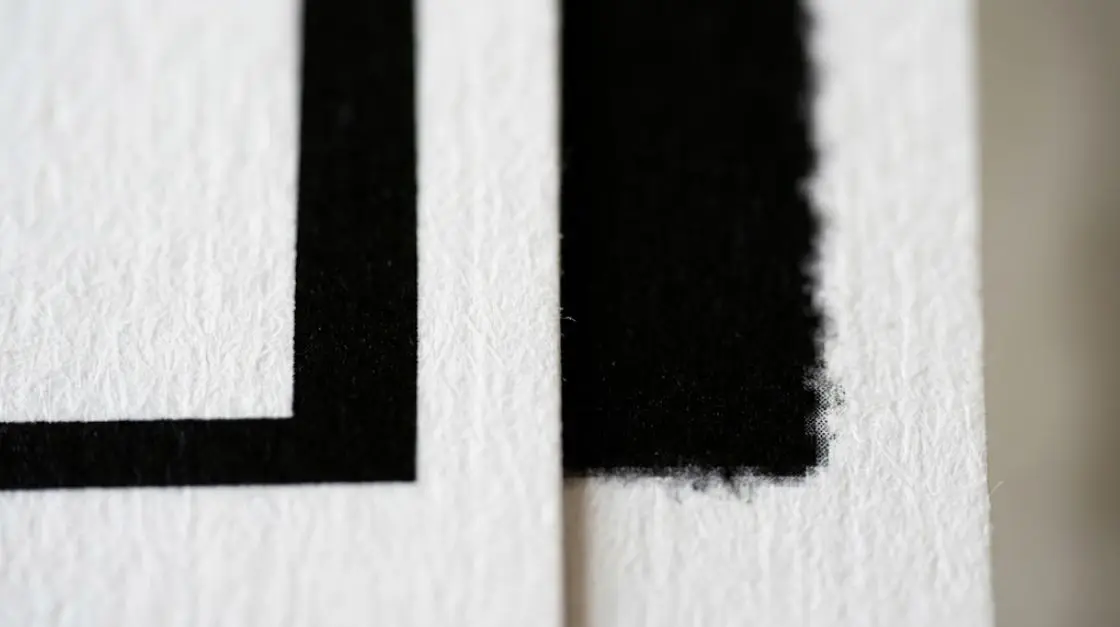
Print quality in a small space is unforgiving — a piece hung 18 inches from your eyes at reading distance shows every flaw that a gallery wall six feet away would hide. Two factors decide whether a print looks crisp or cheap: resolution and paper absorbency.
Most home inkjet printers output in the 300–1200 DPI range, but 300 DPI is the practical floor for line art and photographic wall prints meant to be viewed up close. Below that threshold, edges start to look jagged or pixelated once you’re within arm’s reach — which is exactly the viewing distance of a reading nook. Our own high resolution files guide breaks down why 300 DPI has become the industry-standard baseline for printable art.
Paper absorbency is the second variable, and it’s the one people underestimate. Standard 20 lb copy paper (about 75 gsm) is thin enough that inkjet ink can bleed through fibers before it dries, which is why smudging shows up most on lightweight paper. Moving up to 90–110 lb cardstock (roughly 200–250 gsm) gives ink less surface area to spread across, so lines stay sharp, and colors stay saturated. If you’re printing coloring-style art to frame afterward, our how-to guide covers dry time and ink-type specifics.
Pigment-based inks also dry faster and resist smearing better than dye-based inks, which matters if you’re framing a piece the same day you print it. As one printer manufacturer support page puts it, pigment inks sit on the paper surface rather than soaking into it — a small chemistry difference with a big effect on how quickly a print is safe to handle.
There’s a mindfulness angle worth mentioning too, since many people build a reading nook specifically to slow down. Printing your own art — rather than buying a mass-produced canvas — adds a small ritual to the process: choosing the palette, setting the printer, watching the page come out crisp. That hands-on step is part of why cozy decor ideas small spaces favor printable art rather than store-bought prints; the process itself is part of the calm.
Types of Printable Art for Reading Nooks & Corners
Botanical and Floral Prints
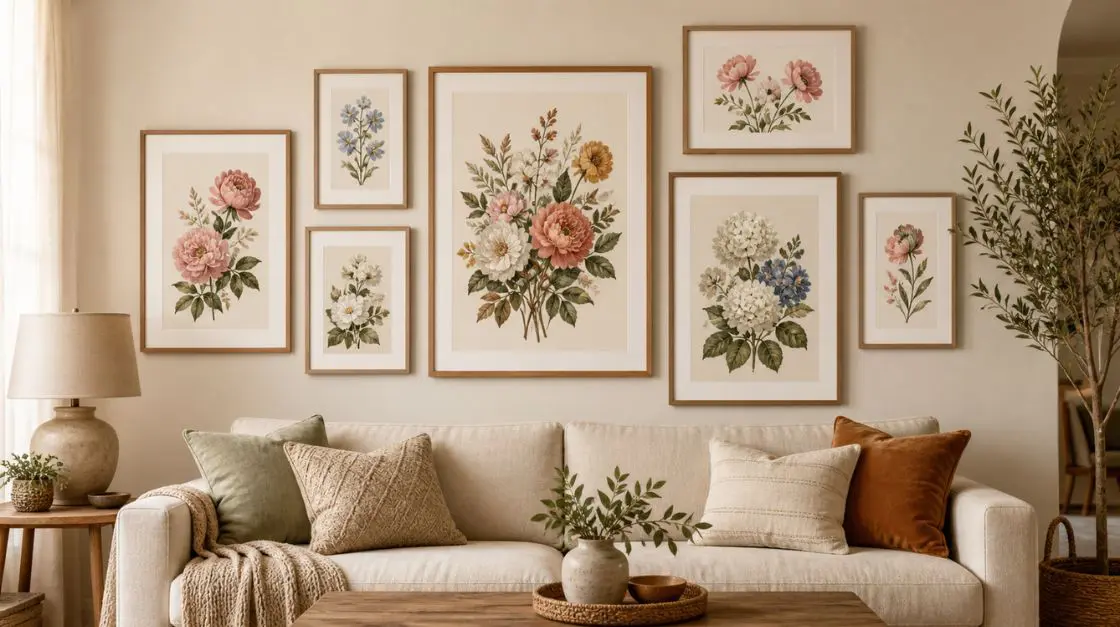
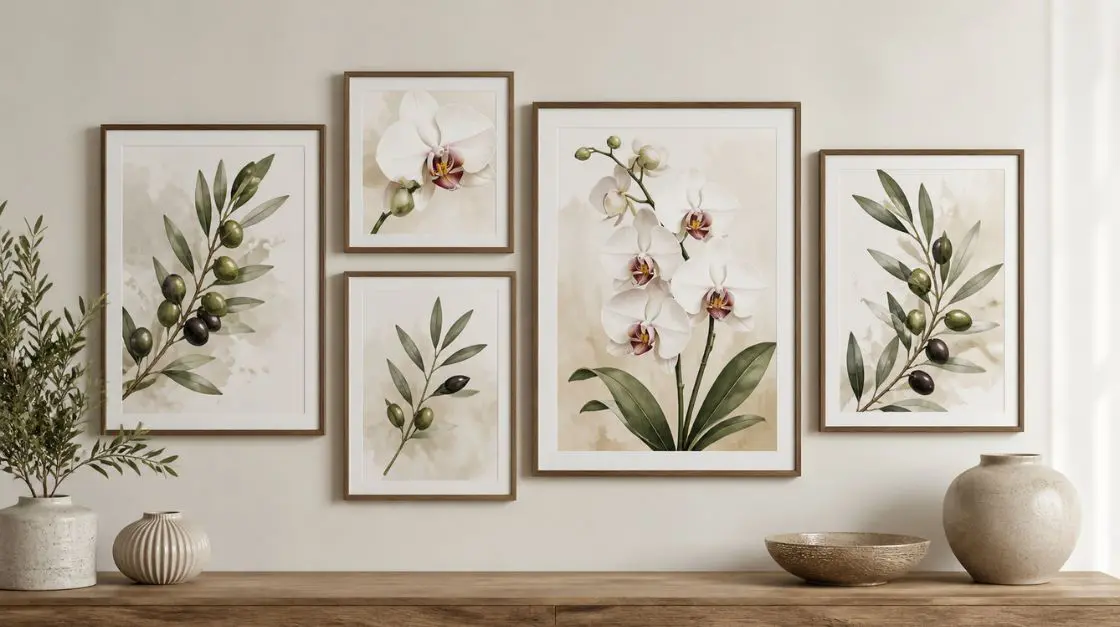
Botanical line art brings warmth without visual noise, which is exactly what cozy decor ideas small spaces call for in a reading corner. A single eucalyptus branch or cherry blossom print reads as calm rather than busy, even at close range.
Best for: anyone who wants a nature-adjacent feel without committing to a full gallery wall. Browse the botanical wall art collection for florals sized specifically for narrow corners.
Abstract and Minimalist Line Art
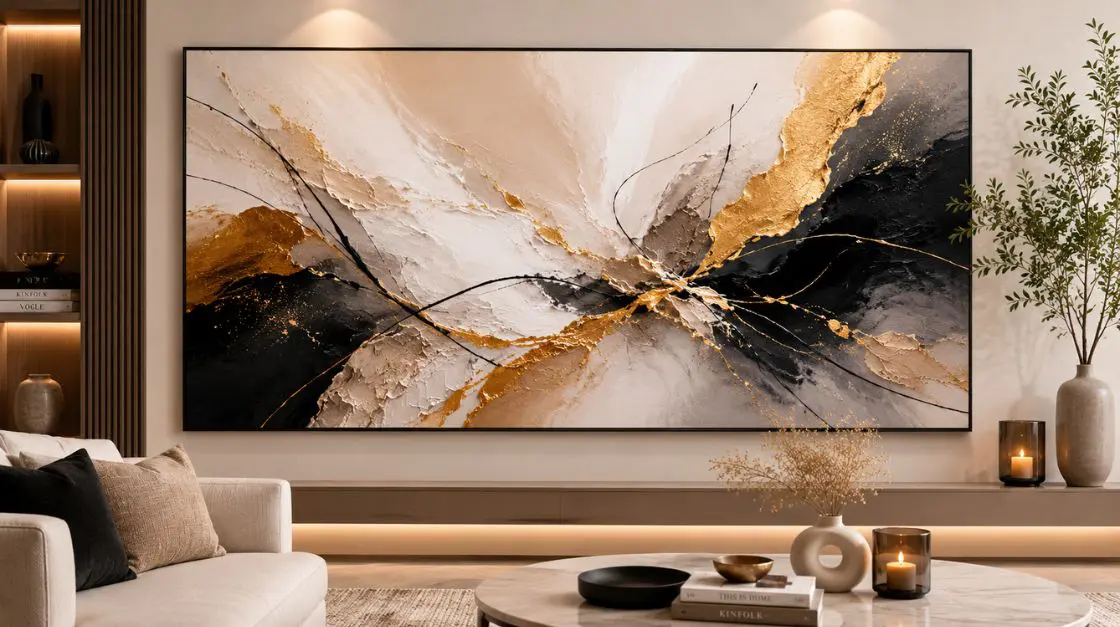
Abstract prints work well in modern or Scandinavian-leaning small living room ideas because a few clean shapes fill a wall without competing with furniture. They also forgive imperfect framing — a slightly off-center hang reads as intentional rather than crooked.
Best for: home offices, reading nooks with mid-century or minimalist furniture. See the full abstract wall art set for formats that suit narrow wall segments.
Celestial and Bohemian Designs
A sun-and-moon motif or desert-inspired print adds personality to a nook without overwhelming a small footprint, and bohemian palettes tend to read warm even in muted lighting — ideal for evening reading. The celestial wall art collection pairs especially well with warm-toned reading lamps.
Best for: eclectic bedrooms, apartment corners that need character on a tight budget.
Dark Academia and Moody Palette Prints
For a reading nook that leans literary rather than airy, moody dark academia prints — vintage books, candlelight, gothic architecture — turn a corner into something that looks like it belongs in an old library. This style works particularly well in small bedroom design, where a single deep-toned print can anchor an otherwise neutral room.
Best for: book lovers, students, anyone whose idea of cozy decor ideas small spaces leans toward warm lamplight over bright daylight. See the dark academia coloring pages guide for palette and shading tips if you plan to color and frame your own piece.
Comparison Tables
Table A: Laser vs. Inkjet for Printing Nook Wall Art
| Feature | Inkjet Printer | Laser Printer |
|---|---|---|
| Dry time | 5–15 minutes for full cure | Instant — toner fuses on contact |
| Smudge risk | Higher on lightweight paper | Very low, even on thin paper |
| Cost per page (color) | $0.15–$0.30 | $0.10–$0.20 |
| Color vibrancy | Richer, more gradient depth | Flatter but more consistent |
| Best paper pairing | 200–250 gsm matte cardstock | 90–120 gsm matte or satin |
Table B: Paper Weight vs. Bleed-Through and Smudge Risk
| Paper Weight (gsm) | Common Name | Bleed-Through Risk | Best Use |
|---|---|---|---|
| 75–90 gsm | Standard copy paper | High | Drafts, test prints only |
| 100–120 gsm | Premium inkjet paper | Moderate | Casual wall prints, temporary display |
| 160–200 gsm | Light cardstock | Low | Framed reading-nook art |
| 220–280 gsm | Heavy cardstock | Very low | Statement pieces, gifting |
For a deeper breakdown of gsm ranges by project type, our best paper weight for coloring books, wall art & cards guide includes a full gsm-to-lb conversion chart.
Step-by-Step: Printing and Hanging Your Nook Print
- Choose your file resolution. Confirm the print file is at least 300 DPI at your intended print size — most printable PDFs list this in the product description.
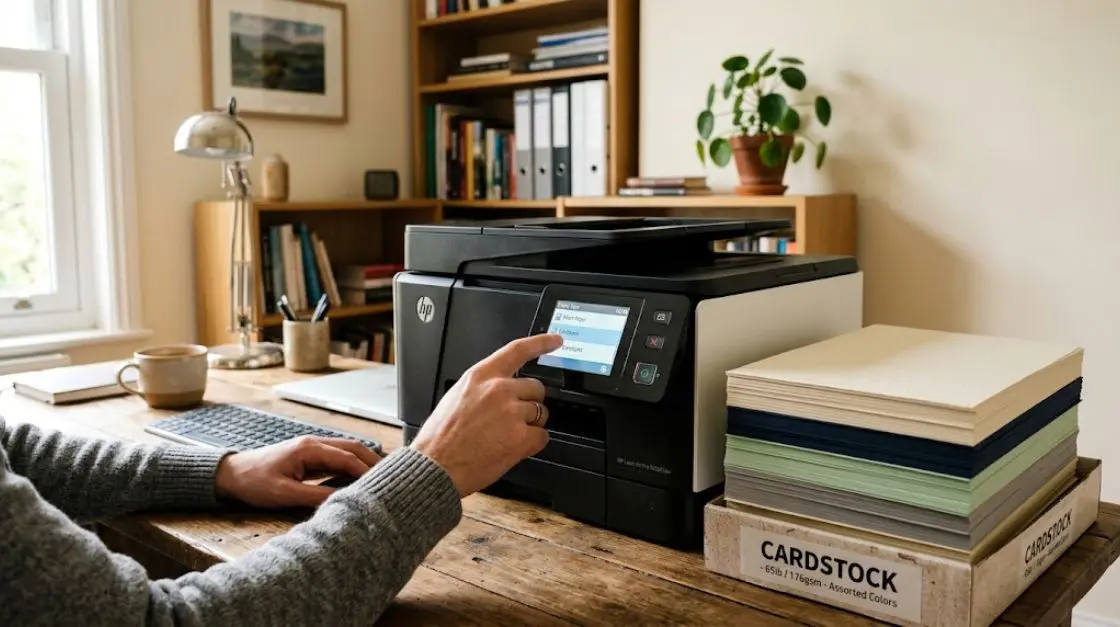
- Select paper type in your printer settings. Switch the paper-type menu from “Plain Paper” to “Photo Paper” or “Cardstock” so the printer adjusts ink volume accordingly.
- Set print quality to “Best” or “Photo” mode. This slows the print head and lays down ink more precisely, reducing streaking on detailed line art.
- Load 200–250 gsm matte cardstock. Heavier stock resists the curling that thinner paper shows once ink saturates the fibers.
- Let the print cure for 10–15 minutes before handling, even with pigment ink — humidity and ink coverage both affect true dry time.
- Frame at a size that fits the wall segment, not the other way around; our printable wall art sizes guide has a full chart for narrow-corner formats like 8×10″ and 11×14″.
- Hang at eye level from the seated position, roughly 60–65 inches from the floor to the center of the frame, since a reading nook is viewed sitting down, not standing.
- Step back and check the corner as a whole, not just the print in isolation — small bedroom design and small living room ideas both benefit from viewing the finished piece alongside the chair, lamp, and any nearby shelving before committing to a permanent hanging spot.
Visual Inspiration for Small-Space Styling
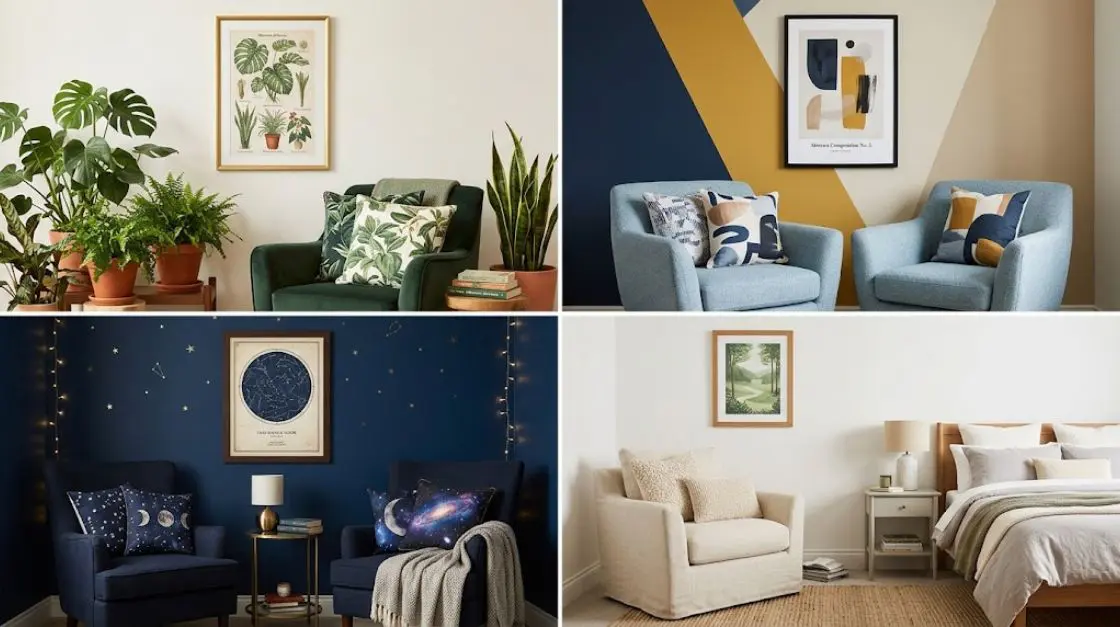
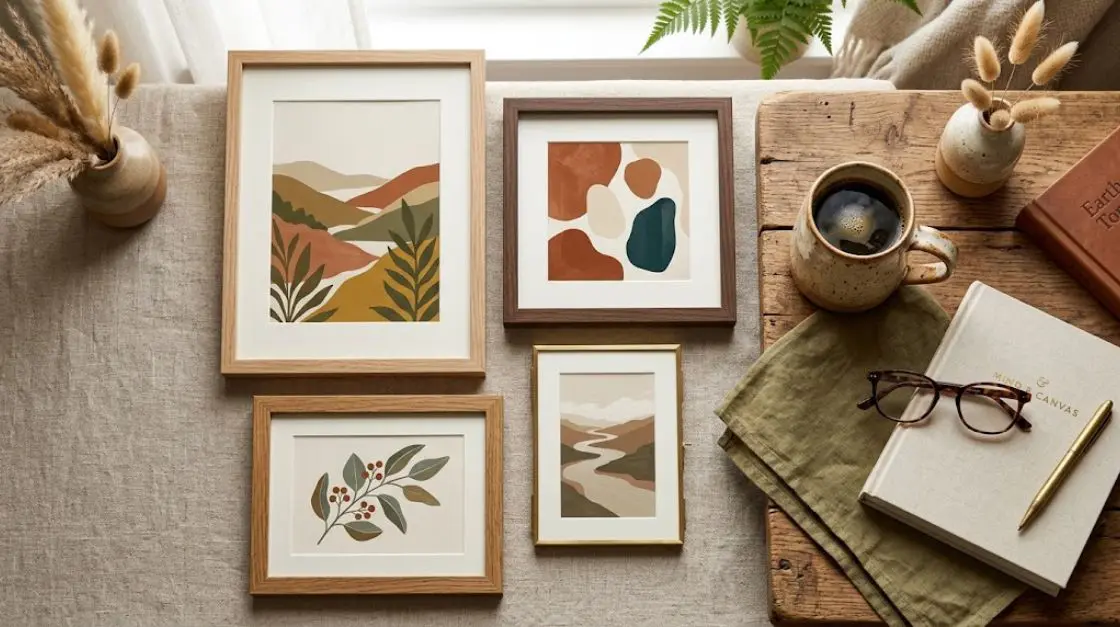
A reading nook built around cozy decor ideas small spaces actually works best when you commit to one palette family rather than mixing several. Warm neutrals — terracotta, cream, sage — pair naturally with wood furniture and read calm under both daylight and lamp light.
For a more layered look without adding clutter, a small gallery arrangement of two or three same-size prints in one palette can work in a slightly wider corner. Our gallery wall printable digital guide shows how to scale that idea down for tight wall segments instead of full walls.
If your reading nook doubles as a home office corner, prints with more geometric structure tend to feel purposeful rather than decorative-only — the home office wall art collection leans into that structure while still keeping the palette warm.
Personalization matters more in tight corners than in large rooms, simply because there’s less surface area to distract from a mismatched choice. Swapping a single mat color, choosing a warmer or cooler wood frame, or picking a slightly different shade of the same botanical print are small edits that make a reading nook feel built around you rather than pulled from a catalog. That’s the real difference between generic small living room ideas and a corner you actually use every evening.
Featured Collections for Small-Space Corners

Frequently Asked Questions: wall art for corners
Q: What are the best cozy decor ideas for small spaces on a budget?
A single printable wall art piece, warm-toned bedding, and a small reading lamp cover most of it. Printable art costs a fraction of framed originals and lets you refresh the look seasonally without buying new furniture.
Q: How do I decorate a corner that’s too small for furniture?
Hang one vertical print at eye level and add a small floor cushion or narrow shelf below it. A wall-mounted reading light frees up floor space entirely while still making the corner feel used.
Q: What size wall art works best for a narrow reading nook?
8×10″ or 11×14″ prints suit most corners under 3 feet wide, since anything larger can crowd a chair or doorway. Measure the wall segment first, then pick the print size — not the reverse.
Q: Is inkjet or laser better for printing wall art at home?
Inkjet generally produces richer color depth for botanical and gradient-style prints, while laser dries instantly with almost no smudge risk. If you’re printing on standard paper rather than cardstock, laser is the safer choice.
Q: What paper weight should I use for framed printable art?
Aim for 200–250 gsm matte cardstock, which resists both curling and ink bleed-through better than standard copy paper. Anything above 280 gsm can be too stiff for some home printer trays, so check your printer’s maximum thickness first.
Q: How high should I hang art above a reading chair?
Center the frame roughly 6–8 inches above the top of the chair back, or about 60–65 inches from the floor to the frame’s center. This keeps the piece at eye level for someone seated, which is the actual viewing position in a nook.
Q: Can I use printable coloring pages as wall art?
Yes — a finished, hand-colored page in a simple frame adds a personal, handmade layer that pre-printed art can’t match. Our ideas for finished coloring pages guide has 30+ framing and display suggestions.
Q: What’s the difference between small bedroom design and small living room ideas for wall art?
Bedroom corners favor calmer, single-tone prints since the room’s job is rest, while living room corners can handle slightly bolder palettes since they’re meant to draw the eye. Both benefit from the same core rule: one strong piece beats several small ones.
Q: Do I need a professional frame for printable wall art?
No — a simple pre-made frame from any home goods store works fine, as long as the mat opening matches your print size exactly. Spending on framing only pays off once you’ve confirmed the print itself is properly sized and printed at 300 DPI or higher.
Q: How often should I rotate wall art in a small reading nook?
There’s no fixed rule, but many people rotate seasonally since printable art costs little to reprint. Rotating keeps cozy decor ideas small spaces feel fresh without the expense or waste of buying new framed originals every few months.
More Guides for Small-Space Styling
- Cozy Room Decor Ideas — palette, framing, and placement tips for a full room, not just a corner
- Printable Wall Art Ideas — room-by-room inspiration from nurseries to living rooms
- Printable Wall Art Sizes — the complete sizing chart for every standard print format
- Boho Wall Art Ideas — 50+ bohemian styling ideas for bedrooms and living rooms
- Hand Craft Ideas — step-by-step DIY projects for turning printable art into finished décor
Final Thoughts
Good cozy decor ideas small spaces need don’t require more square footage — they require one well-chosen print, properly sized paper, and a hang height that matches how the corner actually gets used. Whether you’re finishing off small bedroom design or carving out small living room ideas around a single chair, the right piece of wall art for corners turns dead space into somewhere you actually want to sit down.
None of this requires a big budget or a weekend of work. A single afternoon — picking a print, adjusting your printer settings, and hanging one frame at the right height — is usually enough to turn an overlooked corner into the most-used seat in the house. That’s the promise behind cozy decor ideas for small spaces: small effort, sized correctly, in exactly the right spot.
Ready to start? Browse our full printable wall art collection and print your first reading-nook piece today.