Age-Based Activity Guidance: Coloring Pages by Age
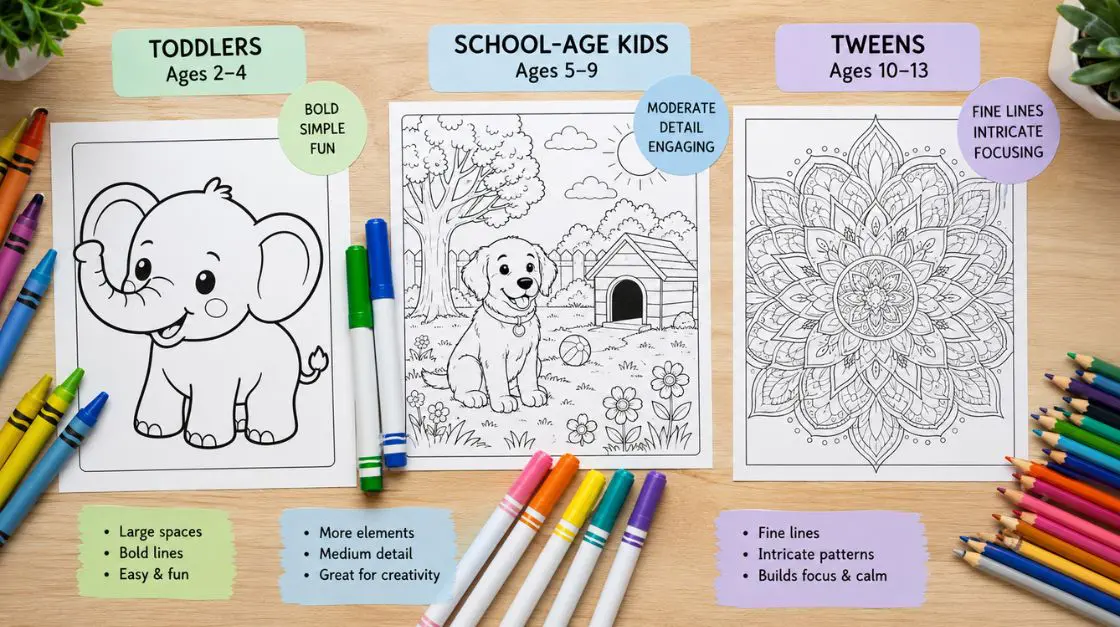 Not every coloring page belongs in every hand. A design that delights a seven-year-old can frustrate a toddler in under a minute, and a page built for a two-year-old will bore a teen before they’ve picked up a marker. Good age-based activity guidance means matching detail level, outline weight, subject matter, and tools to where a child actually is developmentally — not just their age on paper, but their fine motor skills, attention span, and interests.
Below is a practical, stage-by-stage breakdown of what to look for when choosing age appropriate coloring pages, and why complexity matters so much more than it seems.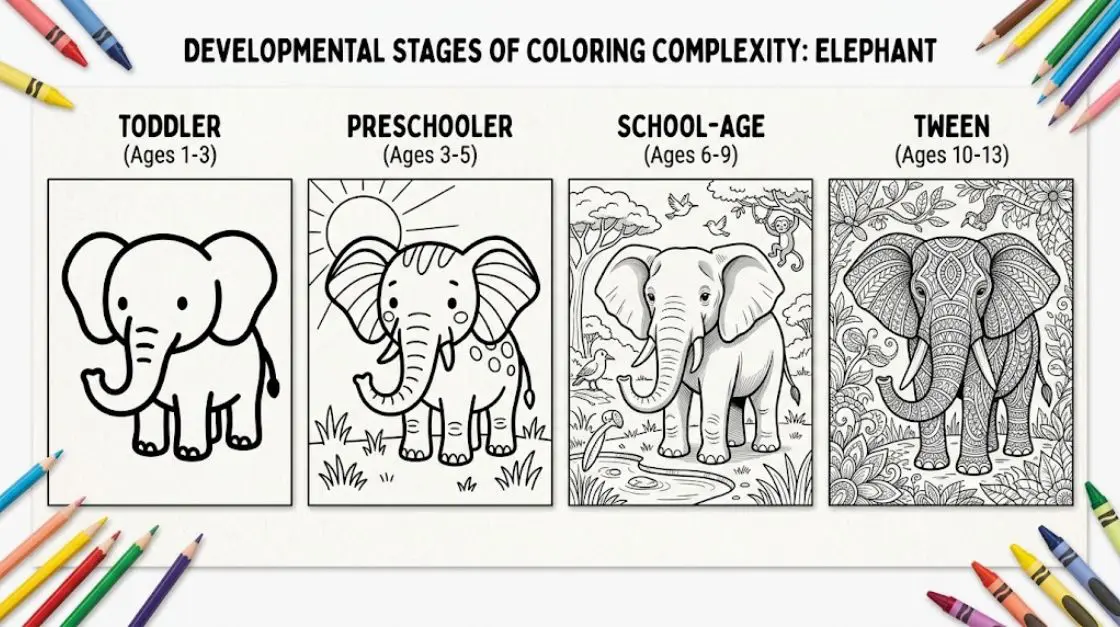
Why Complexity and Motor Skills Shape Developmental Coloring Activities
Before getting into specific age bands, it helps to understand why age-matching matters. Coloring is a fine motor skill activity, and a child’s ability to control a crayon, pencil, or marker develops in fairly predictable stages.
- Too much detail, too early, leads to frustration. A three-year-old handed an intricate mandala will scribble outside the lines, lose interest, or refuse to try — not because they dislike coloring, but because the task exceeds their current motor control.
- Too little challenge, too late leads to boredom. A ten-year-old handed a page with three fat outlines and no detail will finish it in ninety seconds and move on, gaining little from the activity.
- Subject matter matters as much as line complexity. Toddlers respond to simple, recognizable shapes (a single animal, a ball, a house). School-age kids want narrative and specificity (a jungle scene with several animals, a scene from a story). Teens often gravitate toward aesthetic or identity-driven themes rather than “cute” imagery.
Matching these three factors — outline weight, subject complexity, and thematic interest — is the core of effective developmental coloring activities, and it’s the difference between an activity a child returns to and one they abandon after one try.
| Age Range | Outline Weight | Best Tools | Session Length | Example Themes |
|---|---|---|---|---|
| Toddlers (1–3) | Very thick, bold | Chunky crayons | ~5 min | Single animal, ball, house |
| Preschoolers (3–5) | Bold, moderate white space | Crayons, chunky washable markers | 10–15 min | Farm, jungle, ocean animals |
| School-Age (6–9) | Moderate detail, multiple elements | Colored pencils, fine-tip markers | 15–25 min | Classroom scenes, seasonal packs |
| Tweens (10–12) | Fine linework, intricate patterning | Fine-tip markers, gel pens, colored pencils | 25–40 min | Fantasy, mandalas, dark academia |
Age Appropriate Coloring Pages for Toddlers (Ages 1–3)
At this stage, the goal isn’t precision — it’s exposure to color, movement, and cause-and-effect (“I made a mark, and it stayed”).
What to look for:
- Very thick, bold outlines with large open spaces — toddlers cannot yet color within a thin line, so the margin for “success” needs to be wide.
- Single, oversized subjects per page (one animal, one shape) rather than busy scenes.
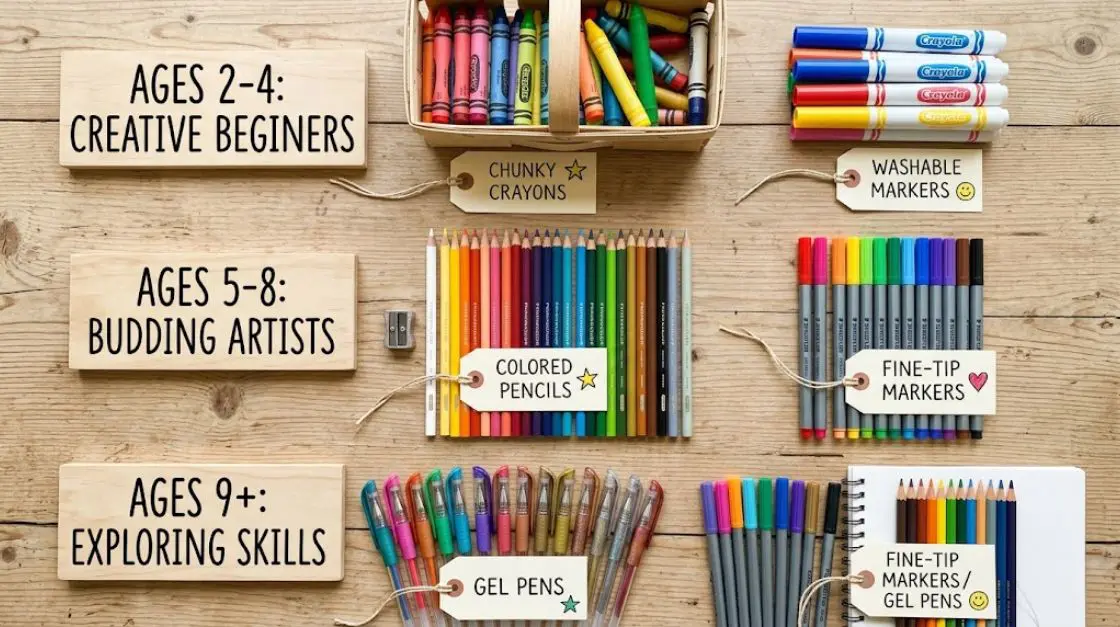
- Chunky crayons are the right tool here, not markers or colored pencils, which require more grip control than toddlers typically have.
- Keep sessions short. Five minutes of genuine engagement beats twenty minutes of a bored toddler being handed a page they can’t relate to.
Age Appropriate Coloring Pages for Preschoolers (Ages 3–5)
Preschoolers are building the grip strength and hand-eye coordination that will support more detailed work later. They also start to enjoy simple stories and can associate a picture with something they know.
What to look for:
- Bold outlines, moderate white space, with a bit more definition inside the shape than toddler pages — a face can have simple features, an animal can have basic patterning.
- Familiar, recognizable themes: farm animals, jungle animals, and ocean creatures are consistently the strongest performers at this age because kids already know the subject. Sets like farm animal coloring pages for kids ages 4–8, jungle animal coloring pages for kids ages 4–8, and ocean animal coloring pages for kids are built specifically around this bold-outline, simple-subject approach.
- Crayons or chunky washable markers still work best; fine-tip markers and pencils are usually too demanding for consistent grip control at this stage.
- Pair coloring with early learning where possible — alphabet tracing worksheets that combine tracing and coloring give preschoolers a gentle bridge between free coloring and structured pre-writing practice.
Developmental Coloring Activities for School-Age Children (Ages 6–9)
This is where fine motor control catches up meaningfully, and kids start wanting more from a page — more detail, more to look at, and often a connection to what they’re learning in class.
What to look for:
- Moderate detail and multiple elements per page — a scene rather than a single object, with several things to color differently.
- Classroom and curriculum tie-ins work especially well here. Sets like the 18 Classroom Coloring Pages K–2 learning pack or seasonal kindergarten worksheets blend coloring with reinforcement of what kids are already learning.
- Colored pencils and fine-tip markers become viable tools at this stage, since grip and pressure control are more developed — though thick crayons are still fine for kids on the younger end of this range.
- Watch for signs of overwhelm or overstimulation. If a child seems anxious rather than engaged, calming, lower-stimulation options like Calm Corner coloring pages — designed specifically for K–2 emotional regulation — can be a better fit than a busy, highly detailed scene.
- Skill-building pages, like math patterns worksheets, also work well combined with coloring at this age, since kids are ready for tasks that mix creativity with light cognitive challenge.
Age Appropriate Coloring Pages for Teens (Ages 10–12)
Teens are often underserved by traditional “kids” coloring content — they’ve outgrown cartoonish, oversimplified designs but aren’t quite ready for the density of full adult coloring books. This age group responds best to detail paired with more mature or aesthetic themes.
What to look for:
- Finer linework and more intricate patterning than school-age pages, without going as dense as adult-level mandalas.
- Aesthetic and identity-driven themes rather than purely “cute” ones. Fantasy worlds, moodier stylistic themes, and pattern-based designs tend to land well — sets like fantasy coloring pages or the more atmospheric dark academia style coloring pages often appeal to teens looking for something a step more sophisticated.
- Mandala-style designs are also a strong bridge at this age — see mandala coloring pages printable for the kind of moderate-to-high detail that suits developing patience and focus without tipping into frustration.
- Tools can expand: fine-tip markers, gel pens, and colored pencils all work well, and this is a good age to introduce basic blending. A colored pencils vs. markers guide is a useful reference if a teen is choosing their first “real” toolkit.
Age-Based Activity Guidance: Matching Pages to Development, Not Just Age
Every age band above is a general guide, not a hard rule — some five-year-olds have the fine motor control of a seven-year-old, and some nine-year-olds prefer simpler pages when they’re tired or stressed. The real principle behind good age-based activity guidance is watching engagement level: if a child is relaxed and focused, the complexity is right. If they’re frustrated or rushing to finish, scale back the detail. If they’re breezing through and bored, it’s time to move up a level.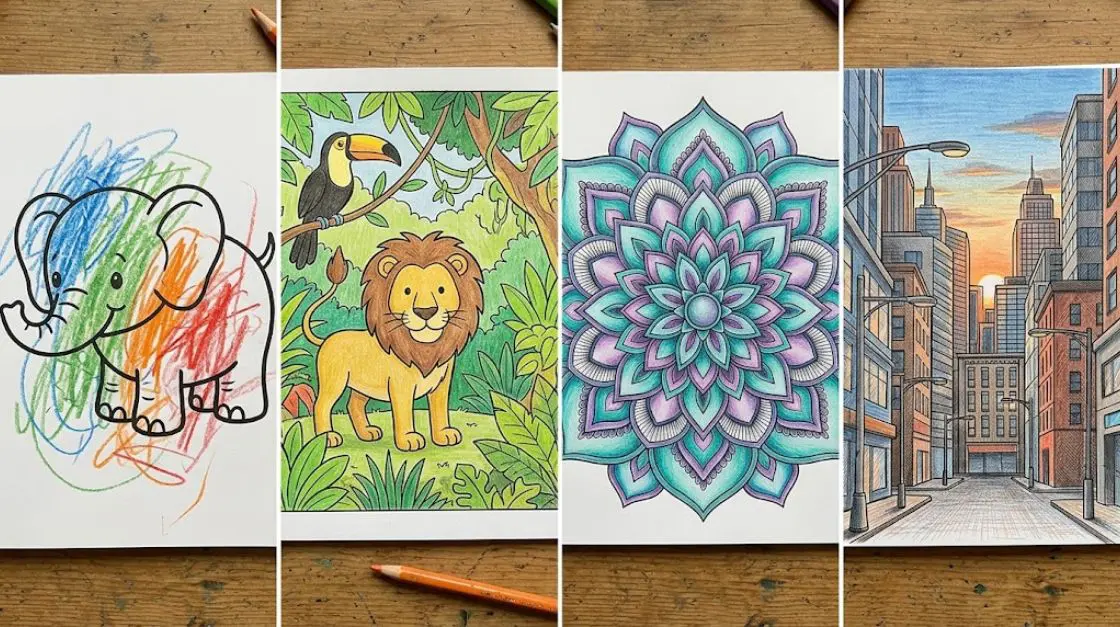
Good age-based activity guidance isn’t just about a number on a package — it’s about reading how a child actually responds. Ask these three questions about the last time your child sat down with age appropriate coloring pages:
- Did they stay roughly within the lines (within about a marker’s-width), or scribble across the whole page? → Staying close to lines signals readiness for the next detail level up.
- How long did they stay engaged before losing interest or getting frustrated? → Under 2 minutes on a page with visible effort suggests it’s too easy or too hard — check which by watching for boredom vs. frustration cues.
- Did they ask for more to color, or ask for help finishing? → Asking for “more” (more animals, more detail) is a strong signal to move up a level. Asking for help finishing suggests the current level is a good stretch, not too much.
Rule of thumb: if two of three answers point toward “too easy,” size up. If two point toward “too hard,” size down. If it’s mixed, stay at the current level — inconsistency is normal and doesn’t mean you got it wrong.
This kind of ongoing check-in is really what separates effective developmental coloring activities from a one-size-fits-all approach — the right level isn’t fixed; it shifts as a child’s motor skills and attention span grow.
For a broader look at how themes and difficulty scale across all ages — including adults — the full printable coloring pages collection is organized to make it easy to move between age bands as a child (or a classroom) grows.
Conclusion
Good age-based activity guidance comes down to one simple habit: watching how a child actually responds to a page, not just what their birthday says. A toddler needs bold, oversized outlines and a single subject to succeed. A preschooler is ready for familiar themes and a bit more definition. School-age kids can handle full scenes and classroom tie-ins, while tweens are often looking for finer linework and more mature, aesthetic themes rather than anything that feels babyish.
Choosing truly age appropriate coloring pages means paying attention to three things together — outline weight, subject complexity, and thematic interest — rather than defaulting to a number on a package. When these line up with where a child actually is developmentally, coloring stays engaging instead of becoming frustrating or boring.
The goal of any set of developmental coloring activities isn’t to rush a child toward harder pages or hold them back on easy ones—it’s to meet them exactly where their motor skills and attention span are, and let complexity grow naturally alongside them. Used this way, coloring pages become a tool that scales with a child for years, not just a single activity they outgrow in a season.