
Creative Journaling + Mindful Coloring Wellness for Well-Being
In today’s fast-paced world, finding moments of calm can feel like a luxury. But what if you could combine two simple, accessible practices—creative journaling and mindfulness coloring—to nurture your mental health and boost your overall well-being? This powerful duo taps into art therapy principles, offering a pathway to self-discovery, emotional release, and daily rejuvenation. Whether you’re dealing with everyday stressors or seeking deeper creative wellness, integrating self-care journaling with stress relief activities like coloring can transform your routine into a sanctuary of peace.
Imagine sitting down with a blank page, your favorite colored pencils at hand, and letting your thoughts flow freely as you fill intricate designs with vibrant hues. This isn’t just a hobby; it’s a form of art therapy that promotes mindfulness and emotional balance. As you explore this combo, you’ll discover how these practices complement each other, creating a holistic approach to creative wellness that nourishes both mind and soul.

Creative journaling is more than just writing down your day—it’s a form of self-care journaling where you express thoughts, dreams, and emotions through words, doodles, and reflections. Paired with mindfulness coloring, which involves focusing on patterns and colors without judgment, this combination becomes a potent tool for stress relief. Research in art therapy shows that such practices can reduce anxiety, improve mood, and enhance self-awareness.
For instance, when you journal about a challenging experience and then color a related mandala, you’re engaging both verbal and visual processing in your brain. This synergy helps process emotions more effectively, turning abstract feelings into tangible expressions. If you’re new to this, start small: dedicate 10-15 minutes a day to jot down gratitudes and color a simple design. Over time, this habit of creative wellness becomes natural and rewarding.
To dive deeper into how art nourishes your inner world, check out our pillar article on Mindful Creativity & Wellness: How Art Nourishes Your Inner World. It explores the broader benefits of incorporating artistic practices into your life for lasting emotional health.
Benefits of Combining Journaling and Mindful Coloring Wellness for Stress Relief
One of the most compelling reasons to try this combo is its proven impact on stress reduction. Mindful coloring alone has been linked to lower cortisol levels, similar to meditation, making it an ideal stress-relief activity. When combined with self-care journaling, the effects amplify. You might write about a stressor, then color to release tension, creating a cycle of reflection and relaxation.
Consider the Benefits of Coloring for Stress Relief, which details how this simple act can quiet the mind and foster a sense of accomplishment. Adding journaling takes it further by allowing you to articulate why a particular color choice resonates with your mood—perhaps blues for calm or reds for energy. This integration not only alleviates immediate stress but also builds resilience over time.
In art therapy sessions, professionals often use similar techniques to help clients explore subconscious thoughts. For everyday use, this combo serves as a personal art therapy tool, accessible anytime. Users report feeling more centered, with improved focus and reduced overwhelm. If anxiety is a concern, incorporating guided elements can make a big difference, as outlined in our guide on Guided Mandala Practices for Anxiety.
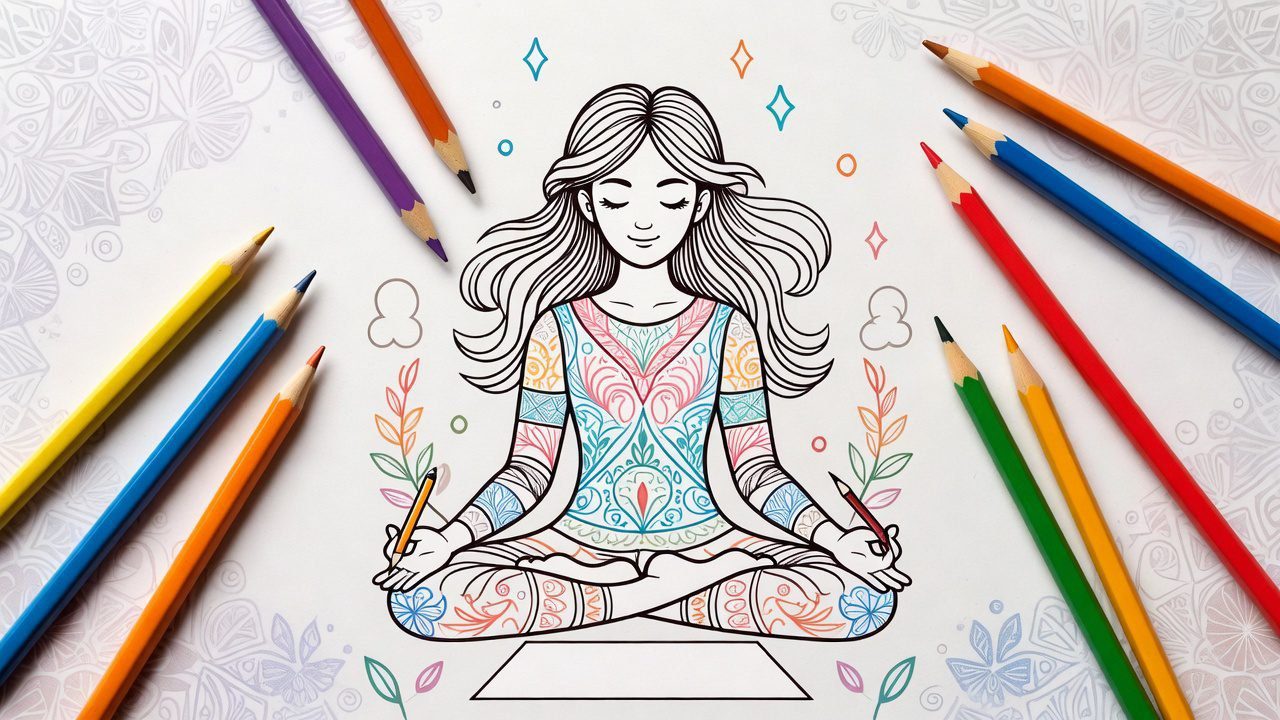
How to Get Started: Building Your Daily Ritual
Creating a routine around creative journaling and mindfulness coloring doesn’t require fancy supplies—just a notebook, some printable coloring pages, and an open mind. Begin by setting up a dedicated space: a cozy corner with good lighting, perhaps with calming elements like a candle or soft music. This environment signals to your brain that it’s time for self-care journaling and stress relief activities.
Start your session with a prompt, such as “What am I grateful for today?” Write freely for a few minutes, then transition to coloring. Choose designs that match your mood—floral patterns for nurturing or geometric mandalas for focus. As you color, reflect on your journal entry, perhaps adding notes in the margins about insights that arise.
For tips on establishing consistency, read How to Create a Daily Coloring Ritual. It provides step-by-step advice on making this practice a non-negotiable part of your day, much like brushing your teeth. Over weeks, you’ll notice enhanced creative wellness, with better sleep, increased positivity, and a stronger connection to your inner self.
If you’re looking for resources to kickstart your journey, our New Year Wellness Bundle: 40 Coloring Pages + 60-Day Journal is perfect. It combines printable mindfulness coloring sheets with a structured journal, ideal for beginners seeking guided creative wellness.
Exploring Emotions Through Color and Words with Stress Relief Activities
Emotions can be tricky to navigate, but this combo offers a safe space to explore them. In self-care journaling, you articulate feelings; in mindfulness coloring, you visualize them through hues and shades. This dual approach draws on art therapy, where color is used symbolically—yellow for joy and gray for uncertainty.
Delve into Art & Emotions: Using Color to Explore Feeling for more on this. It explains how selecting colors mindfully can reveal hidden emotions, turning your journal into a visual diary. For example, after journaling about a joyful memory, color a vibrant scene to amplify the positive energy. Conversely, for processing grief, softer tones in a mandala can provide gentle catharsis.
This practice fosters emotional intelligence, helping you respond rather than react to life’s ups and downs. It’s particularly beneficial for those in high-stress jobs or navigating life transitions, offering stress-relief activities that are both therapeutic and enjoyable.
Advanced Techniques: Integrating Mandalas and Affirmations
Once you are comfortable with the basics, elevate your practice with advanced elements such as mandalas and affirmations. Mandalas, with their symmetrical designs, promote centering and are excellent for art therapy focused on balance. Color one while repeating a journaled affirmation, such as “I am resilient,” to embed positive beliefs.
Our Guided Mandala Practices for Anxiety offers specific exercises to try. Combine this with journaling prompts like “What patterns in my life need harmony?” to deepen introspection. This level of creative wellness can lead to profound personal growth, reducing anxiety and enhancing self-compassion.
For themed resources, consider the Inspiring Eco Mandala Coloring Book with Affirmations – 35 Mindfulness & Nature Designs. It pairs eco-inspired mandalas with positive statements, making it ideal for integrating into your self-care journaling routine.
Overcoming Common Challenges
Like any new habit, When it comes to stress relief activities, you might face hurdles. If your mind wanders during mindfulness coloring, gently return to the present by focusing on the pencil’s stroke. For journaling blocks, use visual cues from your coloring to spark words. Remember, there’s no “right” way—it’s about the process, not perfection.
If motivation wanes, you can revisit the Benefits of Coloring for Stress Relief to reignite enthusiasm. Consistency comes with patience; you can track progress in your journal to see how far you’ve come.
Real-Life Stories and Testimonials
Many have transformed their lives through this combo. Sarah, a busy mom, shares: “Combining journaling with coloring has been my go-to for stress relief activities. It helps me unwind and connect with my emotions.” Similarly, Mark, a professional, notes improved focus after incorporating it into his evenings.
These anecdotes highlight how accessible art therapy can be. Whether for personal use or as a family activity, the benefits extend to all ages, promoting creative wellness.
To support your emotional exploration, try our Color Me a Mood: 40+ Mindful Emotion Coloring Pages for Adults with Affirmations. These pages are designed to pair seamlessly with journaling, guiding you through a range of emotions with color.
FAQ
Here are the rewritten first 6 FAQ entries, with expanded, more detailed answers that maintain the natural, helpful tone and incorporate key themes (art therapy, mindfulness coloring, self-care journaling, stress-relief activities, creative wellness). Each answer now has substantially more text for richer guidance and value.
Q1: What is the best way to start creative journaling if I’m a beginner?
A: The best approach for beginners is to keep everything simple, gentle, and pressure-free so the practice feels welcoming rather than intimidating. Start with short, low-stakes prompts that don’t require deep introspection right away—try questions like “What are three things I’m grateful for today?”, “How did my body feel this morning?”, or “What’s one small win from the past 24 hours?” Set a timer for just 5–10 minutes to write whatever comes to mind without editing or judging. Use a dedicated notebook or even the notes app on your phone. Once you’ve written a few lines, immediately transition into mindfulness coloring: pick a simple design (like a basic flower or mandala from a printable) and color for another 5–10 minutes. This combination leverages art therapy principles by allowing words to release thoughts and colors to soothe the nervous system. Over the first week or two, focus on consistency rather than length—short daily sessions build the habit far better than occasional long ones. As you gain comfort, you can gradually add more personal reflections or experiment with doodling in the margins of your journal pages. The goal is to create a safe, enjoyable ritual that supports self-care journaling and creative wellness without perfectionism getting in the way.
Q2: How does mindfulness coloring differ from regular coloring?
A: Mindfulness coloring is intentionally slower and more present-focused than casual or “regular” coloring (like what kids do with cartoons or what adults might do purely for fun). In regular coloring, the emphasis is often on finishing the picture, matching colors perfectly, or following a theme for entertainment. Mindfulness coloring, rooted in art therapy, treats the act itself as a meditative practice: you pay close attention to each pencil stroke, the sensation of color blending, the rhythm of your breathing, and the way patterns emerge under your hand. There’s no rush to complete the page—in fact, many people leave pages unfinished and return to them over days or weeks. The focus shifts from outcome to process, helping quiet racing thoughts and anchoring you in the present moment, much like a moving meditation. This makes it one of the most accessible stress relief activities, especially for people who find traditional seated meditation challenging. When paired with self-care journaling, it becomes even more powerful: you might reflect on an emotion in words, then choose colors that represent or soothe that feeling, deepening emotional awareness and creative wellness. The result is not just a pretty picture, but a calmer mind and a stronger connection to your inner experience.
Q3: Can this combo help with anxiety?
A: Yes, very effectively—and often more accessibly than many other techniques for people who struggle with stillness or verbal processing alone. The combination of creative journaling and mindfulness coloring operates on multiple levels, guided by art therapy principles. Journaling allows you to name and externalize anxious thoughts, which research shows reduces their intensity by moving them from the emotional brain to the more rational prefrontal cortex. Then, coloring intricate patterns (especially mandalas or symmetrical designs) activates a flow state that lowers heart rate, decreases cortisol, and engages the parasympathetic nervous system—essentially telling your body it’s safe to relax. Many users report that the tactile, repetitive motion of coloring acts like a grounding anchor when anxiety feels spiraling or overwhelming. For best results, try structured approaches: after writing about what’s triggering anxiety, color a mandala while silently repeating a soothing phrase or affirmation you’ve just journaled. Over time, this practice builds emotional resilience, improves sleep, and reduces the frequency and intensity of anxious episodes. It’s invaluable because it provides both an expressive outlet (words) and a soothing, nonverbal one (color), making it a versatile tool for daily stress relief and long-term creative wellness.
Q4: What supplies do I need?
A: You can start with the bare minimum and still get the full benefits of this art therapy-inspired practice—no expensive art supplies required. At the core you need: (1) something to write in—a plain notebook, a bullet journal, loose paper, or even a digital notes app works perfectly for self-care journaling; (2) coloring tools—colored pencils are most popular because they allow layering and blending, but markers, crayons, or even a small set of watercolors can be used depending on your preference; (3) printable coloring pages—free or affordable designs from sites like egcreativity.art (look for mandalas, florals, or emotion-themed pages to match journaling prompts). Optional but helpful extras include: a comfortable pen that feels good in your hand, a small pencil sharpener, a cozy blanket or cushion for your space, and perhaps soft instrumental music or nature sounds to enhance the mindfulness aspect. Many people begin with just 12–24 colored pencils in basic colors and one or two simple coloring books or digital downloads. As you fall in love with the practice, you might expand to premium pencils, thicker paper to prevent bleed-through, or themed bundles like mandala collections or seasonal designs. The key is starting small so the focus stays on the therapeutic process—creative wellness grows from consistency, not from having the “perfect” setup.
Q5: How often should I practice stress relief activities for noticeable results?
A: For most people, 10–20 minutes a day, 5–7 days a week, produces noticeable improvements within 2–4 weeks, though many feel calmer and more centered after just a few consistent sessions. The magic lies in regularity rather than marathon sessions—short, daily practice allows your nervous system to recognize it as a reliable stress-relief activity and begins rewiring your stress response over time. Think of it like brushing your teeth for mental health: a brief ritual that compounds over time. If daily feels overwhelming at first, aim for 4–5 days per week and gradually increase. Track how you feel before and after in a quick one-sentence journal note (“Anxiety was 7/10 → now 4/10”) to see progress objectively. Studies on art therapy and mindfulness practices show that consistent short sessions are more effective for reducing anxiety and boosting mood than sporadic longer ones. Evening sessions often work best for winding down, while morning ones can set a calm, intentional tone for the day. Listen to your energy—some days you might only color for 5 minutes, others you’ll flow into 30. The important thing is showing up regularly to let self-care journaling and mindfulness coloring weave creative wellness into your life naturally.
Q6: Are there digital options for those who prefer apps?
A: Yes, digital options work very well and can be especially convenient for people who travel, prefer paperless setups, or want easy access anywhere. Many coloring apps (such as Happy Color, Colorfy, or Pigment) offer thousands of designs, including mandalas, florals, and mindfulness-themed pages, with features like zoom, undo, and color palettes that make the experience smooth and relaxing. For journaling, apps like Day One, Reflectly, Journey, Notion, and GoodNotes let you take typed or handwritten notes (with stylus support on tablets) and insert screenshots or doodles directly into your entries. You can create a hybrid routine: color digitally, take a screenshot of your finished or in-progress piece, then paste it into your journal app and write reflections around it. This preserves the art therapy benefits—mindful focus, emotional expression, and stress reduction—while adding portability and organization. Some people even use split-screen mode on tablets: one side for coloring, the other for journaling. The main advantage is accessibility; the main trade-off is a reduced tactile sensation compared to paper and pencils. If you enjoy both worlds, alternate between digital for on-the-go sessions and traditional materials for deeper, at-home creative wellness rituals.
These expanded answers provide more practical advice, reassurance, and depth while staying aligned with the article’s themes. You can replace the original Q1–Q6 with these directly in the FAQ section. Let me know if you’d like any further tweaks!
Q7: Is creative journaling and coloring suitable for beginners with no artistic skills?
A: Absolutely yes! This practice is rooted in art therapy principles and focuses on the process rather than perfection. You don’t need to be “good at art.” Simple coloring pages and short, honest journal entries are all that’s required. Many beginners start with basic prompts and easy designs, and they quickly discover how relaxing and rewarding mindfulness coloring and self-care journaling can be for creative wellness.
Q8: Can I use this combo as part of my evening wind-down routine for better sleep?
A: Yes — it’s one of the most popular ways people use these stress relief activities. Spending 15–30 minutes on creative journaling (reflecting on the day, releasing worries) followed by gentle mindfulness coloring helps calm the nervous system and shift from thinking mode to a more present, relaxed state. Many find it more effective than scrolling on phones for improving sleep quality and supporting overall well-being.
Q9: How does this practice compare to traditional meditation for stress relief?
A: Both are excellent, but they work differently. Traditional meditation is often stillness-focused, while creative journaling and mindfulness coloring are active, hands-on art therapies that engage both the mind and body. For people who find sitting in silence difficult, this combo offers a gentler entry into mindfulness. Research shows it can lower stress and anxiety levels similarly to meditation, while also allowing emotional expression through words and color—making it especially powerful for creative wellness and emotional processing.
Combining journaling with coloring has deepened both practices. The creative-reflective combo is brilliant.
Art therapy doesn’t have to be formal therapy. This accessible approach brings healing benefits to daily life.
My neighbor mentioned these and I was initially skeptical, but after trying a few I completely understand the appeal. Very well done.