
Mindful Coloring for Stress Relief: Your Complete Guide to Art Therapy and Mental Wellness
In our fast-paced, digitally saturated world, finding moments of genuine calm can feel like searching for silence in a symphony. Yet one of the most accessible and practical tools for stress relief has been quietly sitting on shelves and screens, waiting to reconnect us with our inner peace: mindful coloring. This ancient practice, now reimagined for modern adults, combines the therapeutic power of art with the calming principles of mindfulness meditation to create a unique pathway toward mental wellness.
The resurgence of adult coloring books isn’t just a passing trend—it’s a response to a collective need for tangible, screen-free methods of anxiety reduction. When we engage in therapeutic coloring, we’re not simply filling in spaces with pretty pigments; we’re participating in a form of art therapy that has been validated by mental health professionals and embraced by millions seeking respite from daily stressors.
Understanding the Science Behind Art Therapy and Coloring
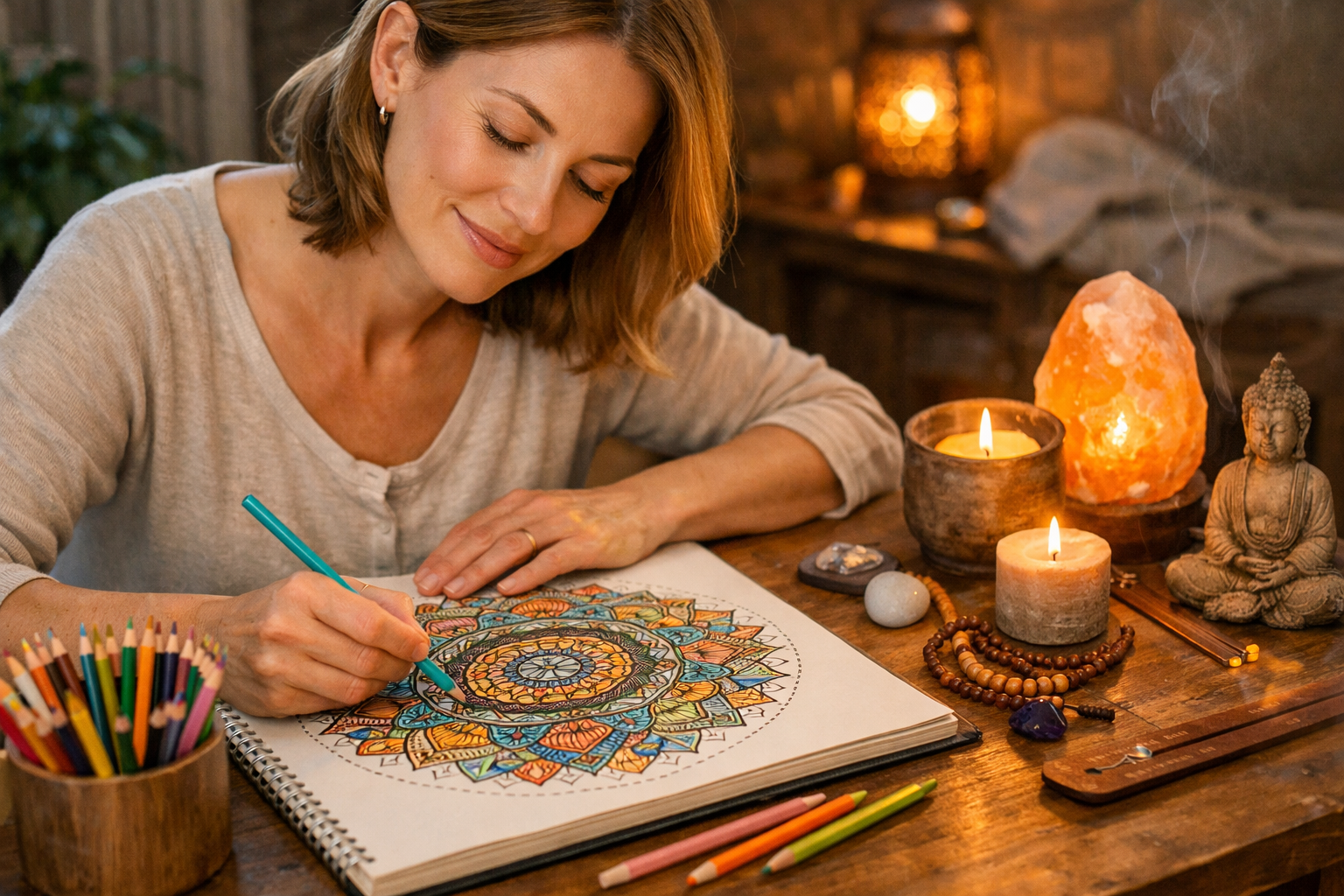
The connection between art therapy and mental health isn’t new, but scientific understanding of how mindful coloring affects the brain has expanded significantly in recent years. When we engage in relaxation coloring, we activate several neurological processes that work in concert to reduce stress and promote mental wellness.
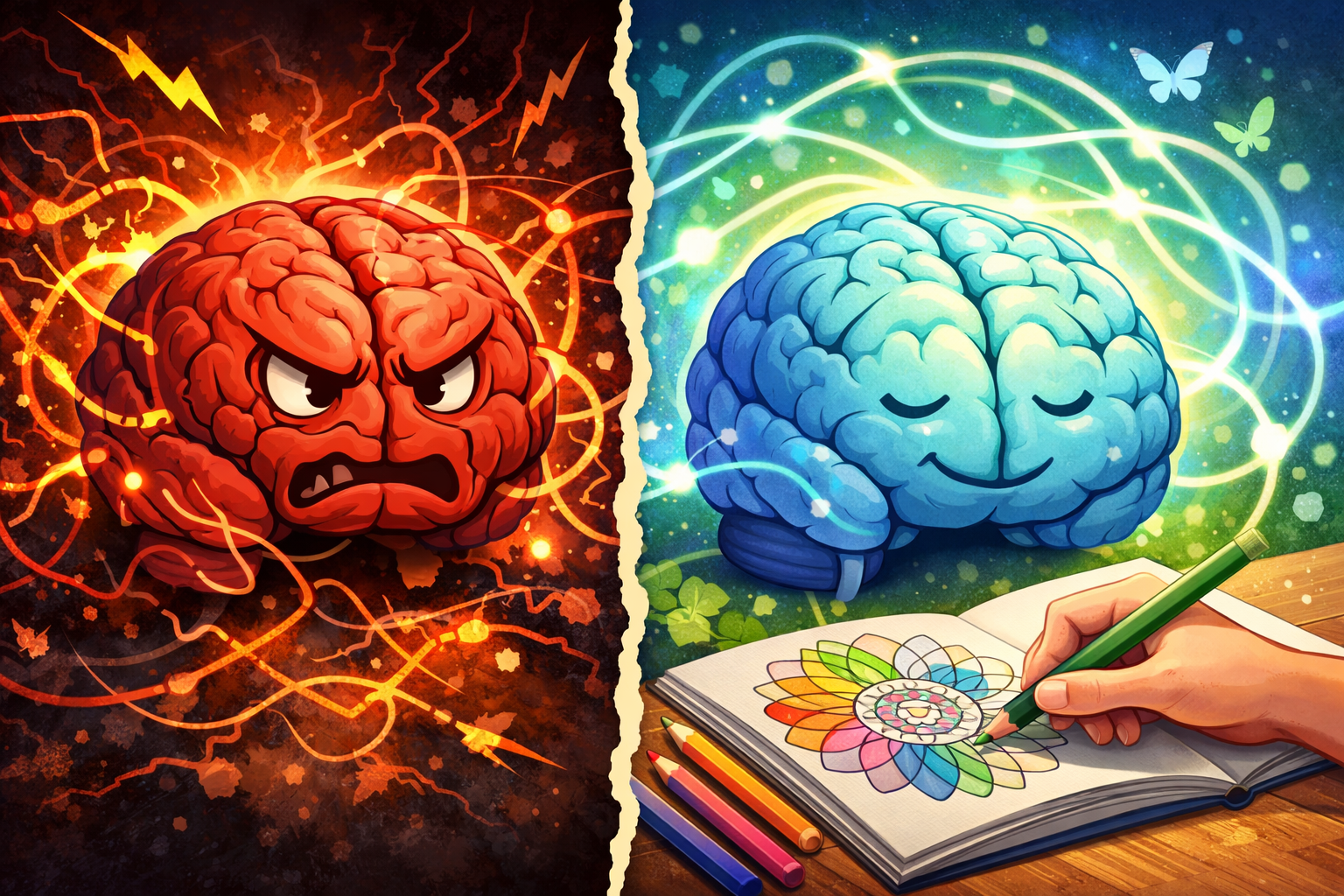
Research published in the Art Therapy Journal has shown that just 20 minutes of coloring can significantly reduce cortisol levels—the hormone most closely associated with stress.
This physiological response occurs because coloring engages the prefrontal cortex, the area responsible for organizing thoughts and moderating social behavior, while simultaneously calming the amygdala, our brain’s fear center.
Think of your brain as a busy intersection where thoughts, worries, and sensory information constantly compete for attention. Therapeutic coloring acts like a skilled traffic controller, directing your mental energy toward a single, manageable task. This focused attention creates what psychologists call a “flow state”—that wonderful feeling of being completely absorbed in an activity where time seems to disappear.
The repetitive motion involved in coloring also has a meditative quality. Just as mindfulness practice asks us to focus on our breath, coloring asks us to focus on the movement of our hand, the colors we choose, and the patterns emerging before us. This is why mandala coloring has become particularly popular for anxiety reduction—the circular, symmetrical patterns naturally guide the eye and hand in soothing, repetitive movements.
The Mindfulness Connection: More Than Just Filling in the Lines
While any coloring can be relaxing, mindful coloring for stress relief takes the practice deeper by intentionally combining coloring with mindfulness meditation principles. The difference lies in your approach and awareness.
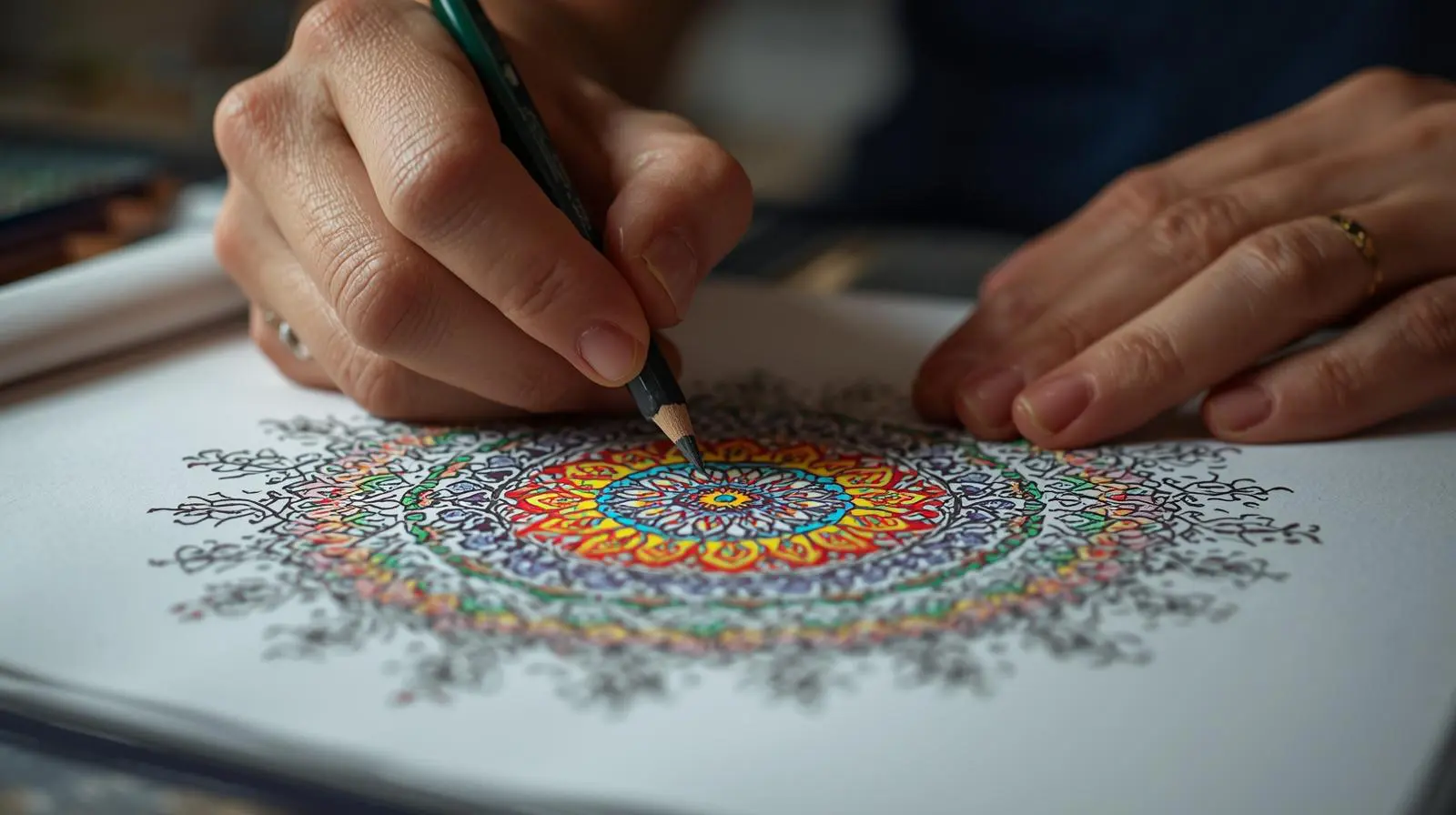
Mindful coloring means bringing full attention to the present moment experience of coloring. Instead of coloring while watching television or thinking about tomorrow’s to-do list, you’re consciously noticing the texture of the paper, the sound of pencil on page, the way colors blend or contrast, and the sensations in your hand and arm as you color.
This practice of present-moment awareness transforms simple coloring into a powerful meditation technique. You might begin by taking three deep breaths, setting an intention for your coloring session—perhaps to “be present” or to “release tension.” As you color, when your mind wanders (and it will, that’s perfectly normal), you gently guide it back to the sensory experience of coloring.
The beauty of this approach is its accessibility. Unlike some mindfulness practices that require specific postures or environments, mindful coloring can happen anywhere. Whether you’re using printable coloring pages at home, in a park, or during a lunch break, you’re carrying a portable peace practice with you.
Many practitioners find that combining coloring with creative journaling creates a more comprehensive mindfulness practice, allowing them to process emotions while engaging in a relaxing creative activity.
Choosing Your Tools: Adult Coloring Books and Materials
The explosion of adult coloring books in recent years means you have an incredible array of options, but this abundance can also feel overwhelming.
Understanding what works best for stress relief, coloring pages can help you make choices that enhance rather than complicate your practice.
Types of Coloring Books for Different Needs
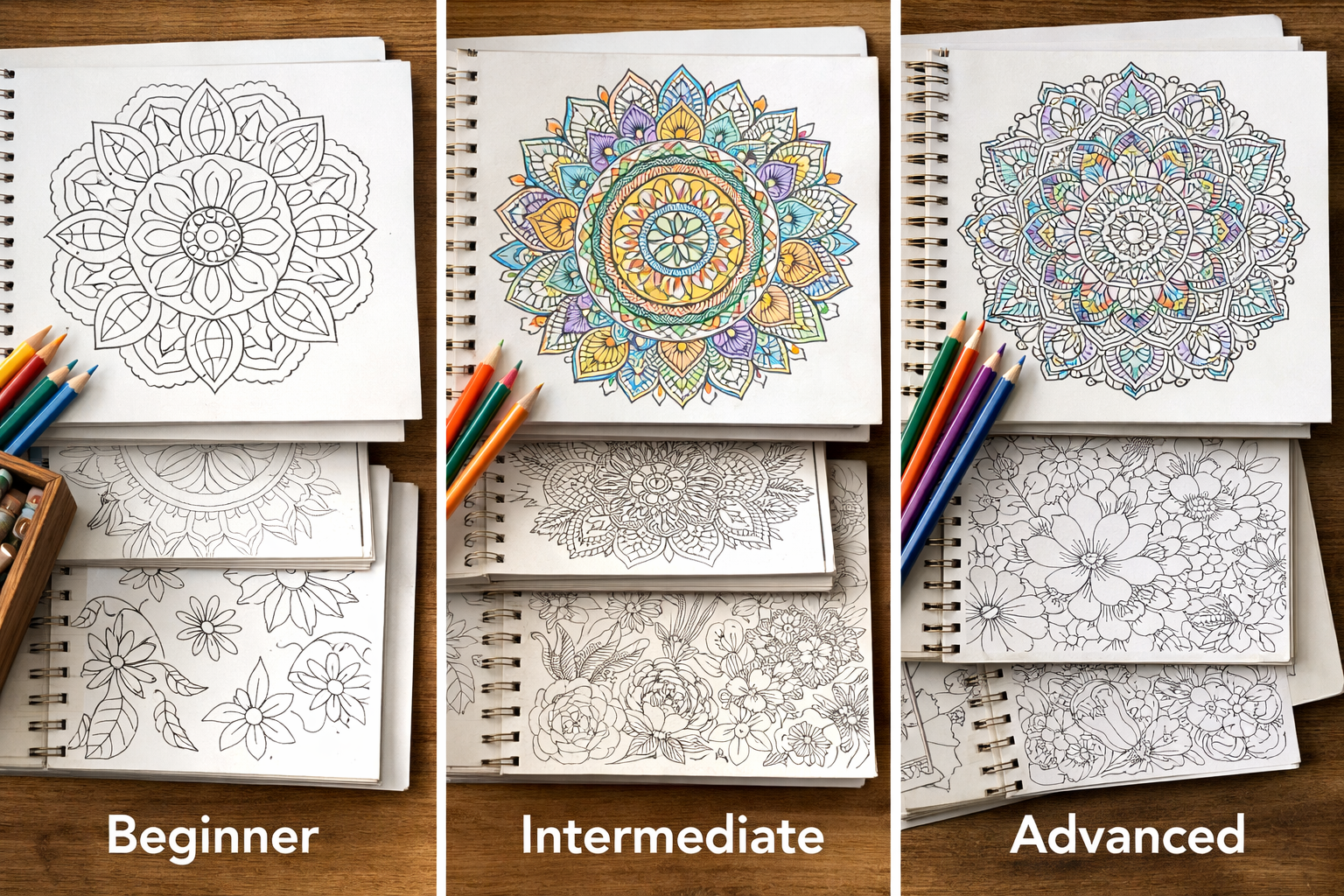
Not all coloring books serve the same purpose. Some are designed with intricate, demanding details that require intense focus—excellent for completely distracting your mind from anxious thoughts. Others feature simpler, flowing designs that allow for more meditative, almost automatic coloring.
For anxiety reduction, many therapists recommend starting with medium-complexity designs. Books featuring relaxing mandala patterns strike an excellent balance—they’re engaging enough to hold your attention but not so complex that they create frustration. The circular, symmetrical nature of mandalas also has deep roots in spiritual and therapeutic traditions across cultures.
Nature-themed coloring books offer another excellent option for stress relief. Spring flower coloring pages, botanical illustrations, and landscape scenes connect us with the natural world’s inherent calming qualities. The Nature Bliss Coloring Pages collection, for example, features designs that combine natural elements with mindful patterns, specifically designed for relaxation.
Seasonal themes can also enhance your practice by connecting you with the rhythms of the year. The Autumn Coloring Pages collection provides cozy fall designs that match the introspective energy of that season, while Easter coloring pages for adults offer renewal themes perfect for spring. Understanding how different seasons affect our mental wellness can deepen your practice, something explored in the comprehensive guide to seasonal celebrations and holiday coloring traditions.
If you’re new to coloring or find detailed work challenging, consider bold and easy coloring pages with larger spaces and simpler lines. These allow you to experience the relaxation benefits without the visual stress of intricate details.
Coloring Materials: Finding What Feels Right
The tools you use matter less than you might think, but finding materials that feel pleasant can enhance your experience. The tactile sensation of your coloring medium is part of the therapeutic experience.
Colored pencils remain the most popular choice for several reasons. They offer precision, require minimal setup, travel easily, and provide that satisfying pencil-on-paper sensation many find soothing. They also allow for layering and blending techniques that add creative depth to your practice. The guide on coloring techniques for every artist offers remarkable insights into developing your skills, though remember that for stress relief, perfection isn’t the goal.
Gel pens deliver vibrant colors with smooth application, requiring less hand pressure than pencils—helpful if you have arthritis or hand tension. Markers create bold, saturated colors quickly, though they can bleed through thinner paper. Some people find the smooth glide of markers particularly meditative.
Ultimately, the best materials are the ones you’ll actually use. If the thought of setting up watercolors feels like a barrier, stick with pencils. If purchasing expensive supplies creates financial stress, remember that basic crayons can be just as therapeutic. The benefits of coloring for stress relief come from the act itself, not from costly materials.
Creating Your Mindful Coloring Practice
Establishing a regular practice amplifies the stress-relieving benefits of coloring. While even occasional coloring sessions can provide temporary relief, integrating this art therapy into your routine creates lasting changes in how you manage stress and anxiety.
Designing Your Coloring Space
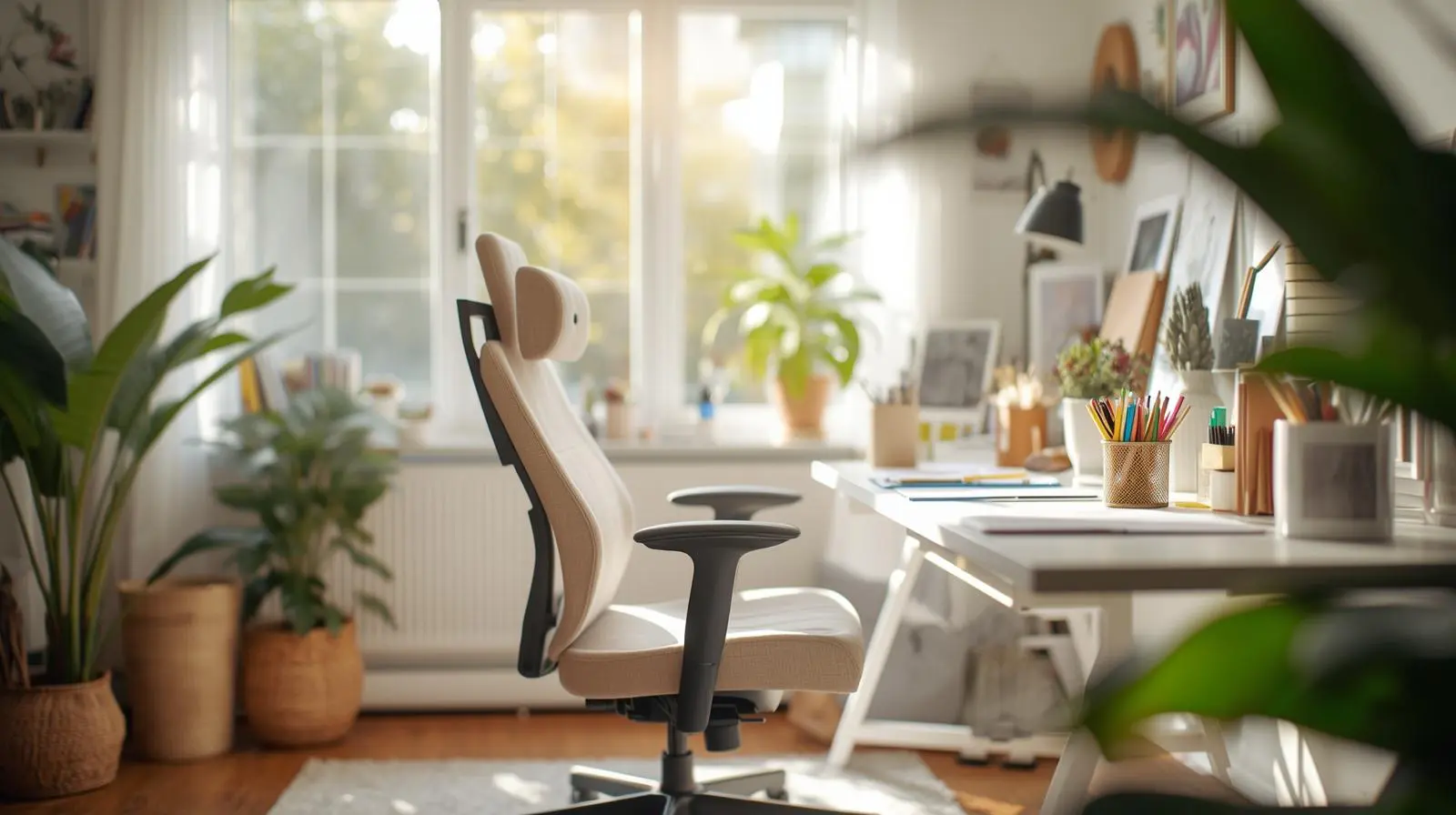
Environment matters more than you might expect. While mindful coloring can happen anywhere, designating a dedicated space for your practice signals to your brain that this is your time for mental wellness.
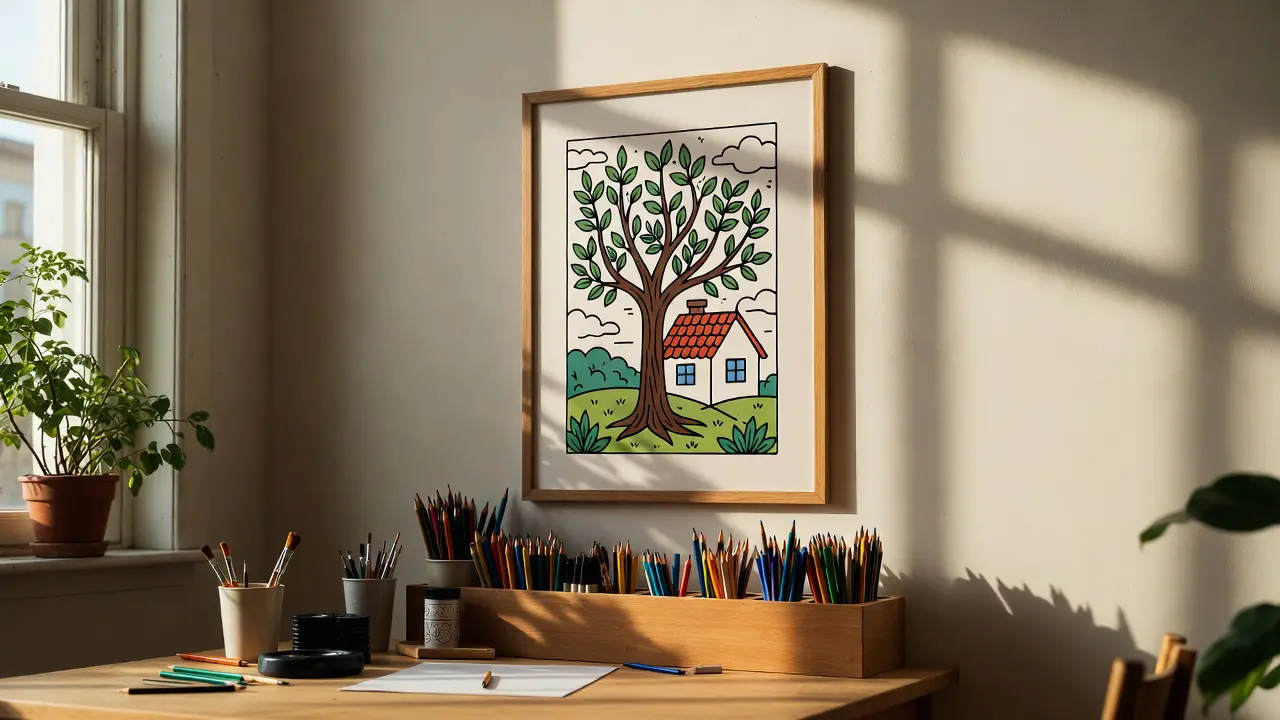
Your coloring space doesn’t need to be elaborate—a comfortable chair with good lighting and a small table or lap desk works perfectly. Natural light offers the best color visibility and has its own mood-boosting properties, though a quality lamp works well for evening sessions.
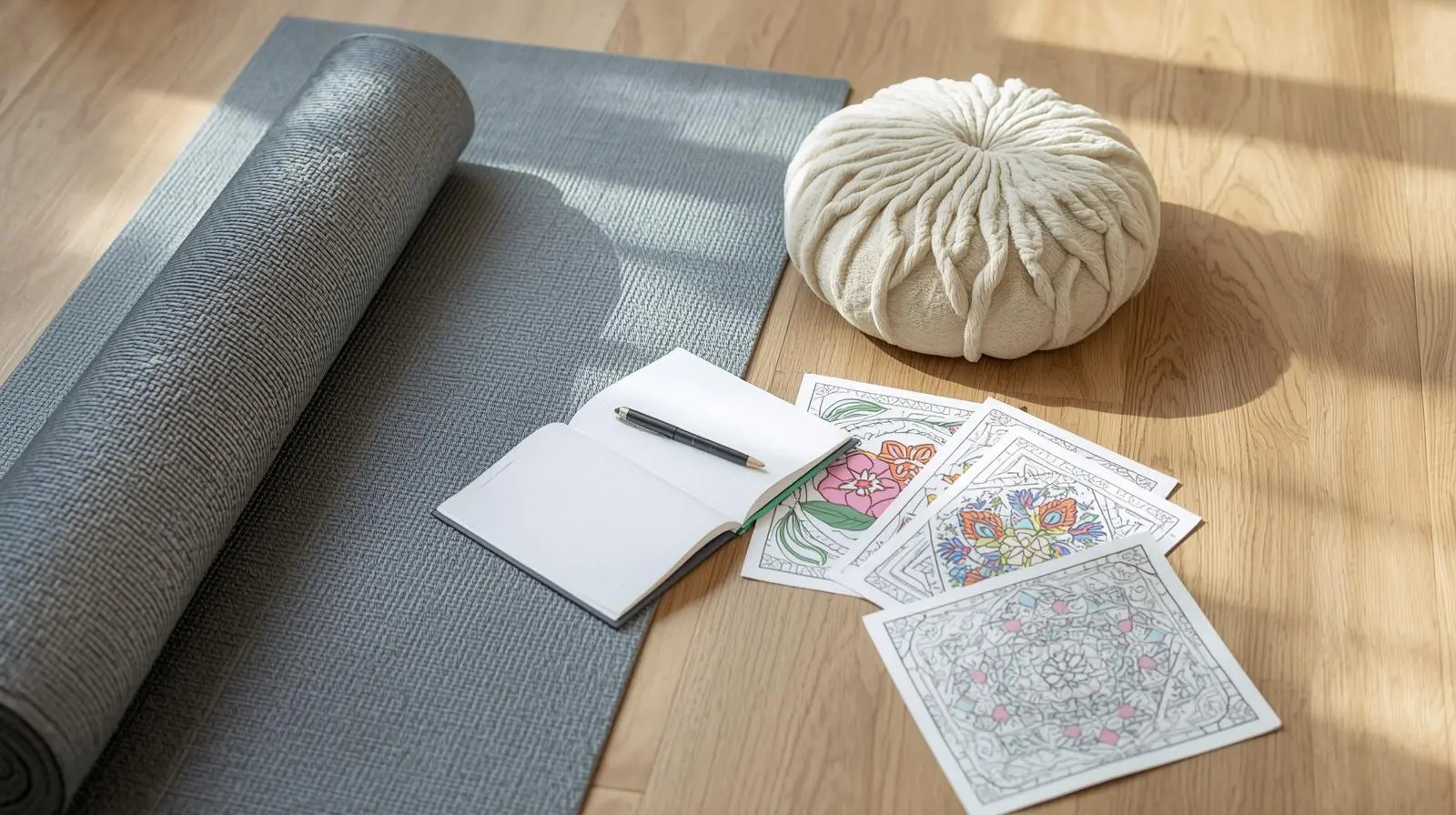
Consider adding elements that enhance relaxation: a comfortable cushion, a cup of herbal tea within reach, perhaps a candle or essential oil diffuser with calming scents like lavender or chamomile. Some people enjoy gentle instrumental music or nature sounds, while others prefer silence. The key is creating an environment where you feel permission to pause and be present.
Keep your materials organized and easily accessible. Something is dispiriting about wanting to color but spending fifteen minutes searching for supplies. A simple storage system—even just a box or basket with your current coloring book and favorite tools—removes barriers between intention and action.
Establishing a Daily Coloring Ritual
Consistency transforms an activity into a ritual, and rituals carry powerful psychological benefits. When you color at the same time each day, your mind begins to anticipate and prepare for that peaceful interval. The comprehensive guide to creating a daily coloring ritual offers detailed strategies; here are some foundational principles.
Morning coloring can set a calm, intentional tone for your entire day. Even fifteen minutes with stress relief coloring pages before diving into email or responsibilities creates a buffer between sleep and the day’s demands. Think of it as a meditation technique that prepares your mind for whatever comes next.
Evening coloring serves a different purpose—helping your brain transition from the day’s stimulation to rest. The blue light from screens interferes with sleep, but the gentle focus required for coloring actually promotes the mental wind-down needed for quality rest. Many people find that coloring before bed reduces nighttime rumination and anxiety.
Midday coloring breaks offer rescue during stressful days. When you feel overwhelmed, stepping away for ten minutes with printable coloring pages can reset your nervous system and return you to tasks with renewed clarity.

Connecting Coloring with Other Wellness Practices
Mindful coloring becomes even more powerful when integrated with other mental wellness strategies. Many practitioners find that pairing coloring with affirmations deepens the therapeutic effect. The Color Me a Mood collection, for example, combines emotion-themed designs with positive affirmations, creating a dual pathway for processing feelings.
The New Year Wellness Bundle, which combines coloring pages with a 60-day journal, demonstrates how creative therapy and reflective writing can complement each other. You might journal about your feelings, then color as a way to process those emotions nonverbally. Or you might color first, then write about any insights or feelings that emerged during the coloring session.
Breathing exercises pair beautifully with coloring. Try coordinating your breath with your coloring strokes—inhale while choosing a color, exhale while making the stroke. This simple addition transforms coloring into a full-body mindfulness practice.
Some practitioners use coloring as part of a broader self-care routine: stretching or yoga, then coloring, then meditation. Others find that coloring itself is their meditation. There’s no single correct approach—the best practice is one that feels sustainable and genuinely supportive of your mental wellness.
The Therapeutic Applications: When Coloring Becomes Healing
While mindful coloring for stress relief benefits everyone, it holds particular value for people managing specific mental health challenges. Understanding these applications can help you harness coloring’s full therapeutic potential.
Coloring for Anxiety Reduction
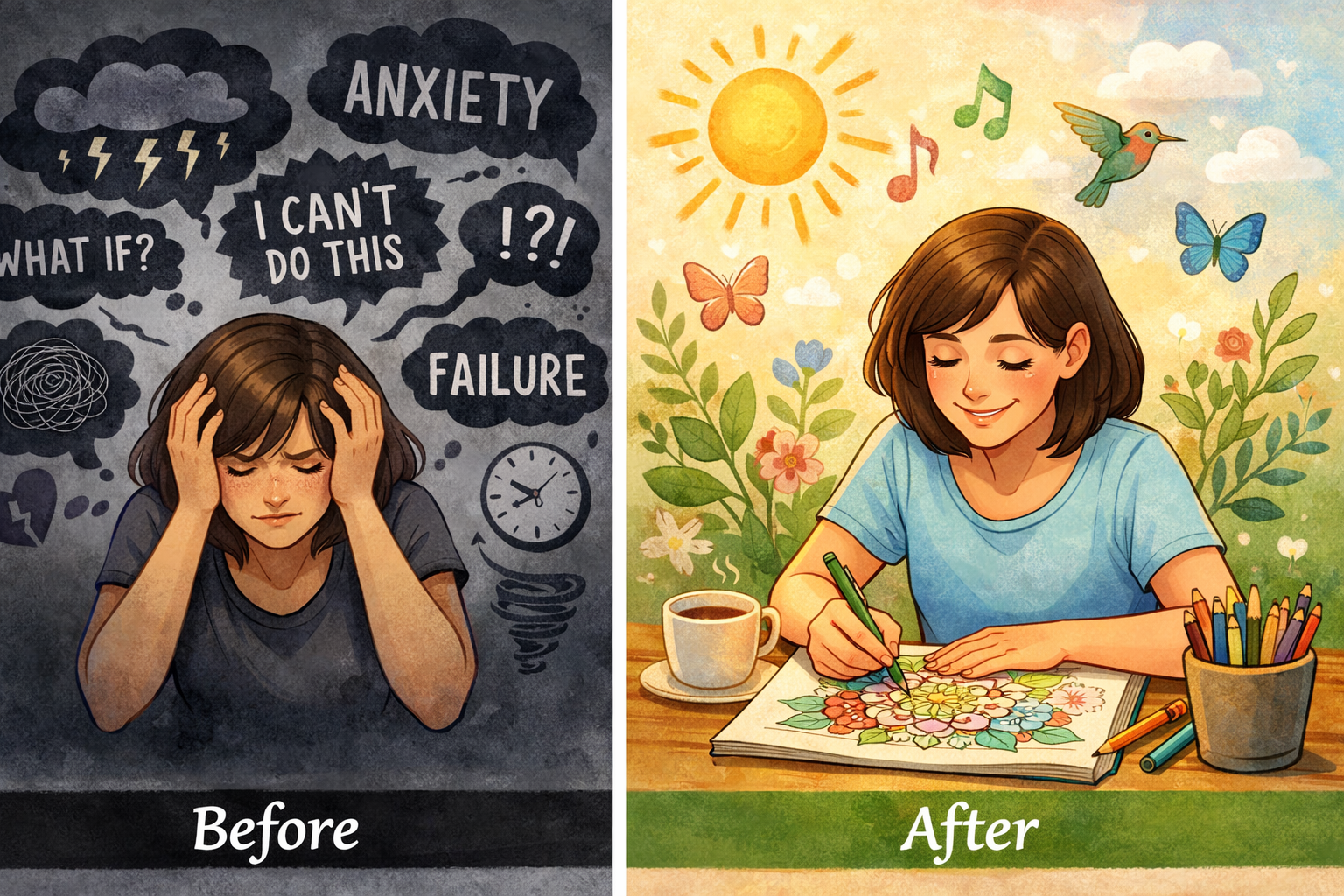
Anxiety often manifests as racing thoughts, physical tension, and a sense of being untethered from the present moment. Therapeutic coloring addresses all three symptoms simultaneously.
The structured nature of coloring pages—defined spaces, clear boundaries—provides a sense of control that anxiety often strips away. When the world feels chaotic and unpredictable, you can control which color goes where. This small sovereignty matters more than it might seem.
The focused attention required for coloring interrupts the anxiety loop. Instead of thoughts spiraling from one worry to the next, your mind has a specific task. Research has shown that this redirection of mental energy can significantly reduce anxiety symptoms, with effects sometimes lasting hours beyond the coloring session itself.
Guided mandala practices for anxiety offer potent relief. The radial symmetry of mandalas creates natural focal points that guide anxious minds toward a sense of center. Many people with anxiety report that mandala coloring feels almost magnetically calming—the circular patterns literally draw their scattered attention inward.
For those experiencing acute anxiety or panic, having stress relief coloring pages readily available provides a grounding tool. When you feel panic rising, reaching for your coloring materials gives your hands something to do (preventing nervous habits) and your mind an anchor point.
Processing Emotions Through Color
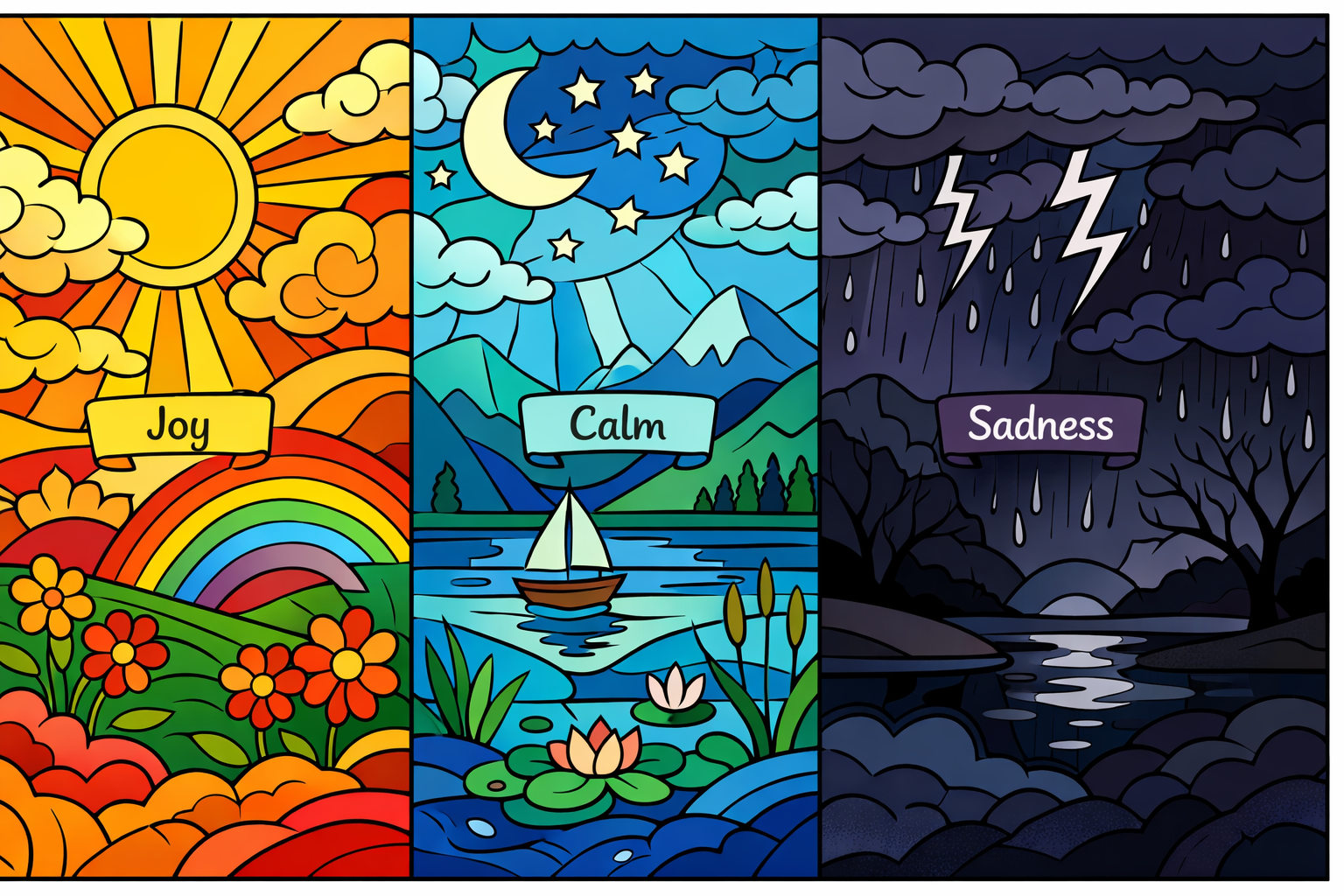
Colors aren’t neutral—they carry emotional resonance that varies by individual and culture, but also contains universal elements. Engaging with color mindfully can help us access, express, and process emotions that might be difficult to articulate verbally.
Art therapists have long used color exploration as a diagnostic and healing tool. When you notice what colors you’re drawn to on a particular day, you’re receiving information about your emotional state, and feeling overwhelmed by dark blues and grays? Your inner world might be processing sadness and reaching repeatedly for bright reds and oranges? Perhaps anger or passion is seeking expression.
The practice outlined in Art & Emotions: Using Color to Explore Feeling offers structured approaches to this color-emotion dialogue. Rather than judging your color choices, you notice them and stay curious about what they might reveal.
This emotional processing occurs without verbal articulation, making coloring particularly valuable for people who find talk therapy challenging or who use it as a complement to conventional treatment. You’re not analyzing your feelings—you’re expressing them through color and witnessing what emerges.
Some therapists encourage clients to create “emotion color maps”—using specific colors to represent different feelings and then noticing which emotions predominate during a particular coloring session. This creates a visual journal of emotions that can reveal patterns over time.
Coloring for Depression and Low Motivation
Depression often drains motivation and makes even simple activities feel insurmountable. The beauty of therapeutic coloring for people managing depression is its low barrier to entry. You don’t need inspiration, talent, or energy—just the willingness to pick up a coloring tool and make a single stroke.
Starting is often the most challenging part. Depression tells us nothing will help, so why bother trying? This is where having materials readily available matters. When stress relief coloring pages are already on your coffee table, you might color simply because it requires less effort than putting them away.
The act of creating something, even something as simple as a colored page, provides tangible evidence of accomplishment during periods when everything feels futile. You can look at the page and say, “I did this.” In depression’s fog, this proof of agency—of having affected your environment in a small, positive way—carries real therapeutic weight.
Coloring also provides structure during unstructured time, which can be particularly challenging for people with depression. Instead of hours disappearing into rumination or scrolling, you’re engaged in an activity that’s gentle enough not to demand much but engaging enough to occupy your mind.
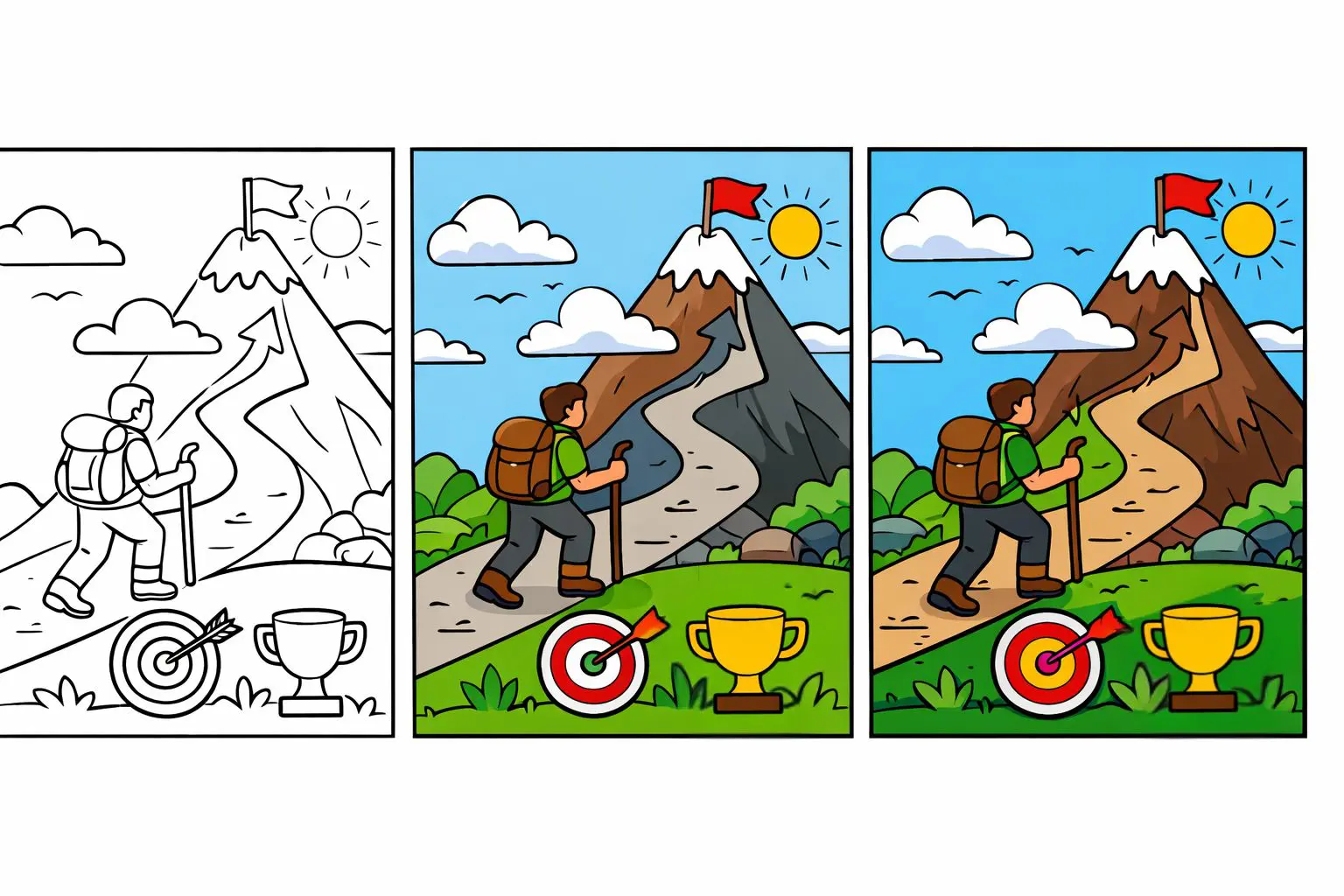
The bold, easy coloring pages work exceptionally well during low-motivation periods because they offer quick, satisfying completion without overwhelming detail.
Special Themes and Seasonal Practices
Aligning your mindful coloring practice with seasons and themes can deepen the experience by connecting you with natural rhythms and specific intentions.
Spring: Renewal and Growth
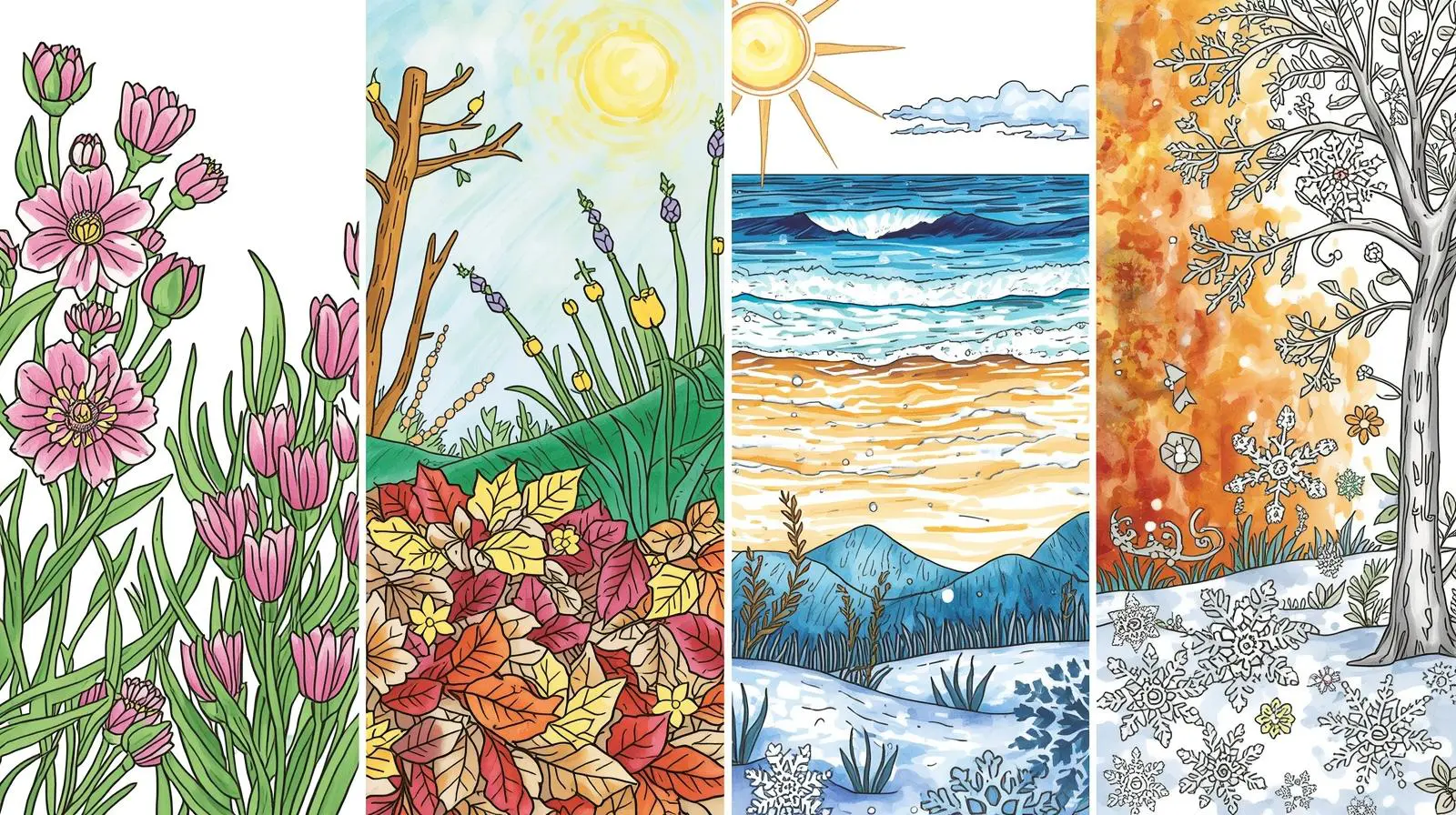
Spring’s energy of renewal makes it an ideal time to refresh or begin a coloring practice. Spring flower and spring animal coloring pages capture this season’s essence—new beginnings, fresh energy, and emerging color after winter’s palette.
The Spring Reset Coloring Kit offers 35 pages designed explicitly for this transitional season, while the Spring Reset Coloring Book Sampler provides a gentle introduction to spring-themed mindful coloring.
Garden themes particularly resonate in spring. The Garden Mandala Coloring Pages combine mandala’s therapeutic properties with botanical elements, creating a practice that feels like tending an inner garden.
Seasonal Celebrations
Holidays and celebrations offer opportunities to practice mindful coloring within community and cultural contexts. The comprehensive guide to seasonal festivals and holiday coloring traditions explores how different cultures incorporate coloring into meaningful occasions.
Easter and spring celebrations, for example, carry themes of resurrection and renewal. Relaxing Easter coloring pages for adults offer sophisticated designs that honor the holiday while providing stress relief.
Autumn’s reflective energy pairs beautifully with coloring practice. The Autumn Coloring Pages capture fall’s cozy, introspective quality, making them perfect companions for the season when daylight shortens, and we naturally turn inward.
Themed Collections for Specific Intentions
Sometimes our mental wellness needs shift, and having coloring pages that match our current intention can enhance the practice. The Eco Mandala Coloring Book combines environmental themes with mindfulness, making it perfect for those who find nature connection central to their well-being.
For cottage-core enthusiasts or those seeking whimsical escape, whimsical cottage coloring provides detailed scenes that transport you to peaceful, imaginary spaces. This escapist quality isn’t avoidance—it’s giving your nervous system a genuine break from stressors.
The mood-tracking journal with daily affirmations demonstrates how coloring can complement emotional awareness practices, creating a comprehensive approach to mental wellness.
Advanced Mindful Coloring Practices
Once you’ve established a basic coloring practice, you might explore deeper applications that transform coloring from a stress relief tool into a genuine meditation technique.
Moving Meditation with Color
Traditional moving meditation includes practices such as walking meditation and tai chi. Coloring can function similarly—the hand movements become the meditation object, with your awareness following the color across the page just as it might follow your feet across the floor.
To practice this, begin by setting an intention to stay present with each stroke. Notice the exact moment the pencil touches paper. Feel the resistance as color transfers. Observe the sound. When your mind wanders to planning or remembering, gently guide it back to the sensory experience of this single stroke, then this one, then this one.
This practice develops what Buddhists call “one-pointed concentration”—the ability to hold attention steadily on a chosen object. This skill extends beyond coloring, helping you stay present in conversations, work tasks, and challenging situations.
Color Meditation: Choosing Mindfully
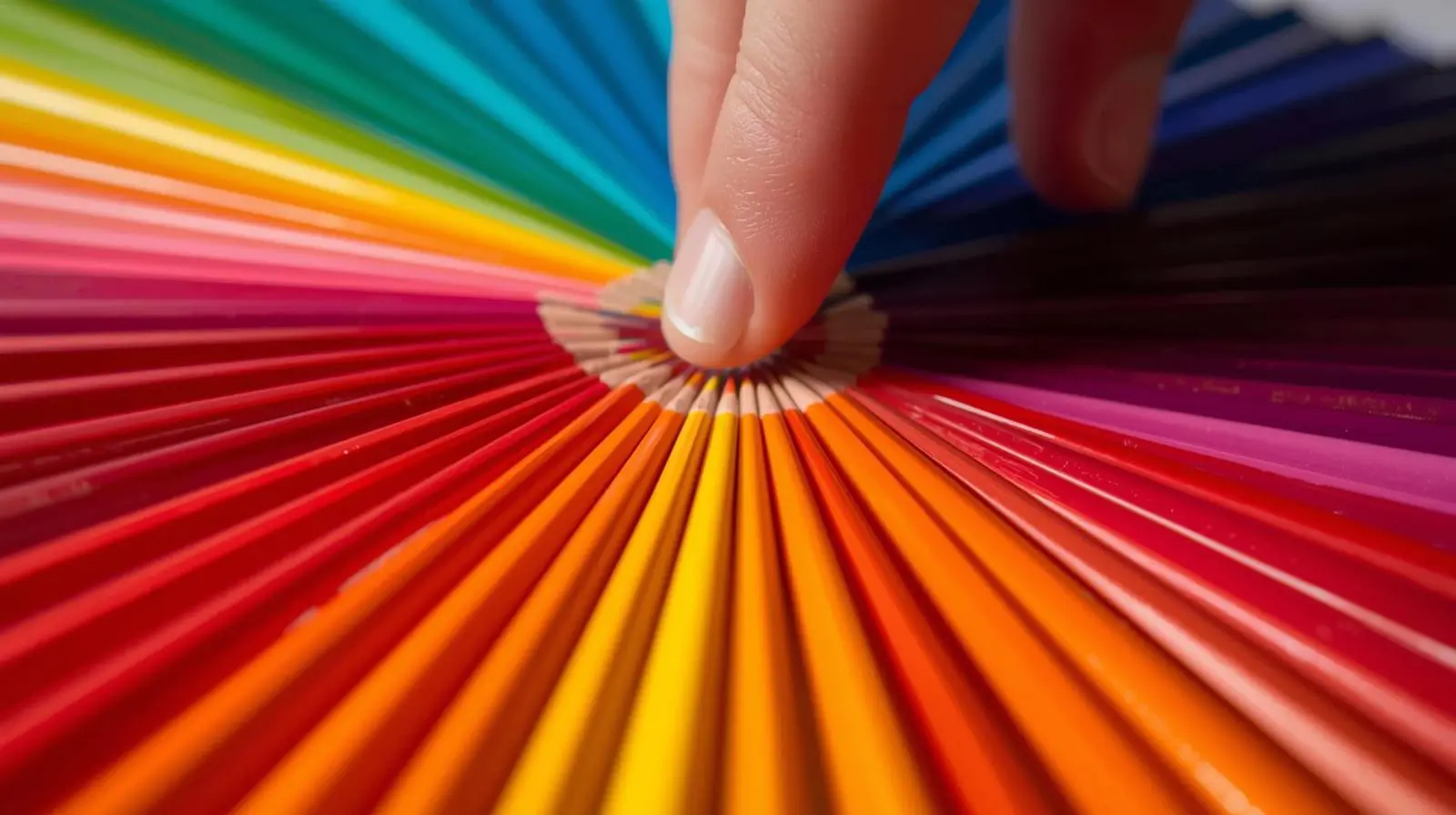
Another advanced practice involves bringing full awareness to color selection. Instead of automatically reaching for your favorite blue, pause before each choice. What color does this moment want? What color does this section need? What color calls to you right now?
This isn’t about right or wrong choices—it’s about noticing the subtle pull toward specific colors and the equally subtle resistance to others. You might discover patterns: always avoiding yellows, perhaps, or defaulting to purple. What might these patterns reveal about your relationship with what these colors represent for you?
Some practitioners use color meditation as a form of intuitive guidance, believing that the colors they’re drawn to contain messages from their subconscious or more profound wisdom. Whether you approach this from a metaphysical or psychological perspective, the practice of choosing colors with full awareness adds depth to relaxation coloring.
Gratitude Coloring
Combining gratitude practice with mindful coloring creates a powerful double intervention for mental wellness. Before beginning to color, identify three things you’re grateful for. As you color, hold one of these gratitudes gently in your awareness. You’re not forcing positive thinking—simply allowing appreciation to be present alongside the physical act of coloring.
Alternatively, you might dedicate each section of your stress relief coloring pages to a different gratitude: “This flower for my friend’s kindness, this leaf for my morning coffee, this border for my functioning body.” This transforms your colored page into a tangible gratitude map.
Research consistently shows gratitude practice as one of the most effective interventions for improving mood and overall life satisfaction. When paired with the already stress-reducing effects of therapeutic coloring, you’re addressing mental wellness from multiple angles simultaneously.
Overcoming Common Obstacles
Even the simplest practices face obstacles. Anticipating and addressing these challenges helps maintain your mindful coloring practice when enthusiasm wanes or life becomes complicated.
“I Don’t Have Time”
Time scarcity is perhaps the most common barrier, but it’s worth examining closely. We often mean “I don’t feel I have permission to prioritize this” rather than “I literally lack time.” If you have time to scroll social media for fifteen minutes (and most of us do), you have time for stress relief coloring.
The practice doesn’t require hour-long sessions. Even five minutes of focused coloring provides measurable stress reduction, rather than waiting for a perfect thirty-minute window. Color for five minutes while your coffee brews, during commercial breaks, or before bed.
Portable materials help tremendously. Keep printable coloring pages and a small pencil case in your bag, car, or desk. These micro-sessions throughout your day add up to significant stress relief.
“I’m Not Creative” or “I’m Bad at Art”
This obstacle stems from confusing creative therapy with art creation. Mindful coloring for stress relief isn’t about producing gallery-worthy art—it’s about the process of coloring itself. Your page’s aesthetic value is entirely irrelevant to its therapeutic value.
In fact, letting go of attachment to how the finished product looks is part of the mindfulness practice. Can you color “badly” and still enjoy the experience? Can you choose colors that “clash” and remain present with that choice? This non-judgment extends from your coloring to other areas of life.
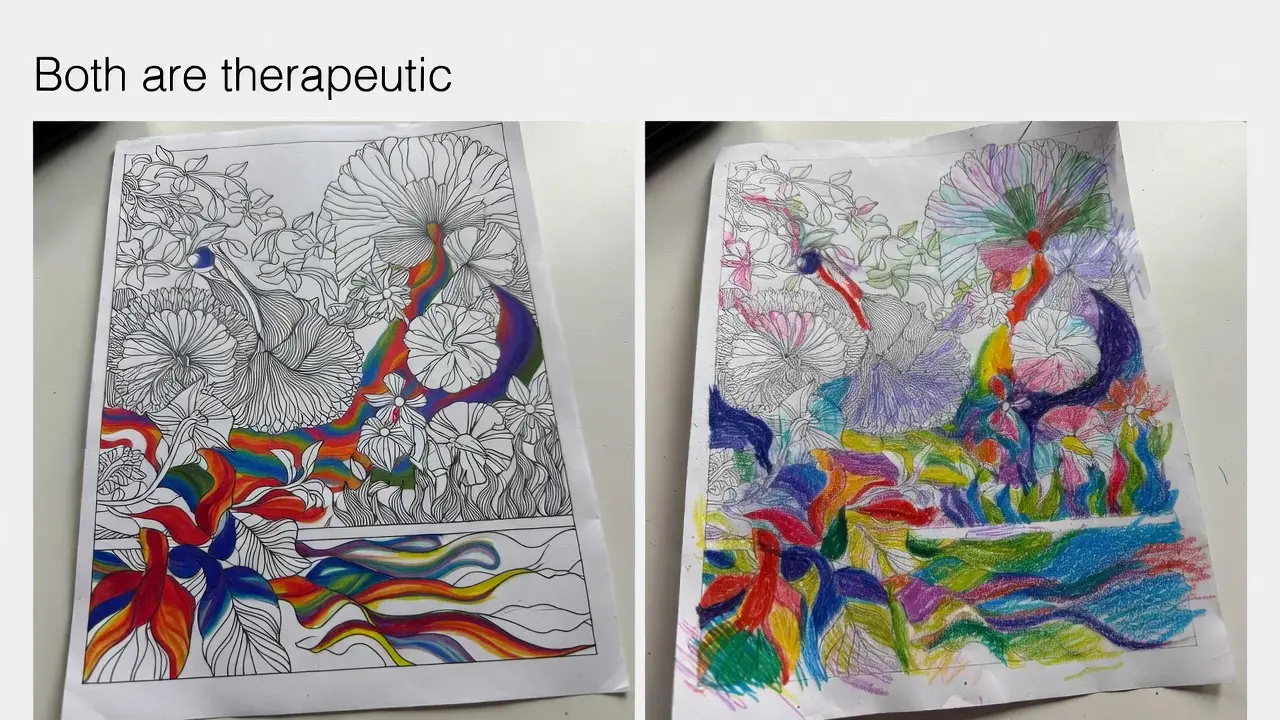
Remember that the therapeutic benefits come from the act of coloring, not from the result. A page colored entirely in random scribbles provides the same stress-reducing neurological effects as a page colored with museum-quality technique.
Perfectionism Paralysis
Ironically, some people find coloring stressful because their perfectionism is activated. They agonize over color choices, berate themselves for coloring outside lines, or abandon pages that don’t meet their standards.
If you notice perfectionism arising, pause and acknowledge it: “Ah, there’s my perfectionism.” Then deliberately make an “imperfect” choice—color outside the lines intentionally, choose a color that “doesn’t match,” leave a section uncolored. This gently challenges the perfectionist pattern while practicing self-compassion.
You might also explore the bold, easy coloring pages with larger, simpler designs. These provide less opportunity for perfectionist anxiety while still offering full therapeutic benefits.
Maintaining Motivation
Initial enthusiasm often fades, leaving your adult coloring books gathering dust. This is normal human behavior, not personal failure. Building sustainability requires strategies beyond willpower.
Variety helps. Rotate between different styles—mandalas one day, nature scenes another, whimsical cottages the next. The Adult Coloring Pages Printable Bundle, with 120+ designs, offers a wide variety to prevent boredom.
Accountability can also support consistency. Color alongside a friend (in person or virtually), share your finished pages on social media if that feels motivating, or join an online adult coloring community. Knowing others are practicing alongside you can help on days when motivation lags.
Finally, track your practice and its effects. Many people use the 60-Day Mood Tracking Journal to notice correlations between their coloring practice and their mental state. Seeing evidence that coloring improves your mood motivates you to continue.
Integrating Coloring into a Comprehensive Wellness Plan
While mindful coloring for stress relief offers substantial benefits, it is most effective when used as part of a broader approach to mental wellness rather than as an isolated intervention.
Complementing Professional Mental Health Care
If you’re working with a therapist or psychiatrist, coloring can complement but not replace professional treatment. Many therapists encourage clients to practice coloring as homework between sessions. The pages you color might even become conversation starters—what were you feeling when you chose those dark colors? What does this shift to brighter hues represent?
Art therapy conducted by licensed art therapists involves more structured interventions than recreational coloring, but your personal therapeutic coloring practice can reinforce what you’re processing in formal art therapy sessions.
Combining with Other Self-Care Practices
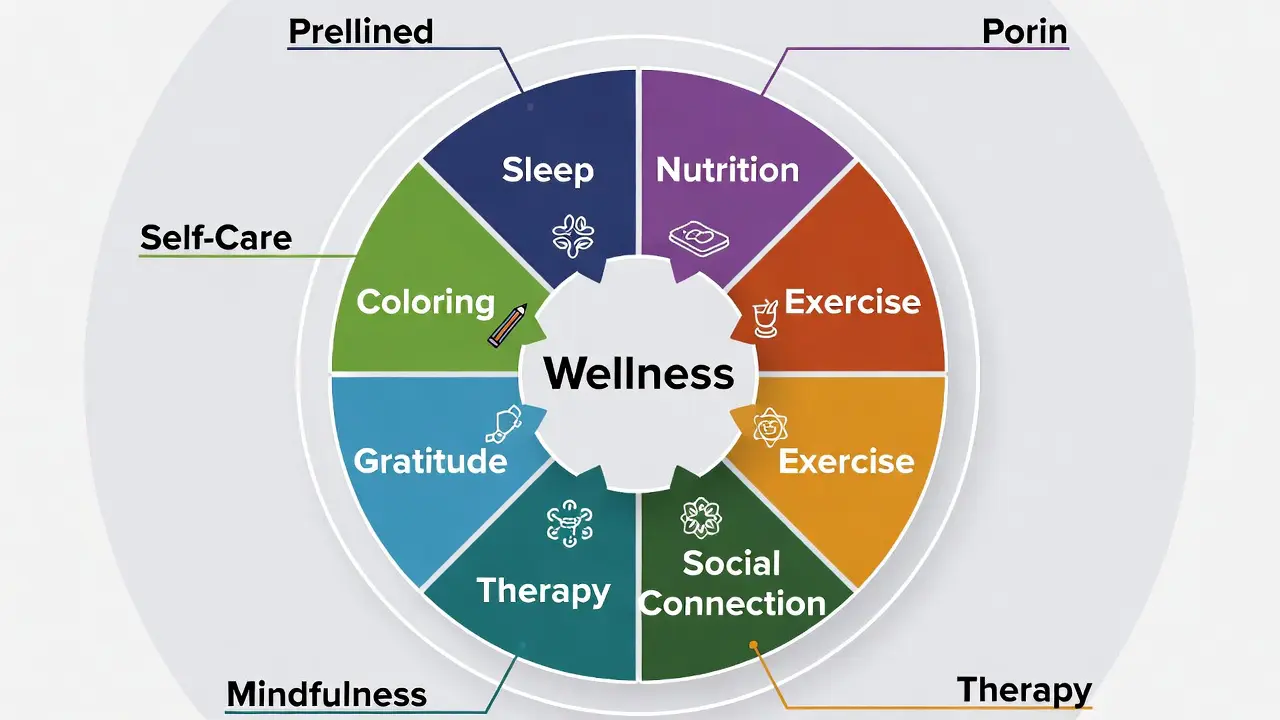
Coloring integrates beautifully into a comprehensive self-care routine. You might structure your morning around several wellness practices: stretching or yoga, then coloring, then journaling, then a healthy breakfast. Each element supports the others, creating a foundation for mental wellness that’s stronger than any single practice.
The creative journaling and coloring combo approach specifically addresses this integration, showing how writing and coloring can work together to process emotions and experiences.
Physical wellness supports mental wellness and vice versa. Coloring before bed might improve sleep, which in turn improves mood, making you more likely to exercise, which further enhances mental wellness. These practices create a positive feedback loop.
Recognizing When Additional Support Is Needed
Mindful coloring provides genuine stress relief and anxiety reduction, but it’s not a cure-all. If you notice your anxiety or depression worsening despite consistent practice, or if you’re having thoughts of self-harm, please reach out to a mental health professional. Coloring is an excellent tool, but some situations require additional support.
The accessibility of coloring makes it an excellent entry point for people hesitant about therapy—it can help you develop comfort with emotional processing that might eventually support more formal treatment if needed.
The Science Continues: Emerging Research
Research supporting mindful coloring for stress relief continues to grow. Recent studies have explored specific applications and mechanisms that deepen our understanding of this creative therapy.
A 2023 study in the Journal of the American Art Therapy Association found that just 20 minutes of mandala coloring significantly reduced state anxiety compared to both unstructured drawing and a control group. The structured, repetitive nature of mandalas is key to their anxiety-reducing effects.
Research on the effects of coloring on mindfulness shows promising results. A study comparing coloring to meditation found that while meditation produced greater overall increases in mindfulness, coloring was more accessible for beginners and led to fewer negative experiences, such as frustration or restlessness. This suggests coloring might serve as a “gateway” to meditation techniques for people intimidated by traditional practices.
Neuroimaging studies show that coloring activates brain reward pathways similar to those activated by other pleasurable activities, but without the addictive potential of many modern pleasures. This makes it a genuinely healthy way to activate our brain’s reward system.
The field continues investigating optimal coloring practices for specific conditions. Which designs work best for different types of anxiety? How does color choice affect therapeutic outcomes? Do different coloring tools (pencils vs. markers vs. digital coloring) produce distinct effects? As research progresses, we’ll develop a more nuanced understanding of how to maximize the therapeutic potential of coloring.
Creating Community Through Coloring
While mindful coloring can be a profoundly personal, solitary practice, it also offers opportunities for connection and community that enhance its mental wellness benefits.
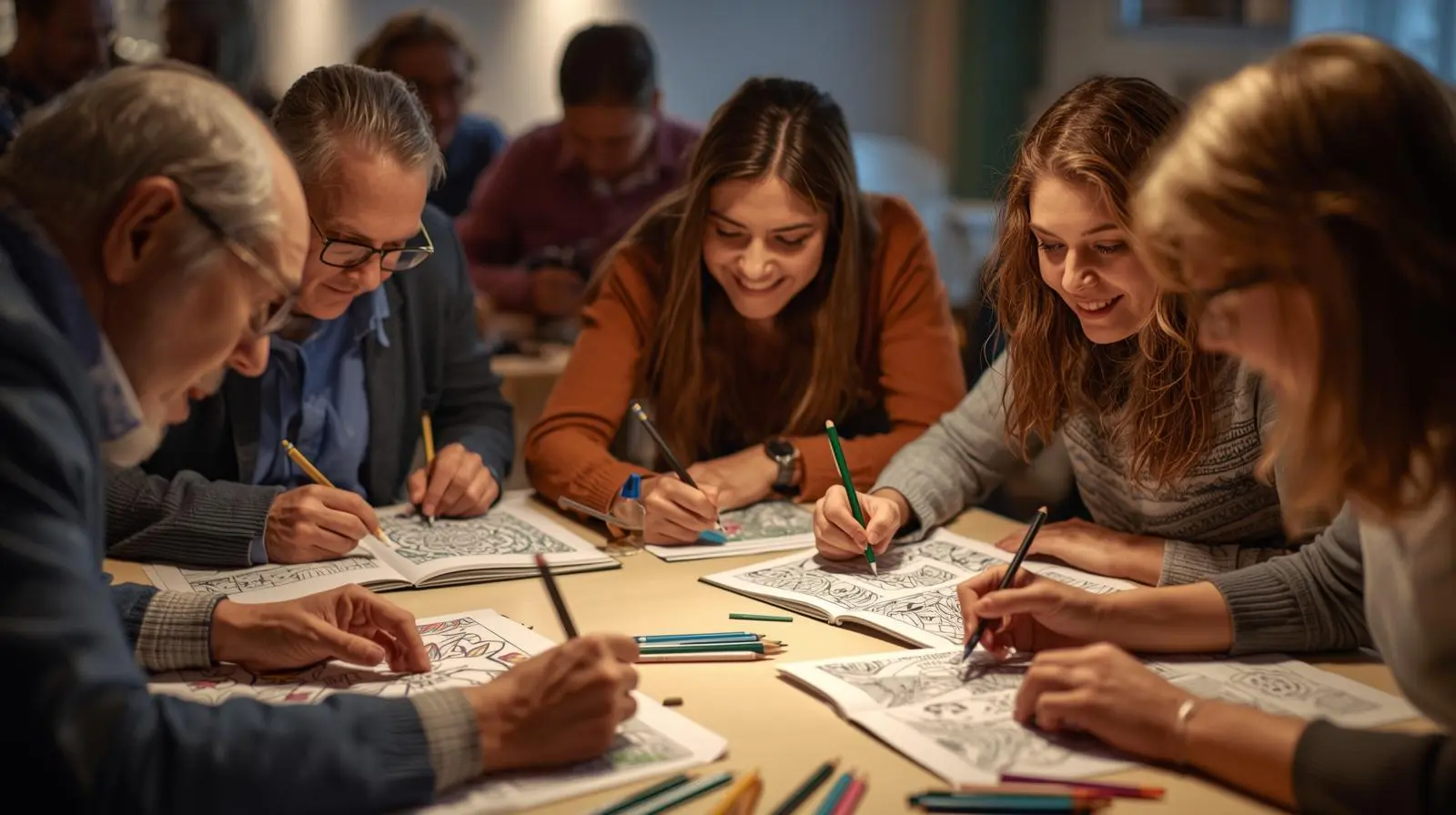
Coloring groups have emerged in libraries, community centers, hospitals, and online spaces. These gatherings provide the stress-reducing benefits of coloring, as well as the well-documented mental health benefits of social connection. There’s something particularly soothing about coloring alongside others—the shared focus creates a form of parallel play that feels connective without demanding conversation.
Some families have adopted coloring as a shared evening activity, replacing screen time with creative therapy time. Parents and children color side by side, each working on age-appropriate pages. This model offers healthy stress-relief techniques for children while fostering quality family time.
Online communities around adult coloring books allow people to share finished pages, discuss techniques, recommend products, and support each other’s practices. These digital gathering spaces prove especially valuable for people who are homebound or lack access to in-person communities.
The act of gifting coloring materials—perhaps the Garden Mandala Coloring Pages for a friend who loves gardening, or the Eco Mandala Sampler for an environmentally conscious family member—extends care beyond yourself. You’re offering not just a gift but an invitation to wellbeing.
Your Invitation to Begin
If you’ve read this far but haven’t yet picked up colored pencils, consider this your personal invitation to begin. You don’t need special preparation, expensive materials, or significant time investment. You need the willingness to try something gentle that might ease the weight you carry.
Start small. Choose one stress relief coloring page—perhaps from the Spring Reset Sampler or the Eco Mandala Sampler—and color for just five minutes. Notice how you feel afterward. Is there even a slight shift in your stress level? A small softening in your shoulders? A moment of mental quiet?
That slight shift is the seed of a practice that could genuinely transform your relationship with stress and anxiety. Mindful coloring for stress relief isn’t a magic bullet. Still, for many people, it comes remarkably close—a simple, accessible, scientifically supported practice that brings color back into lives that stress has rendered gray.
Your mental wellness deserves attention, care, and investment. Among the many tools available for managing stress and anxiety, therapeutic coloring stands out for its unique combination of accessibility, effectiveness, and sheer pleasantness. In a world that often demands complexity, there’s profound wisdom in returning to something as fundamental as color on paper.
The pages are waiting. The colors are ready. Your more peaceful, present self is just a few mindful strokes away.
Ready to begin your mindful coloring journey? Explore our collection of specially designed stress relief coloring pages and wellness resources to find the perfect starting point for your practice.
The wellness connection to creative practice is beautifully articulated. Art truly does nourish from within.
Mindful creativity has become essential to my mental health routine. This article validates that experience.
I’ve probably downloaded 30 or 40 pages by now and the quality has been consistently good throughout. That consistency is rare and appreciated.