
Guided Mandala Practices for Anxiety
In today’s fast-paced world, anxiety can feel like an unwelcome companion, creeping into our thoughts and disrupting our peace. But what if a simple, creative activity could help soothe those racing thoughts? Enter mandala coloring for anxiety, a mindful practice that combines art, symmetry, and focus to promote relaxation. Mandalas, with their intricate circular designs, have been used for centuries in various cultures as tools for meditation and self-reflection. Today, they’re gaining popularity as a form of mandala anxiety relief, offering a gentle way to unwind without needing artistic expertise.
If you’d like to try one of these practices today, having a high-quality sheet in front of you makes a genuine difference — the right design holds your attention without creating overwhelm. Our printable mandala coloring sheets for adults are specifically chosen for this kind of mindful, focused coloring session.
This guide explores guided mandala practices for anxiety, drawing on the therapeutic power of coloring to help you reclaim calm. Whether you’re new to this or looking to deepen your routine, we’ll cover step-by-step practices, benefits, and tips to make it part of your daily life. If you’re interested in how creative activities like this nurture your overall well-being, check out our pillar article on Mindful Creativity & Wellness: How Art Nourishes Your Inner World.
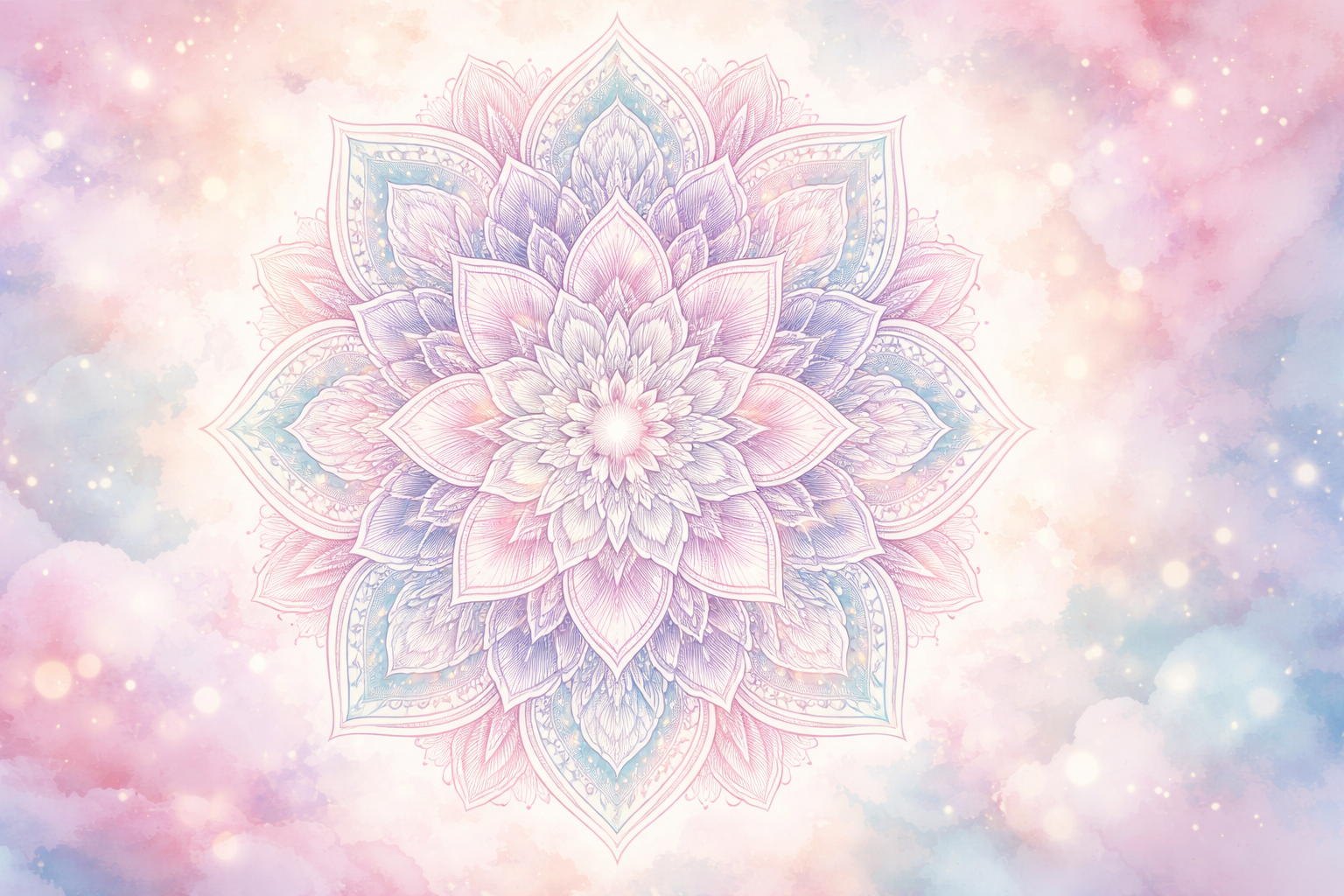
What Are Mandalas and Why Do They Help with Anxiety?
Mandalas originate from Sanskrit, meaning “circle,” and represent wholeness, unity, and the universe in spiritual traditions like Hinduism and Buddhism. In modern wellness, stress-relief mandalas are adapted into coloring pages to encourage mindfulness. The repetitive patterns draw your attention inward, away from external stressors, making them ideal for mandala meditation anxiety sessions.
Before diving into specific anxiety-relief practices, it’s worth understanding why mandalas are such effective tools in the first place. Our exploration of the magic of printable mandala coloring pages covers the psychological and sensory reasons this particular art form is so calming — worth a read if you’re new to the practice.
Psychologically, coloring mandalas engages the brain’s reward centers, similar to meditation. It reduces activity in the amygdala—the part responsible for fear and anxiety—while boosting endorphins. Studies in art therapy show that just 20 minutes of coloring can lower cortisol levels, providing quick relief from anxiety. Unlike traditional meditation, which can feel intimidating for beginners, anxiety coloring books with mandalas offer a structured yet flexible entry point.
For more on the science behind this, you can explore our supporting post on the Benefits of Coloring for Stress Relief, which delves into how these activities rewire your brain for better emotional regulation.
Getting Started: Setting Up Your Mandala Practice
Before diving into guided practices, create a supportive environment. Choose a quiet space, dim the lights, and gather supplies: colored pencils, markers, or crayons, and printable mandala sheets. Opt for anxiety coloring books designed for adults, as they feature complex designs that hold your focus longer.
Start small—aim for 10-15 minutes daily. Consistency is key, so integrate it into your routine, perhaps before bed, to ease nighttime worries. Our guide on How to Create a Daily Coloring Ritual offers practical steps to build this habit, including setting intentions and tracking progress.
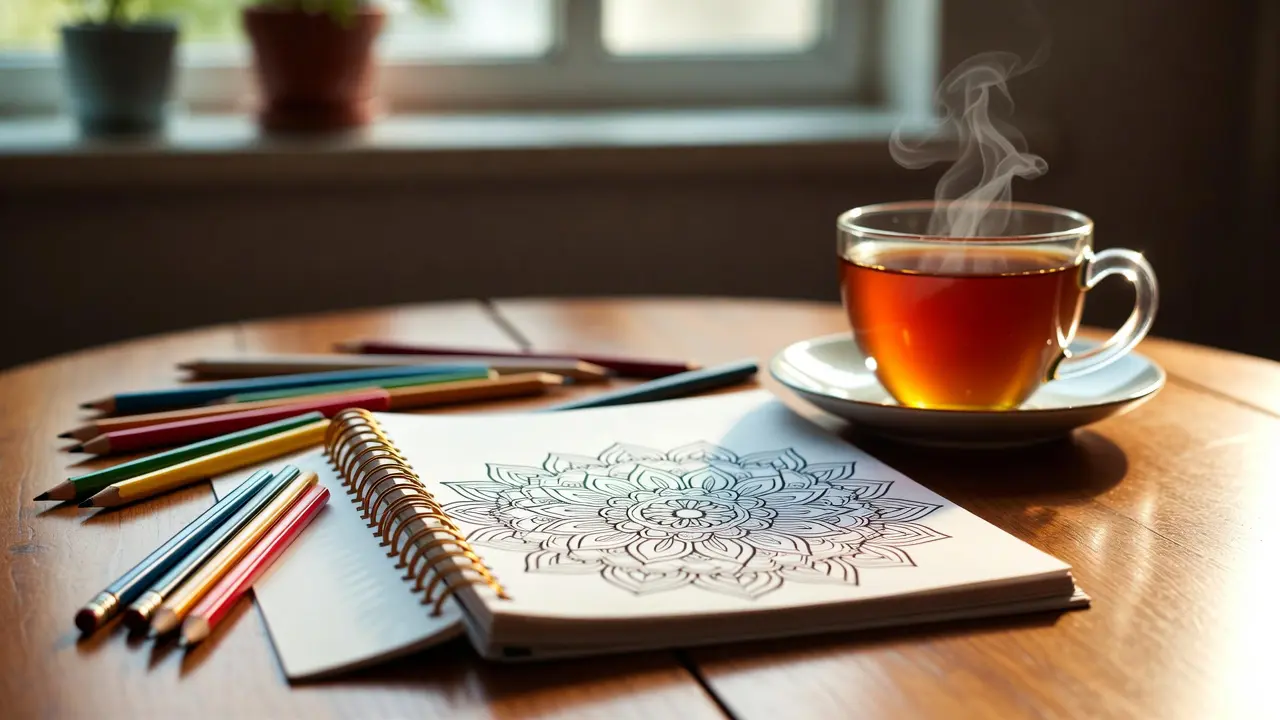
Guided Practice 1: Basic Breathing with Mandala Coloring
This entry-level practice combines mandala coloring for anxiety with deep breathing to ground you in the present.
- Select a simple mandala from an anxiety coloring book. Print it on quality paper for a tactile experience.
- Sit comfortably, close your eyes, and take three deep breaths: inhale for four counts, hold for four, exhale for four.
- Open your eyes and choose colors intuitively—perhaps blues for calm or greens for growth.
- As you color from the center outward, sync your strokes with your breath: inhale as you start a section, exhale as you fill it.
- If anxious thoughts arise, acknowledge them without judgment and return to the pattern.
Practice this for 15 minutes. Over time, it builds resilience, turning stress relief mandalas into a go-to tool for panic moments.
Guided Practice 2: Intention-Setting Mandala Meditation
For more profound mandala meditation anxiety relief, incorporate intentions. This practice helps reframe negative thoughts.
- Choose a mandala that resonates—floral for nurturing or geometric for structure.
- Before coloring, journal a positive intention, like “I release worry and embrace peace.”
- Divide the mandala into sections, assigning each to an aspect of your anxiety (e.g., work stress in one quadrant).
- Color mindfully, visualizing the intention infusing the design. Use warm colors for empowerment.
- End by reflecting: How do you feel? Note shifts in your journal.
This combines coloring with self-reflection to enhance emotional awareness. For more on emotions and art, read our post on Art & Emotions: Using Color to Explore Feeling, which explains how hues influence mood.
Mandalas have served as meditation objects in Tibetan Buddhism and Hinduism for thousands of years — their use for calming the mind is not a modern invention. For anyone curious about that deeper history, our guide to the world of mandala coloring provides a rich, accessible overview.
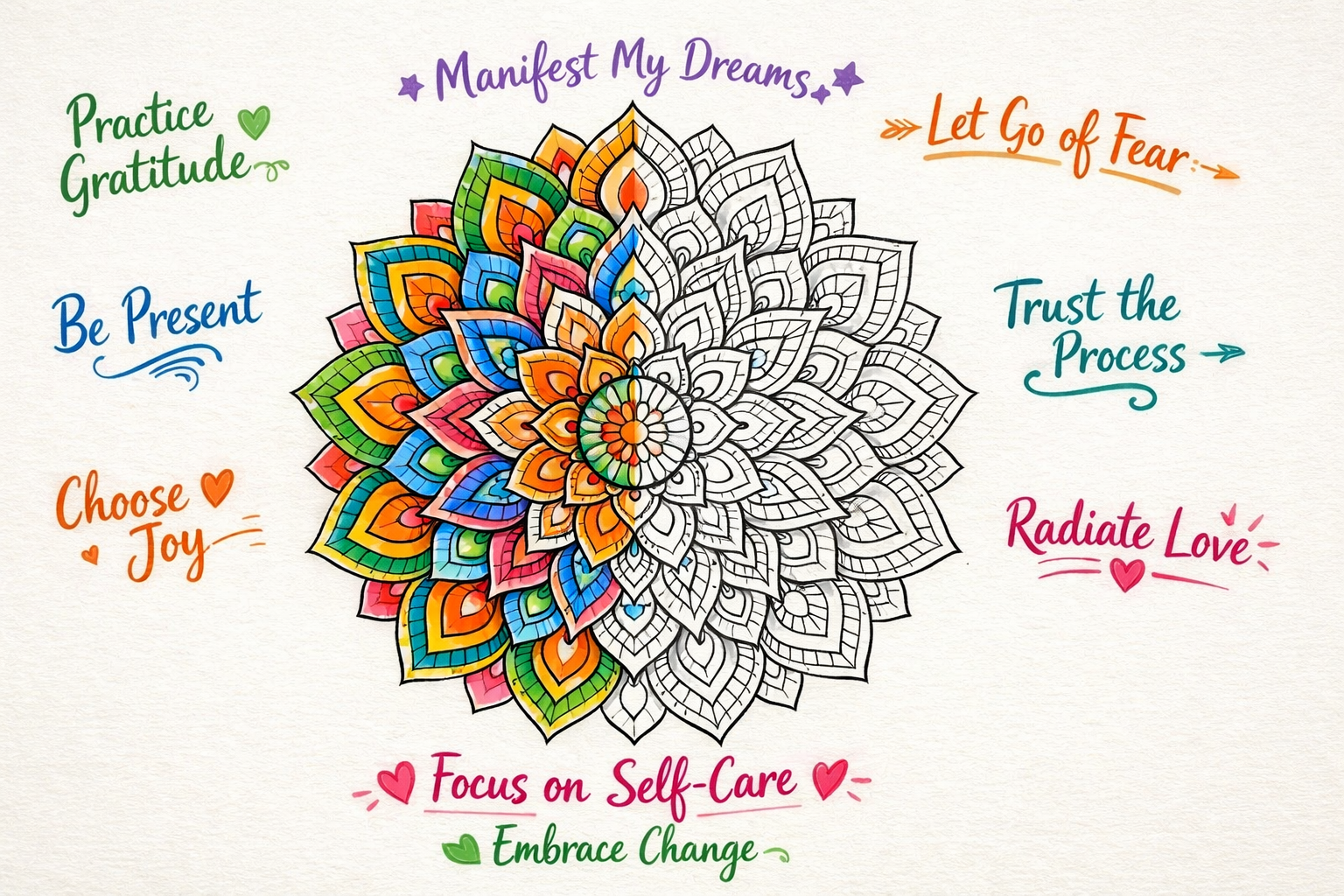
Guided Practice 3: Progressive Layering for Deep Relaxation
Advanced users can try layering, building complexity to mirror the layers of anxiety.
- Start with a blank or basic mandala template.
- Layer 1: Outline in black, focusing on symmetry to create order amid chaos.
- Layer 2: Add base colors, breathing steadily.
- Layer 3: Incorporate details, letting go of perfectionism.
- If anxiety peaks, pause and trace the outline with your finger for tactile grounding.
This practice fosters patience, teaching that anxiety, like a mandala, can be deconstructed layer by layer. It’s especially effective in anxiety coloring books with multi-page designs.
Combining Mandalas with Journaling for Enhanced Well-Being
Elevate your practice by pairing mandala coloring for anxiety with journaling. After coloring, jot down insights: What emotions surfaced? How did colors reflect your mood?
This combo amplifies benefits, turning a solo activity into therapeutic self-dialogue. Our article on Creative Journaling + Coloring Combo for Well-Being provides templates and prompts to get started.
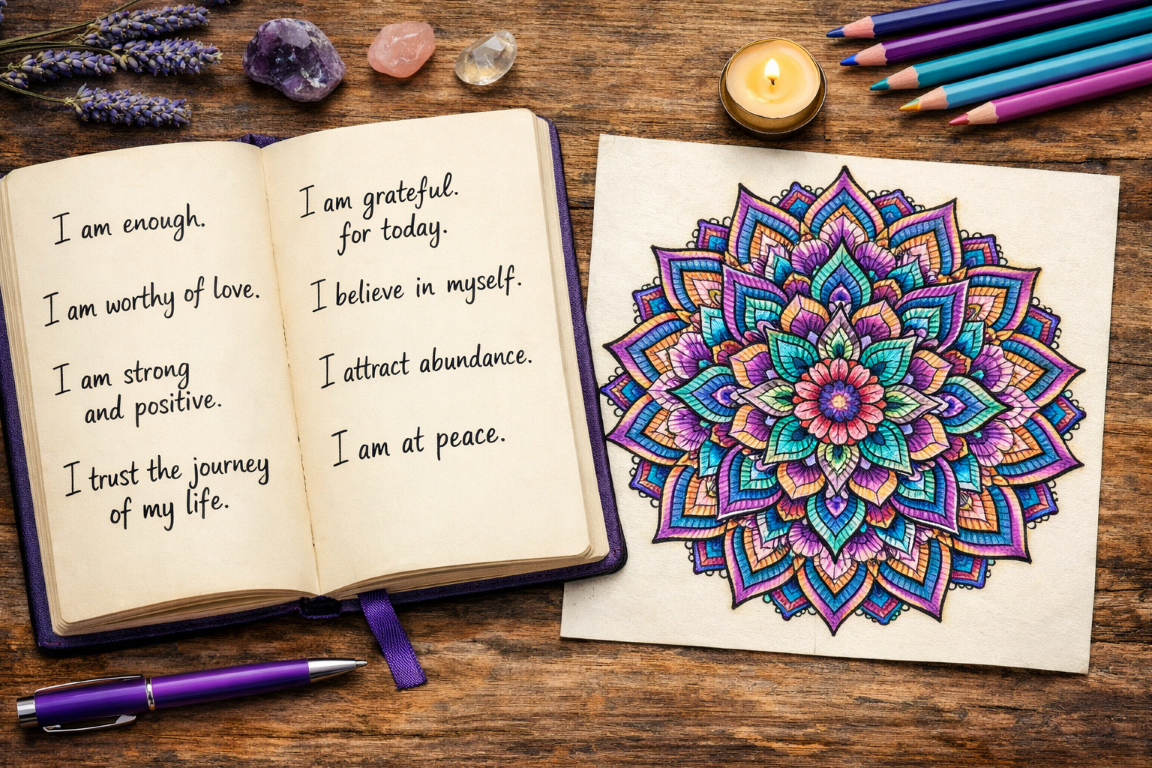
Choosing Colors Mindfully in Mandala Practices
Colors aren’t random in mandala anxiety relief; they’re tools for emotional expression. Blues and purples soothe, while yellows uplift. You can experiment to discover what resonates.
If anxiety feels overwhelming, start with cool tones to cool the mind. As you progress, incorporate contrast to maintain balance. This deliberate selection deepens the practice and aligns with broader creative wellness, as discussed in Mindful Creativity & Wellness: How Art Nourishes Your Inner World.
Overcoming Common Challenges in Mandala Coloring
Newcomers might face hurdles like perfectionism or distraction. Remember, there’s no “right” way—stress-relief mandalas are about the process, not the product. If your mind wanders, gently redirect it.
For those with severe anxiety, combine with professional therapy. Mandalas complement, not replace, treatment.
Discover seasonal celebrations through coloring.
Recommended Products for Your Mandala Journey
To enhance your mandala meditation anxiety sessions, here are a few curated products from our collection:
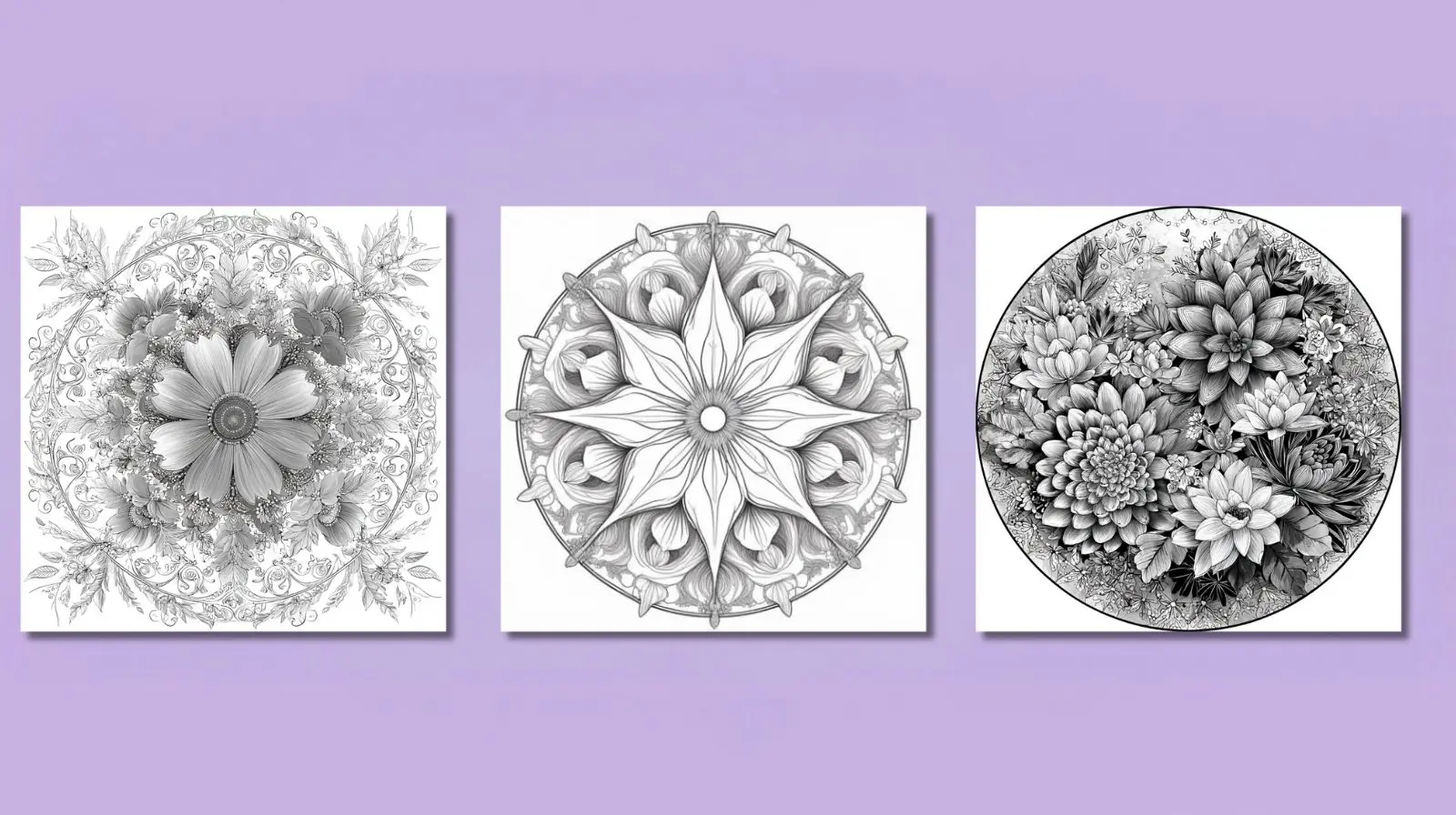
- Amazing Mandala Coloring Bundle: 150+ Premium Printable Pages – Perfect for endless stress relief mandalas, this bundle offers variety for daily practices.
- Inspiring Eco Mandala Coloring Book with Affirmations – 35 Mindfulness & Nature Designs – Ideal for anxiety coloring books with built-in affirmations to boost positivity.
- Relaxing Mandala Coloring Pages for Adults – 56 Printable Designs for Stress Relief – Tailored for mandala coloring for anxiety, these designs promote deep relaxation.
These digital downloads are instant, allowing you to start right away.
Long-Term Benefits and Integration into Daily Life
Consistent guided mandala practice for anxiety leads to lasting changes: improved focus, better sleep, and greater emotional resilience. Integrate them into routines—like morning rituals for a calm start or evening wind-downs.
As you evolve, create your own mandalas to personalize the experience. This creative outlet not only provides anxiety relief through mandala therapy but also fosters self-discovery.
In conclusion, mandala coloring for anxiety is more than a hobby; it’s a pathway to inner peace. By embracing these practices, you nurture your mind and spirit. For a holistic view, revisit our pillar on Mindful Creativity & Wellness: How Art Nourishes Your Inner World.
🎨 Not sure where to start?
Here are our most loved products.
FAQ
🎨 Not sure where to start? Here are our most loved products.
Q1: What is mandala coloring for anxiety? A: Mandala coloring for anxiety involves filling intricate circular designs with color to promote mindfulness and reduce stress. It’s a therapeutic activity that helps shift focus from worries to the present moment and is often used in coloring books to provide quick relief for anxiety.
Q2: How does mandala meditation help with anxiety? A: Mandala meditation anxiety relief works by engaging the brain in repetitive, focused tasks that mimic meditation. It lowers cortisol levels, calms the nervous system, and encourages self-reflection, making it effective for anxiety relief.
Q3: Are there specific colors recommended for stress relief mandalas? A: Yes, cool colors like blue and green are great for calming anxiety in stress relief mandalas. Warm colors like yellow can uplift mood. Choose based on intuition, as explored in our post on Art & Emotions: Using Color to Explore Feeling.
Q4: How often should I practice guided mandala coloring? A: Start with 10-15 minutes daily for best results. Consistency yields benefits, as detailed in “How to Create a Daily Coloring Ritual.”
Q5: Can beginners use anxiety coloring books with mandalas? A: Absolutely! Beginners benefit most from simple coloring-book designs for anxiety. They provide structure without overwhelming, leading to gradual mandala anxiety relief.
Q6: What if I don’t have artistic skills for mandala practices? A: No skills needed—mandala coloring for anxiety is about the process, not perfection. It’s accessible to all and focuses on relaxation rather than artistry.
Q7: How can I combine mandalas with other wellness activities? A: Pair them with journaling for deeper insights, as in our guide on Creative Journaling + Coloring Combo for Well-Being. This enhances the overall mandala meditation anxiety benefits.
Q8: Where can I find free mandala resources? A: Many sites offer free printables, but for premium stress relief mandalas, check our products like the Eco Mandala Sampler.
Q9: Can mandala coloring replace therapy for severe anxiety? A: No, mandala coloring for anxiety and mandala anxiety relief practices are excellent complementary tools, but they are not a substitute for professional mental health treatment. They can significantly reduce everyday stress, lower cortisol levels, and create moments of calm through stress-relief mandalas and focused attention. Many people find that regular mandala meditation sessions help them manage symptoms between therapy appointments or while using other coping strategies. If anxiety significantly interferes with daily life, speaking with a licensed therapist or counselor is strongly recommended. Think of mandala coloring as a gentle, accessible self-care practice that supports — rather than replaces — professional care.
One thing that makes the practice more sustainable over time is feeling confident in how you color — not worried about ‘doing it wrong.’ Our mandala coloring techniques guide takes all the pressure off by showing you simple, forgiving approaches that feel meditative rather than effortful.an
Q10: How long does it take to feel the benefits of mandala coloring for anxiety? A: Most people notice a sense of calm within the first 10–20 minutes of a session, mainly when they focus on slow, intentional breathing while coloring. Short-term mandala anxiety relief (lower heart rate, quieter mind) can happen almost immediately. Longer-term benefits — such as improved emotional regulation, better sleep, and reduced baseline anxiety — typically become noticeable after 2–4 weeks of consistent practice (even 10–15 minutes per day). Using anxiety coloring books regularly helps build the habit and strengthens the brain’s relaxation response over time, similar to any mindfulness practice.
For anxiety in particular, designs with natural elements — flowers, leaves, flowing organic forms — tend to be the most soothing. Our garden mandala coloring collection explores exactly this style, and many of our readers find it their most reliable go-to for a genuinely restful session.”
Q11: What’s the best time of day to do mandala meditation for anxiety? A: The most effective time depends on your personal rhythm and when anxiety tends to peak. Popular choices include:
- Morning — to start the day with calm and set a grounded tone (great before work or school).
- Mid-afternoon — to break up stress buildup during the workday.
- Evening / before bed — to unwind racing thoughts and improve sleep quality (one of the most common choices for mandala anxiety relief). Experiment for a week or two and notice when you feel the most substantial shift. Pairing the practice with an existing routine (after coffee, during the lunch break, or as part of the wind-down) makes it easier to remember. Our guide, “How to Create a Daily Coloring Ritual,” offers more tips on anchoring the habit in your schedule.
This article articulates what I’ve felt but couldn’t express about coloring.
Adult coloring deserves more recognition as a legitimate wellness practice.
The way this describes creative flow through coloring is spot-on.
Good, honest creative resources without unnecessary clutter or complicated sign-up processes. Exactly what I was looking for.